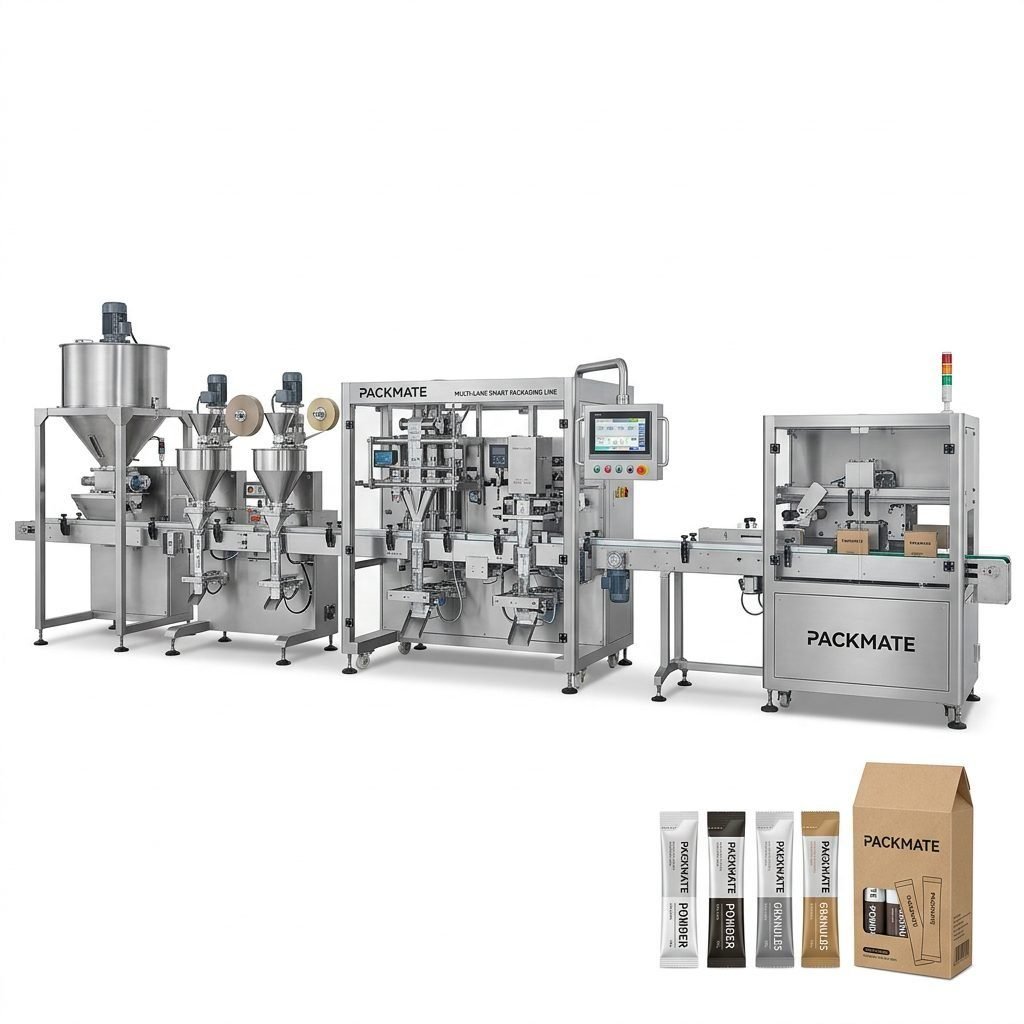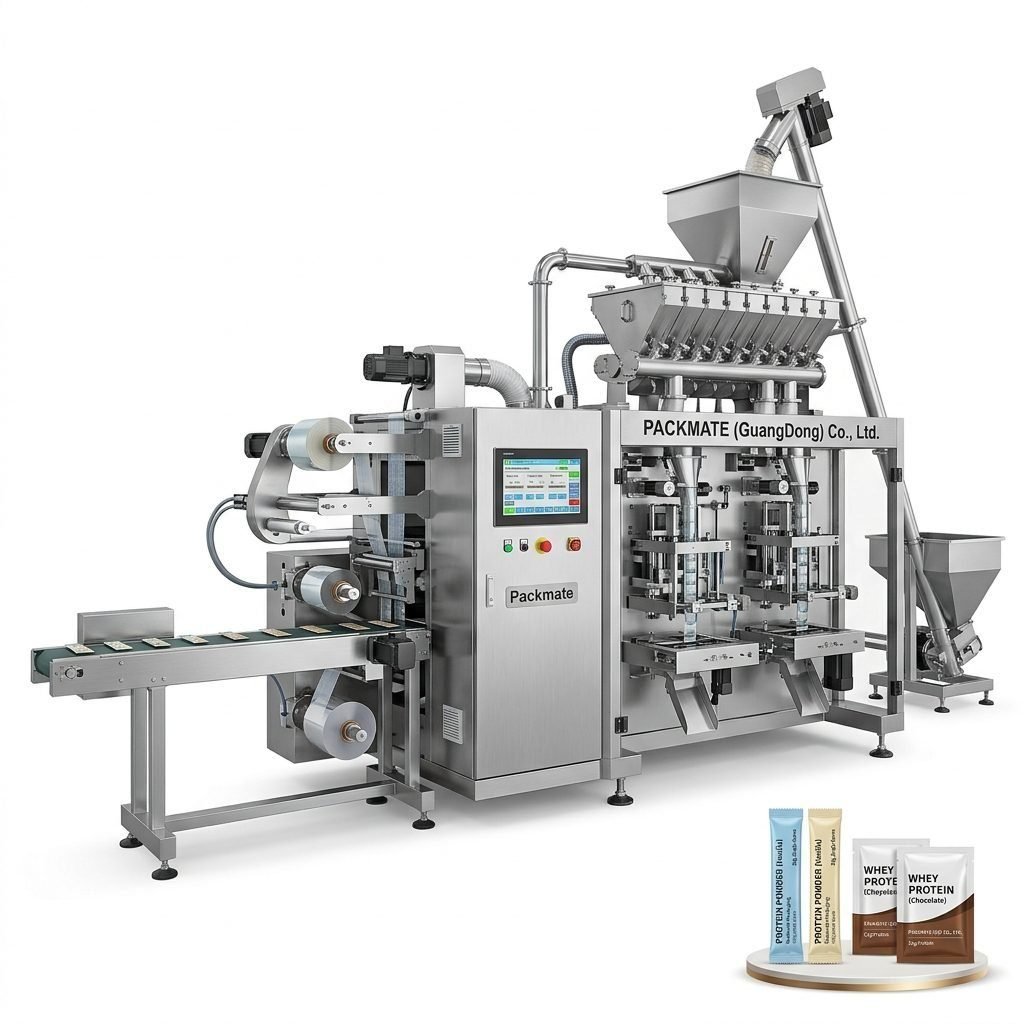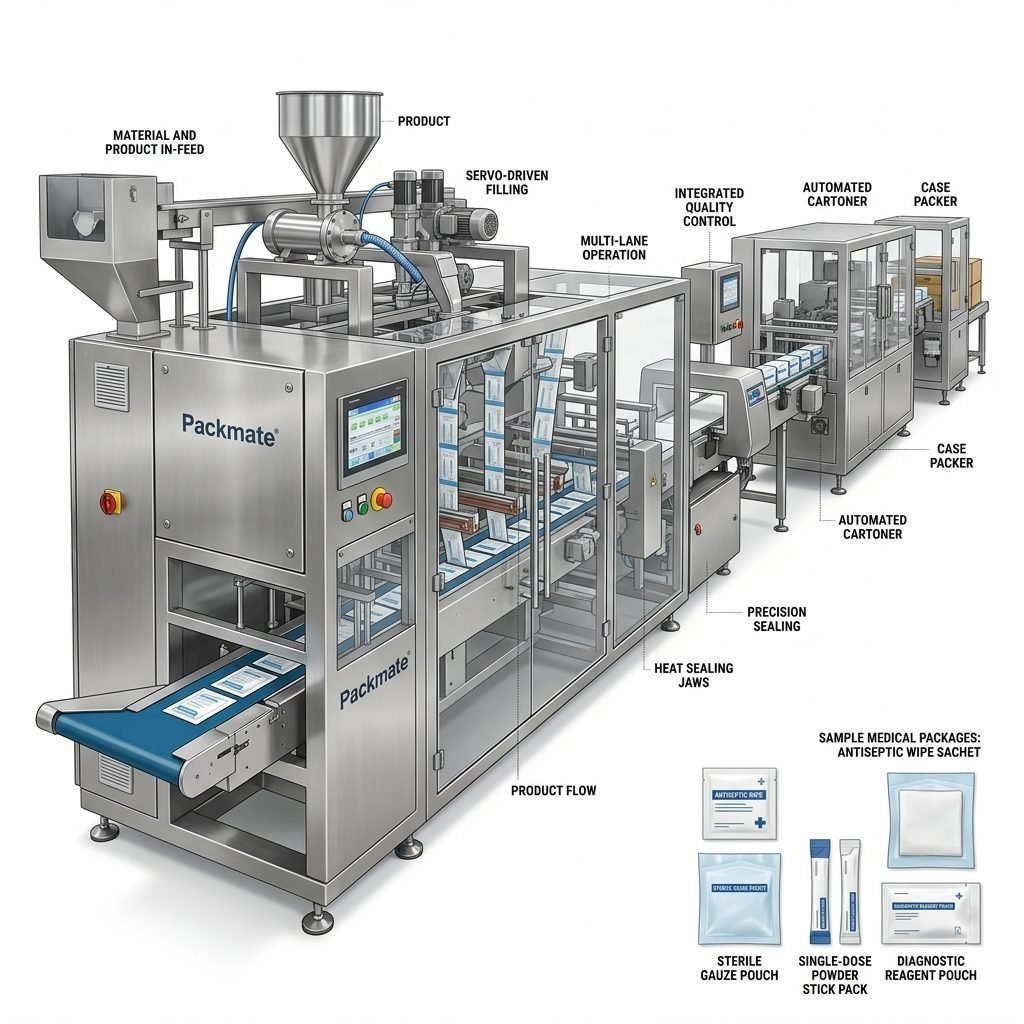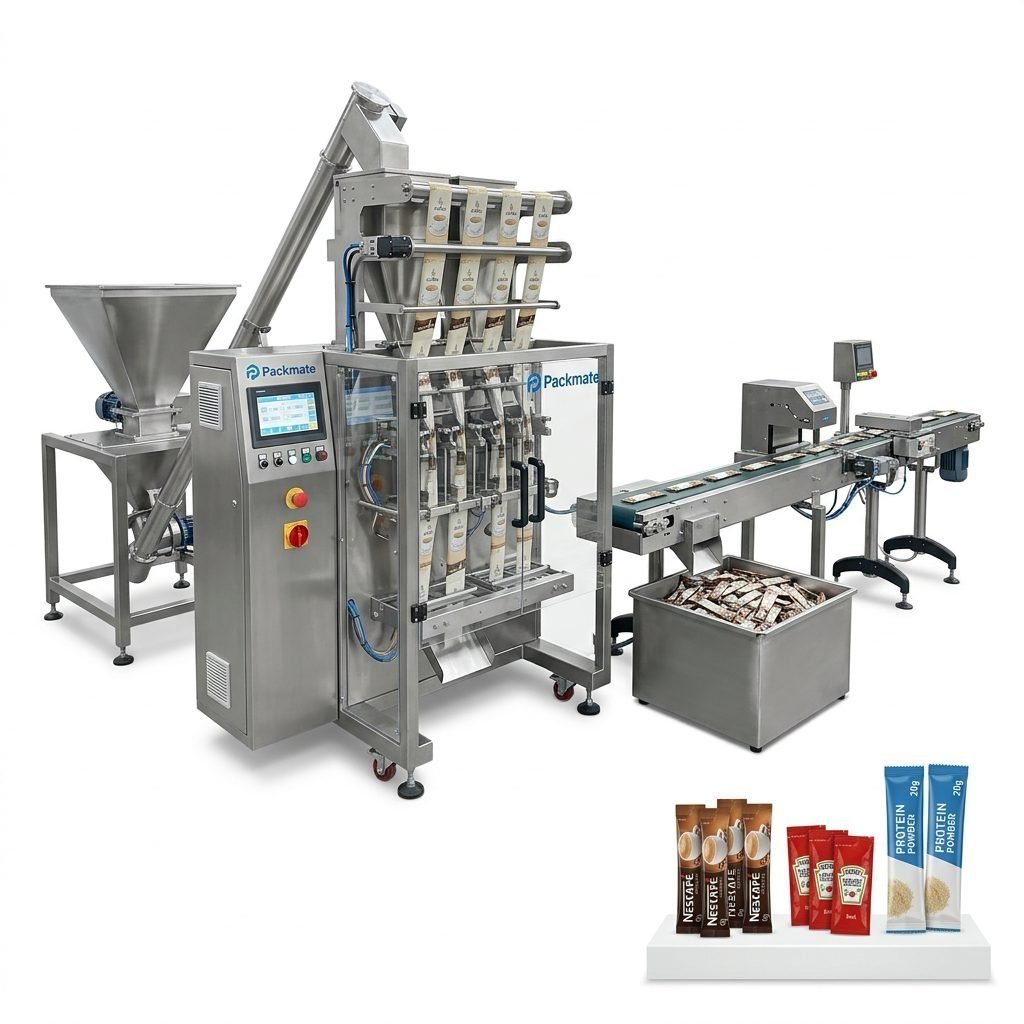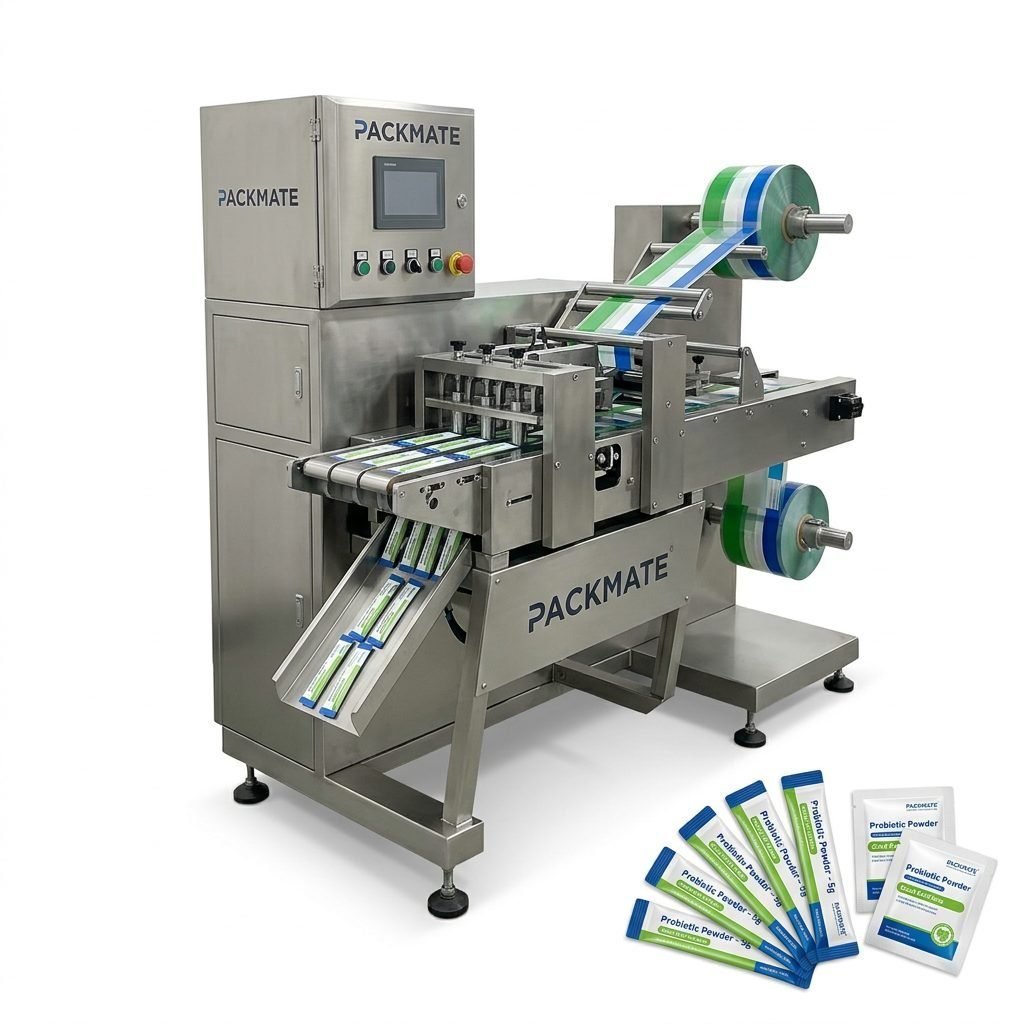
Pouch packaging machines are essential equipment in modern manufacturing, enabling efficient, hygienic, and cost-effective packaging for a vast range of products. From food and pharmaceuticals to chemicals and consumer goods, these machines automate the process of forming, filling, and sealing pre-made or roll-fed pouches. This guide explores the different types of pouch packers, their working principles, and key considerations for selecting the right machine for your production line.
What is a Pouch Packaging Machine?
A pouch packaging machine is an automated system designed to create and fill flexible pouches from a roll of film or to fill and seal pre-made pouches. These machines handle various product forms, including powders, granules, liquids, pastes, and solids. The primary advantages are high-speed operation, reduced labor costs, improved product shelf life through hermetic sealing, and consistent, precise packaging.
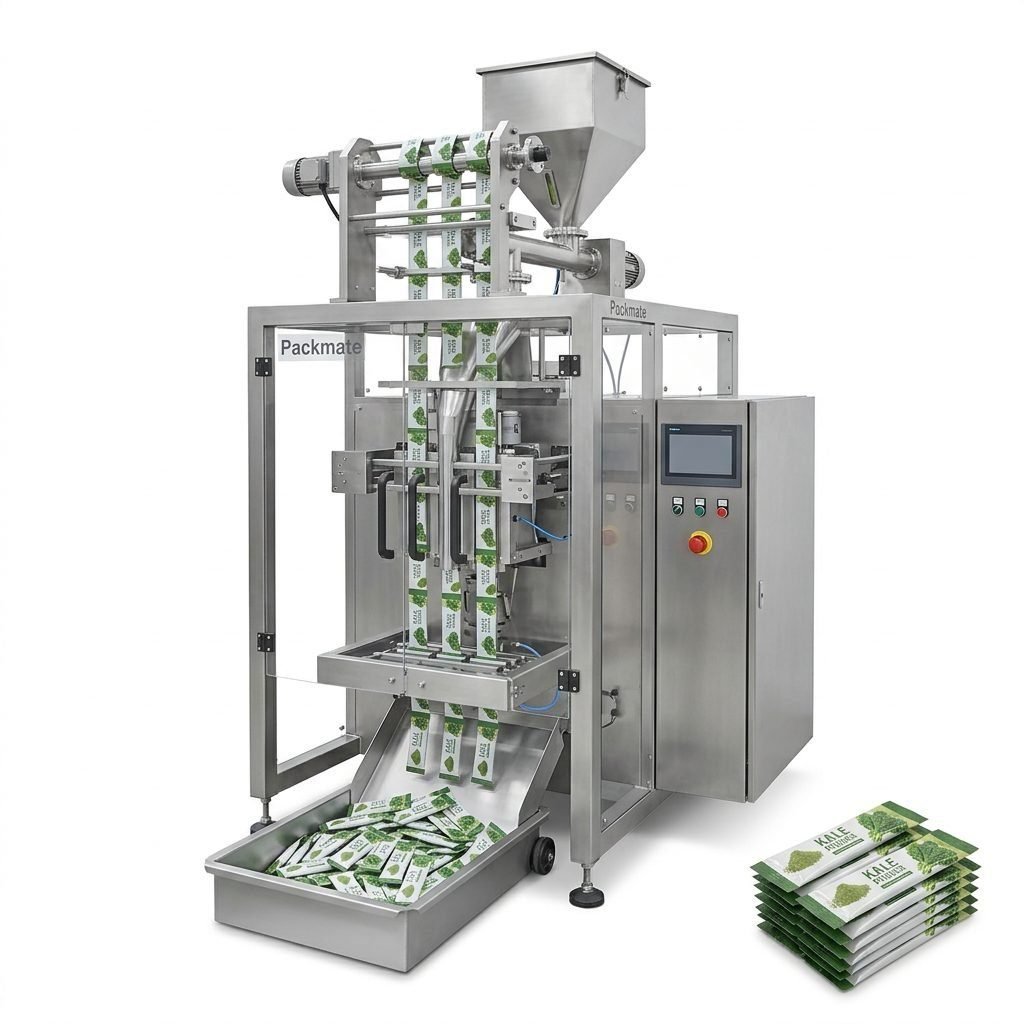
Core Components of a Pouch Packing Machine
While designs vary, most pouch machines consist of these fundamental systems:
- Film Unwinding & Feeding System: Controls the feeding of packaging material from a roll.
- Pouch Forming Unit: Shapes the flat film into a pouch using forming collars or mandrels.
- Filling System: Precisely doses the product into the formed pouch. This can be volumetric, auger-based, liquid pump, or weigh scale systems.
- Sealing System: Uses heat, pressure, or ultrasonic energy to create airtight seals on the pouch.
- Cutting/Dispensing Unit: Separates individual pouches from the film web.
- Control System (PLC/HMI): The brain of the machine, managing all parameters like speed, temperature, and fill weight.
Main Types of Pouch Packaging Machines
Choosing the right type depends on your product, pouch style, and required output. Here are the most common categories:
1. Vertical Form-Fill-Seal (VFFS) Machines
These are the most common type for granular and powder products. The machine forms a tube from a roll of film, creates the bottom seal, fills the product, and then creates the top seal before cutting the pouch free. They are highly efficient for high-volume production of stand-up pouches, pillow packs, and three-side seal pouches.
2. Horizontal Form-Fill-Seal (HFFS) Machines
Ideal for liquids, pastes, and products that need to be laid flat. The film travels horizontally, and pouches are formed, filled, and sealed in a sequential process. HFFS machines are often used for condiment sachets, liquid soap packets, and medical gels.
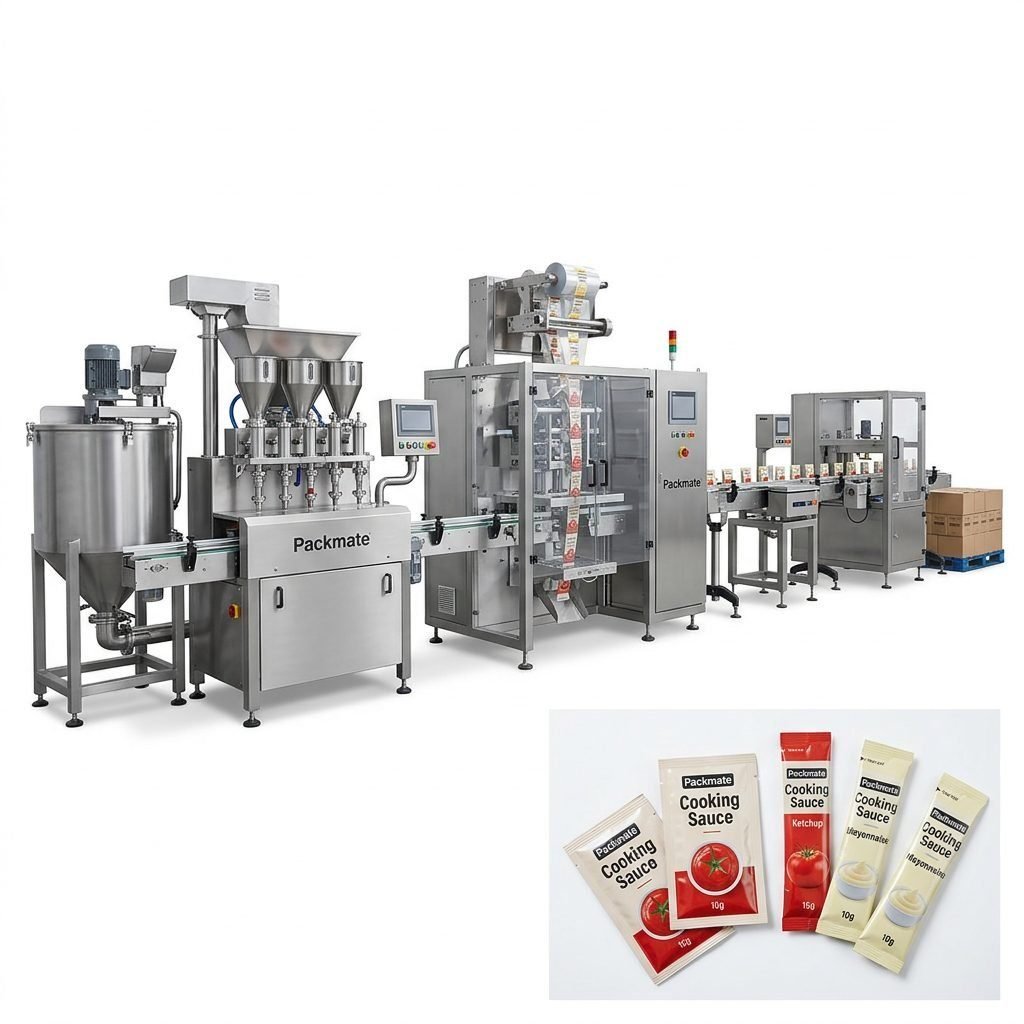
3. Pre-Made Pouch Fillers
These machines use ready-made pouches supplied in stacks or magazines. They open the pouch, fill it with product, and then seal it. This method is suitable for complex pouch shapes, zipper pouches, or spouted pouches that are difficult to form on a VFFS machine. Speeds are generally lower than VFFS but offer great flexibility.
4. Stick Pack Machines
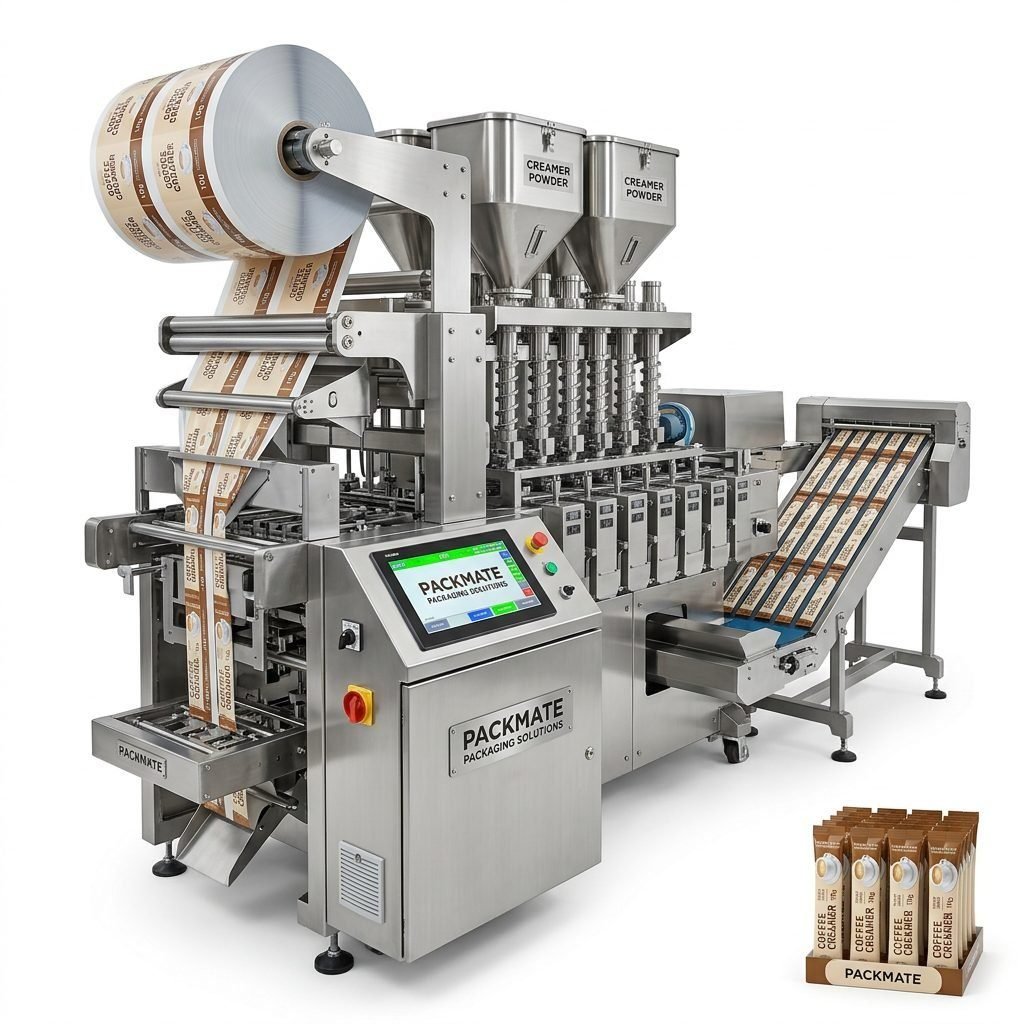
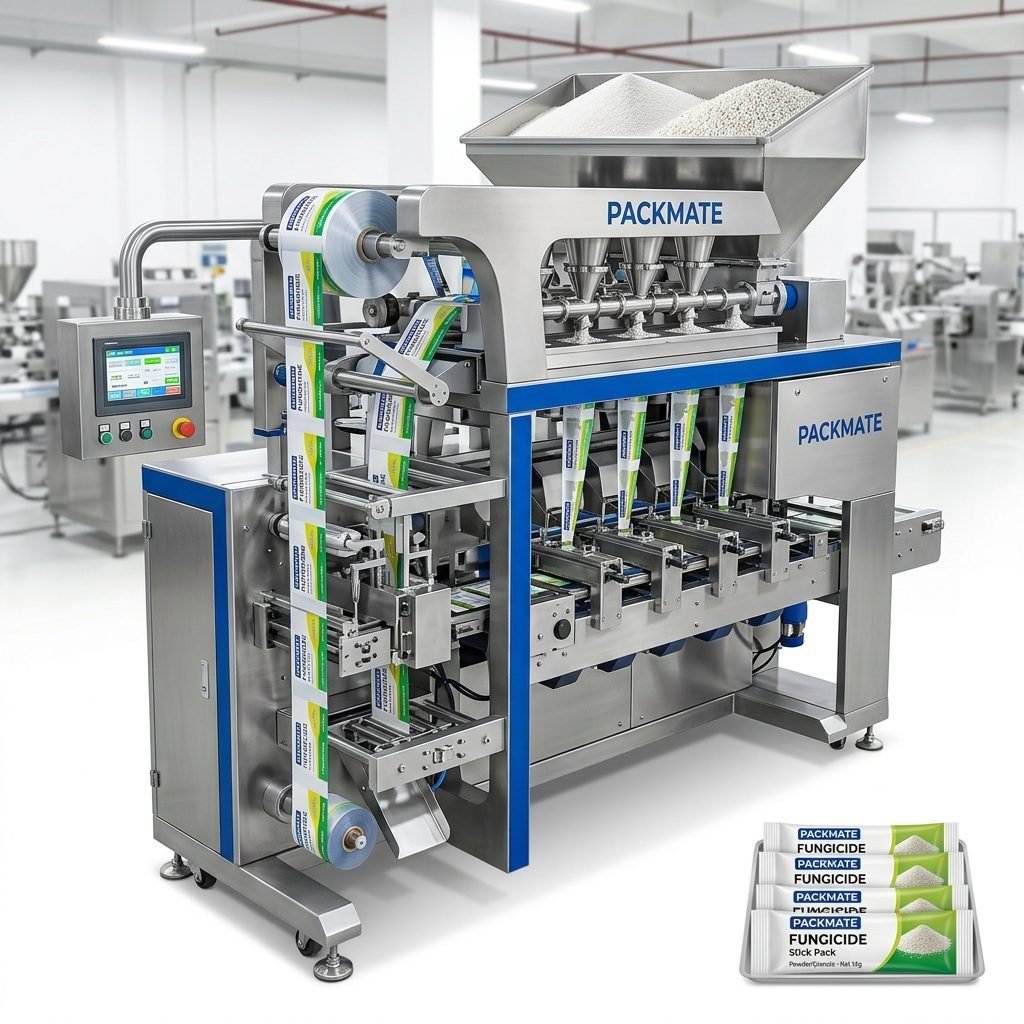
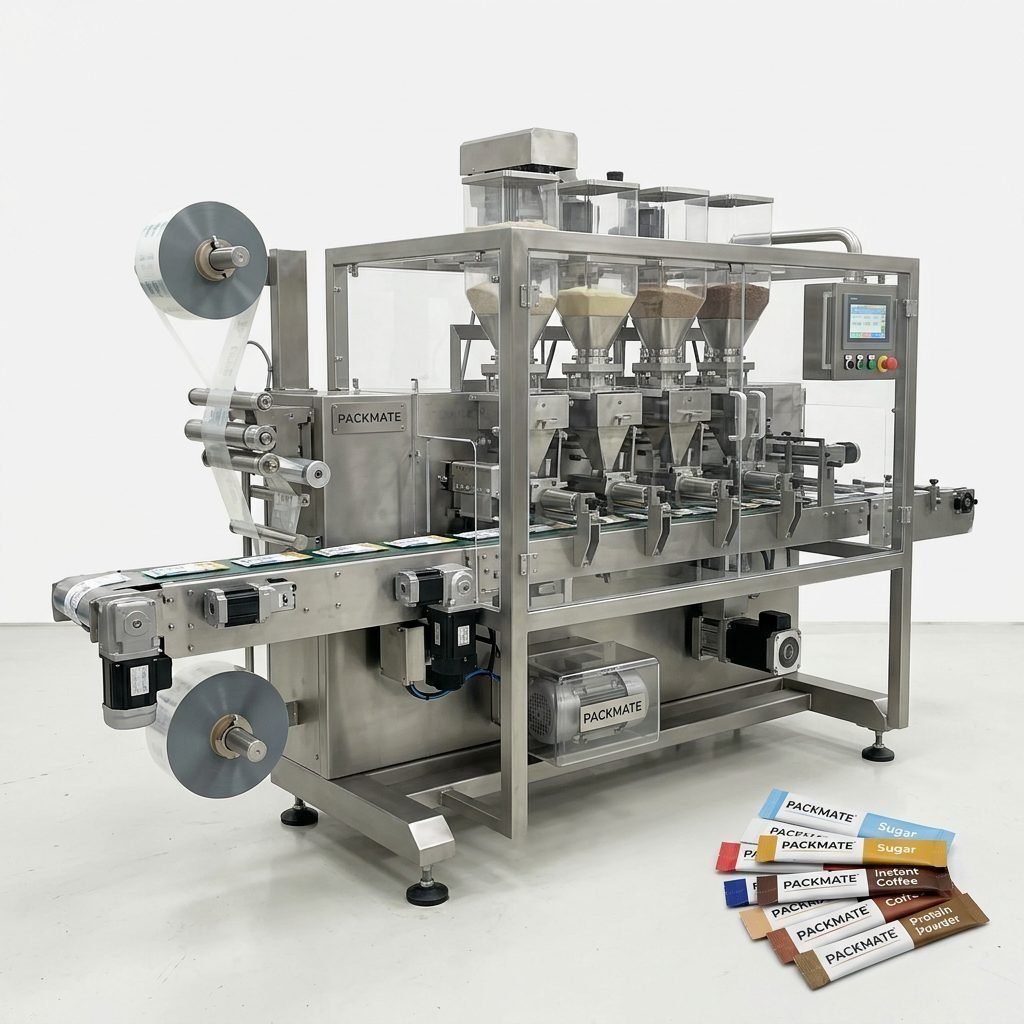
A specialized subset of VFFS machines designed to produce long, narrow “stick” pouches. They are perfect for single-serve portions of powdered drinks, instant coffee, sugar, and pharmaceutical powders. Modern machines often feature multi-lane designs for extremely high output.
5. Four-Side Seal & Three-Side Seal Machines
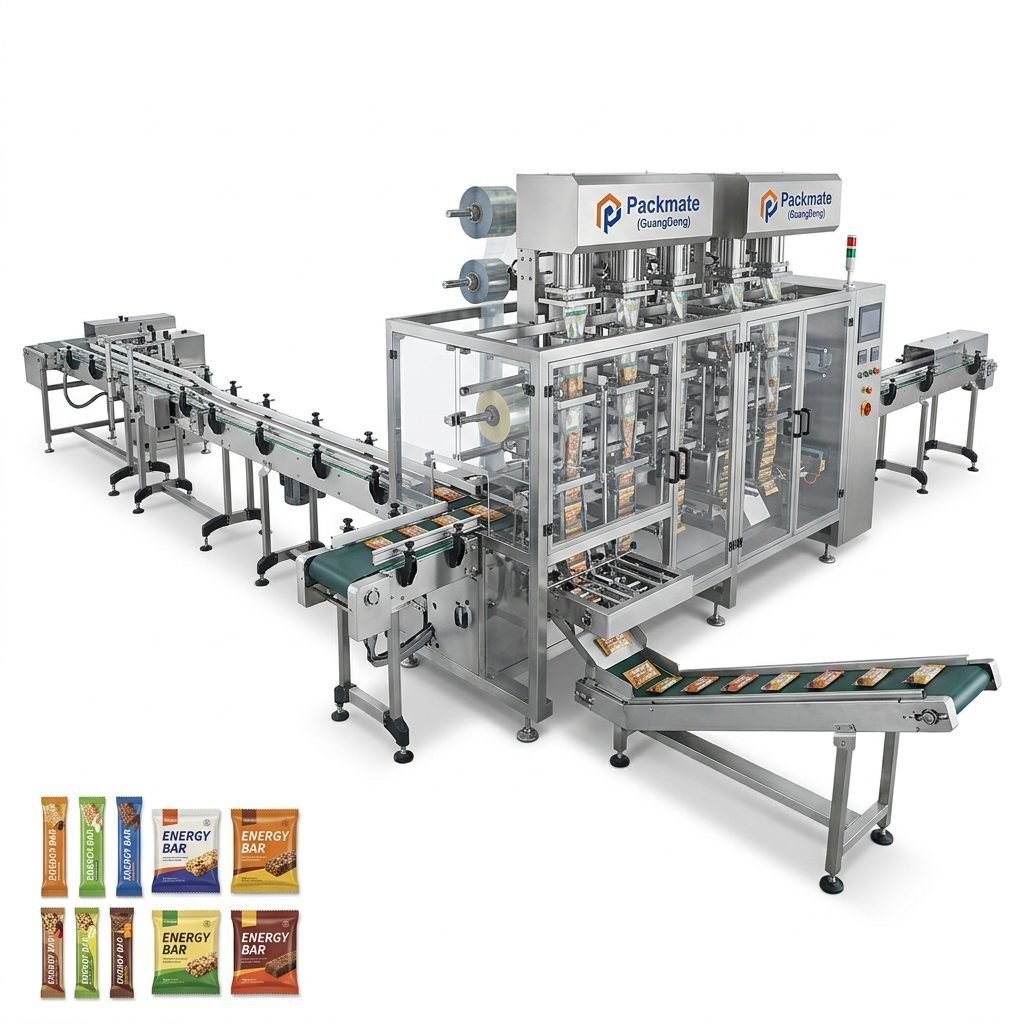
These machines create pouches sealed on all four edges or three edges, often from pre-printed roll stock. They are common for tea bags, wet wipes, and single-use condiment packs. The flat, stable pouch shape is ideal for retail display.
| Machine Type | Best For | Typical Output | Key Advantage |
|---|---|---|---|
| Vertical Form-Fill-Seal (VFFS) | Granules, Powders, Snacks | 60-200 pouches/min | High speed, low film cost |
| Horizontal Form-Fill-Seal (HFFS) | Liquids, Pastes, Creams | 40-150 pouches/min | Excellent for liquid products |
| Pre-Made Pouch Filler | Spouted, Zipper, Complex Shapes | 20-80 pouches/min | Pouch design flexibility |
| Multi-Lane Stick Pack | Powdered Supplements, Drink Mixes | 200-1000+ sticks/min | Extremely high output for small portions |
How Does a Pouch Packing Machine Work? (The Basic Process)
The operation of a standard VFFS machine, the most prevalent type, follows a continuous cycle:
- Film Feeding: The roll of packaging film (laminate) is fed through a series of tensioners and guides.
- Pouch Forming: The film is pulled over a forming collar, which shapes it into a vertical tube.
- Vertical Sealing: The longitudinal (back) seal of the tube is created by a sealing bar.
- Cross Sealing & Bottom Seal: A pair of heated jaws close to create the horizontal bottom seal of the first pouch and the top seal of the previous pouch simultaneously.
- Filling: The product is precisely dosed into the open-top tube via a filler positioned above.
- Pulling & Sealing: The film tube is pulled down to the next sealing position. The jaws close again, creating the top seal of the filled pouch and the bottom seal of the next pouch, while also cutting the finished pouch away.
- Discharge: The completed, sealed pouch is discharged onto a conveyor for collection or secondary packaging.
Key Considerations When Buying a Pouch Packaging Machine
Investing in the right equipment is crucial for long-term productivity. Here are the main factors to evaluate:
1. Product Characteristics
The nature of your product dictates the machine type and filling system. Is it a free-flowing powder, a sticky paste, a granular solid, or a viscous liquid? Each requires specific hopper designs, feeding mechanisms (auger, pump, volumetric cup, weigh scale), and nozzle types to ensure accurate, clean filling.
2. Pouch Specifications
Define your pouch requirements: size (width, length), material (PET/PE, AL foil, biodegradable films), seal type (fin seal, lap seal), and special features (zipper, spout, hang hole). The machine must be compatible with your chosen film and capable of producing the desired seal integrity.
3. Production Speed & Output
Calculate your required output in pouches per minute (PPM). Consider both current needs and future growth. A multi-lane stick pack machine from a manufacturer like Ludyway can dramatically increase output for small-portion products compared to a single-lane machine.
4. Level of Automation
Options range from semi-automatic machines (manual pouch loading) to fully automatic lines with integrated cartoning, case packing, and robotic palletizing. For high-volume production, a turnkey line from a supplier like PacklineOEM that offers full integration can maximize efficiency.
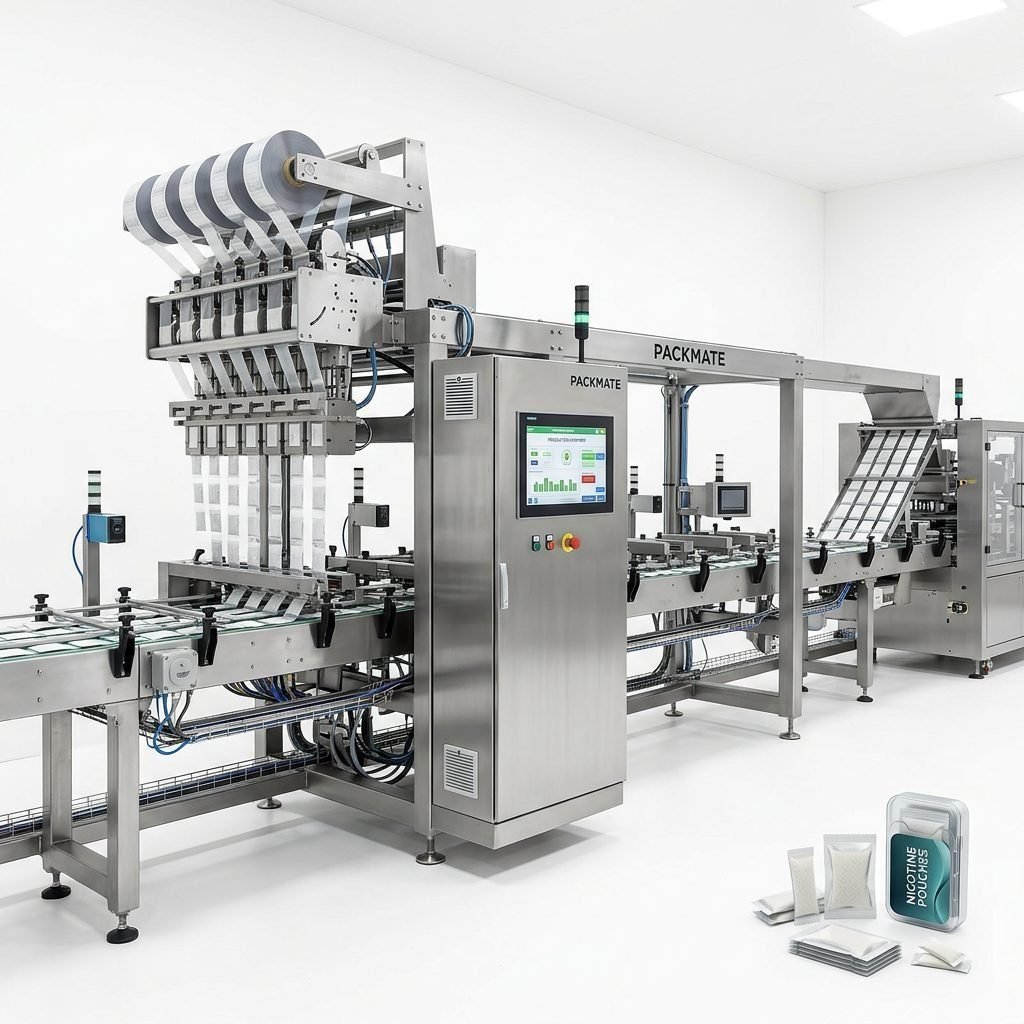
5. Machine Flexibility & Changeover
If you run multiple products or pouch sizes, quick changeover capability is vital. Look for machines with tool-less adjustments, recipe storage in the PLC, and easy-access components. For highly specialized needs, a custom machine from a manufacturer like PackingMachineOEM might be the best solution.
6. Hygiene & Construction
For food, pharmaceutical, or chemical products, machine construction is critical. Look for stainless steel (304 or 316 grade) contact parts, smooth surfaces, and easy-clean designs. IP-rated electrical components may be necessary for wet environments.
7. Supplier Support & Service
Choose a reputable manufacturer with a strong track record. Consider their technical support, availability of spare parts, warranty terms, and training offered. Companies with extensive export experience, such as Packmate Machinery, often have robust international support networks.
Industry Applications of Pouch Packaging Machines
These machines are versatile and serve numerous sectors:
- Food & Beverage: Coffee, spices, snacks, sauces, drink mixes, sugar, milk powder.
- Pharmaceutical & Nutraceuticals: Powdered supplements, oral rehydration salts, herbal extracts, single-dose medications.
- Personal Care & Cosmetics: Shampoo sachets, face cream samples, wet wipes, hand sanitizer.
- Chemicals & Industrial: Detergents, lubricants, adhesives, agrochemicals, water treatment powders.
- Specialty Nicotine: The demand for nicotine pouch packaging has led to specialized high-speed machines from companies like SnusMachinery, designed for precise dosing and high-output production of smokeless tobacco products.
Frequently Asked Questions (FAQs)
What is the difference between a sachet and a stick pack?
A sachet is typically a small, flat, rectangular or square pouch, often used for liquids, creams, or single-use samples. A stick pack is a long, narrow, cylindrical pouch, primarily used for powdered products like drink mixes or supplements. The packaging machine for each is similar in principle but configured for different pouch shapes.
Can one machine handle different pouch sizes?
Yes, most modern machines are designed for quick changeover between different pouch sizes and products. This is achieved by changing parts like the forming collar, filling nozzles, and sealing jaws, and by loading different recipes in the machine’s control system. The ease and speed of changeover vary by machine model.
How accurate is the filling on these machines?
Filling accuracy depends on the product and the filling system. Auger fillers for powders can achieve accuracies of ±0.5-1%. Liquid pumps and volumetric cup fillers are also very precise. For the highest accuracy (e.g., in pharmaceuticals), weight-based fillers (net weighers) are used, which can achieve tolerances within fractions of a gram.
What packaging materials can be used?
Pouch machines can run a wide variety of laminated films, including PET/PE, PET/AL/PE, OPP/CPP, and biodegradable/compostable materials like PLA. The key is that the film must be heat-sealable on the inner layer and have the necessary barrier properties (moisture, oxygen, light) for the product.
What is a “turnkey” packaging line?
A turnkey line is a fully integrated system supplied by a single manufacturer or integrator. It goes beyond a single pouch machine to include all upstream and downstream equipment needed for a complete process: feeding, weighing, filling, sealing, checkweighing, metal detection, labeling, cartoning, and case packing. This provides a single point of responsibility for the entire system’s performance. Companies like Ludyway and PacklineOEM specialize in providing such comprehensive solutions.