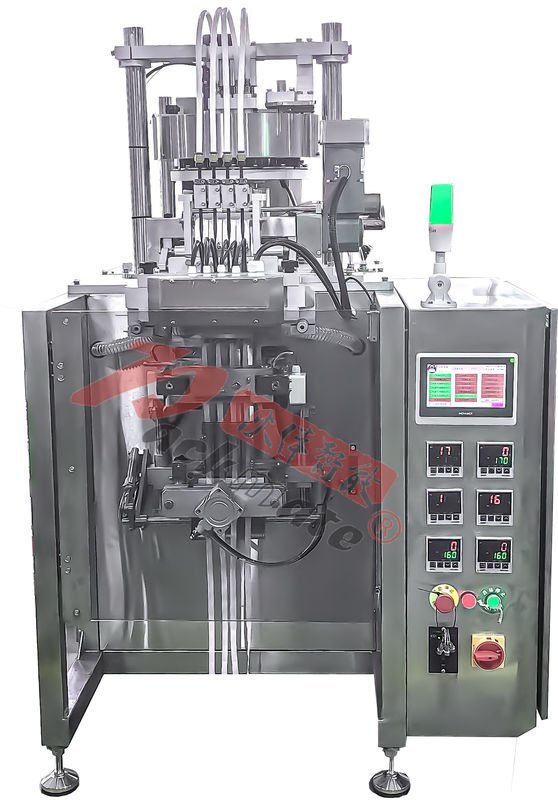
In the fast-paced world of modern manufacturing, efficiency and reliability are paramount. For industries packaging granular products like coffee, nuts, seeds, or pharmaceuticals, the Horizontal Form Fill Seal (HFFS) machine stands as a cornerstone of automated production lines. Understanding its key components and their functions is essential for operators, maintenance personnel, and anyone involved in selecting packaging machinery. This deep dive explores the integral parts of an HFFS machine and how they work in harmony to create precise, secure, and consistent pouches.
The Core Principle: How an HFFS Machine Operates
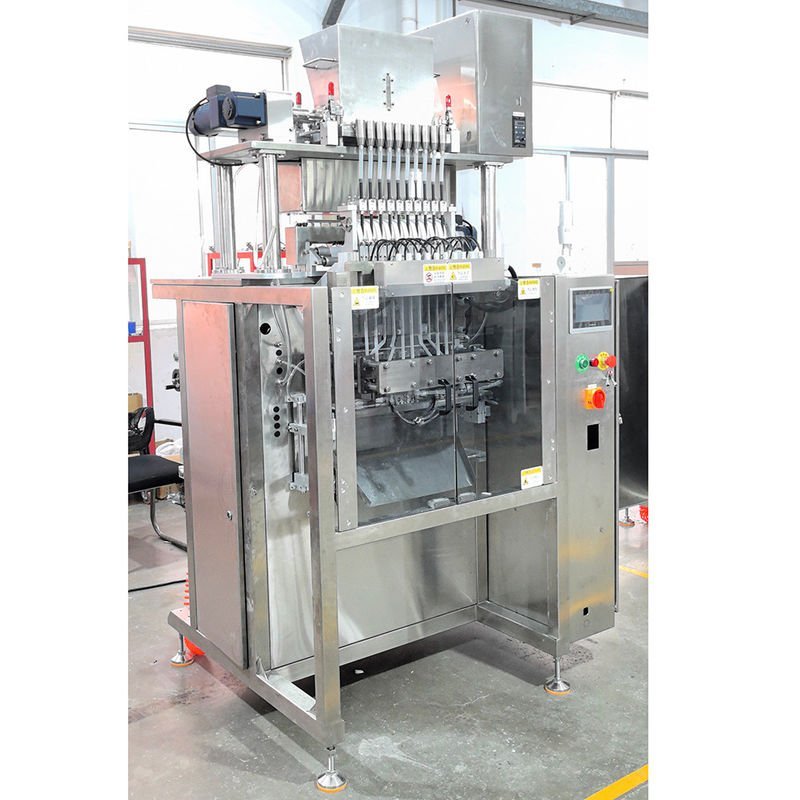
Before dissecting its components, it’s crucial to grasp the basic operational sequence. An HFFS machine forms pouches from a roll of flat packaging film in a horizontal plane. The film is unwound, formed into a tube, sealed longitudinally, filled with product, and then sealed transversely before being cut into individual pouches. This continuous motion allows for high-speed production, making it ideal for a vast range of free-flowing products. For a comprehensive look at different packaging solutions, explore our range of Bag & Pouch Packaging Machines.
Key Advantage of HFFS
The horizontal orientation is particularly advantageous for products that settle or compact well, allowing for consistent filling and a flat, stable final pouch that is efficient for boxing and palletizing.
Deconstructing the Machine: Key Components and Functions
An HFFS machine is a symphony of mechanical, electrical, and pneumatic systems. Each component plays a specific, critical role.
1. Film Unwinding & Feeding System
This is the starting point. A large roll of packaging film (laminated or coated for barrier properties) is mounted on a shaft. A tension control system, often using dancer arms or magnetic particle brakes, ensures the film is fed smoothly and without wrinkles. Consistent tension is vital to prevent film breaks and ensure accurate print registration if the film is pre-printed.
2. Film Forming Shoulder (Former)
This is the heart of the “Form” stage. The forming shoulder is a precision-machined, curved metal component that gradually shapes the flat film into a cylindrical tube. The design of the former is critical and varies depending on the pouch style (e.g., gusseted, flat-bottom). It guides the film edges together precisely under the longitudinal sealer.
3. Longitudinal Sealing System
As the film exits the former and forms a tube, the two overlapping edges must be sealed. This is done by the longitudinal sealer, typically a heated jaw or a continuous band sealer. It applies heat and pressure to create a strong, airtight seal along the length of the pouch. Temperature and pressure are precisely controlled to match the film material.
4. Product Filling System
Located directly after the longitudinal seal, this is the “Fill” stage. The product is fed into the formed tube via a filling nozzle. The type of filler depends on the product:
→ Volumetric Cup Fillers: Ideal for uniform granules, using rotating cups of a set volume.
→ Auger Fillers: Perfect for powders, spices, or fine granules, using a screw mechanism for precise measurement.
→ Weighing Fillers: For high-value or non-uniform products, integrated multi-head weighers provide extreme accuracy.
Discover our specialized Weighing & Packaging Systems for applications requiring the highest precision.
5. Transverse Sealing & Cutting System
This dual-function assembly performs the “Seal” part of the cycle. Reciprocating sealing jaws, often with a crimp pattern for easy tearing, close on the filled tube. They simultaneously:
• Seal the bottom of the current pouch.
• Seal the top of the previous pouch.
• Cut the sealed section between the two pouches.
The jaws are heated and cooled in a precise cycle to ensure a strong seal without burning the film. This system’s timing relative to the film pull-down is critical for pouch length accuracy.
6. Film Pull-Down Belt System
These are two synchronized rubber or composite belts that grip the formed film tube. They index downward, pulling a precise length of film through the machine for each cycle. Their grip strength and synchronization are essential for maintaining film registration and consistent pouch length.
7. Control System (PLC & HMI)
The brain of the operation. A Programmable Logic Controller (PLC) coordinates all movements, temperatures, and timings. The Human-Machine Interface (HMI) touchscreen allows operators to set parameters, monitor production speed, track counts, and diagnose faults. Modern machines feature recipe storage for quick changeovers.
8. Auxiliary Systems
Gas Flushing System (Optional): For products requiring modified atmosphere packaging (MAP), a gas flush nozzle injects inert gas (like nitrogen) into the pouch before the final seal to displace oxygen, extending shelf life.
Date Coders: Integrated inkjet or thermal transfer printers apply batch codes, expiry dates, or logos onto the film.
Dust Extraction: For powdery products, a vacuum port may be included near the filler to keep the sealing area clean.
These auxiliary systems can be integrated into complete Filling & Packaging Lines for end-to-end automation.
Optimizing Performance and Ensuring Longevity
Proper maintenance of each component is non-negotiable. Regular cleaning of filling systems prevents cross-contamination and clogging. Sealing jaws must be kept clean of film residue to ensure seal integrity. Lubrication of moving parts and calibration of sensors and scales according to the manufacturer’s schedule are vital. Sourcing machines from a reputable manufacturer with a strong support ethos is key. Companies like Packmate, with decades of experience, not only build robust machines but also provide the knowledge and parts to keep them running optimally.
Summary: The Synchronized Workflow
In essence, the HFFS process is a continuous loop: Film is unwound and formed into a tube → The tube is sealed along its length → Product is dispensed into the tube → The tube is sealed, cut, and released as a finished pouch. Each component must operate in perfect sync with the others, a testament to precision engineering. For similar precision in smaller formats, our Sachet & Stick Pack Machines operate on analogous principles.
Frequently Asked Questions (FAQs)
What types of products are best suited for HFFS packaging?
HFFS machines excel with free-flowing granular, powdered, or small solid products. Common applications include snack foods (nuts, chips, candy), coffee, pet food, grains, seeds, hardware (screws, nails), and certain pharmaceutical granules.
How do I choose the right sealing temperature for my packaging film?
The optimal temperature depends entirely on the film material (e.g., polyethylene, polypropylene, laminated structures). Always refer to the film supplier’s specifications. Start at the lower end of the recommended range and conduct seal strength tests. Most modern machines allow fine-tuning of temperature for both longitudinal and transverse sealers.
What are the most common causes of film breakage or misregistration?
Film breakage often stems from incorrect tension (too high), sharp edges on guides or formers, or poor film quality. Misregistration (where print aligns incorrectly) is usually caused by inconsistent film tension, worn pull-down belts, or incorrect synchronization between the film feed and the sealing/cutting mechanism.
Can one HFFS machine handle different pouch sizes?
Yes, most HFFS machines are designed for quick changeover. This involves changing the forming shoulder, adjusting the filler nozzle, setting the new pouch length on the PLC, and potentially changing the sealing jaw width. Changeover time varies with machine design and operator skill.
What is the key difference between HFFS and Vertical Form Fill Seal (VFFS) machines?
The primary difference is orientation and product flow. HFFS forms pouches horizontally and is ideal for products that can be fed horizontally. VFFS forms pouches vertically, with product dropped down into the forming tube, making it better for lighter products that can fall freely, like chips or salad mixes. The choice depends on product characteristics and packaging requirements.