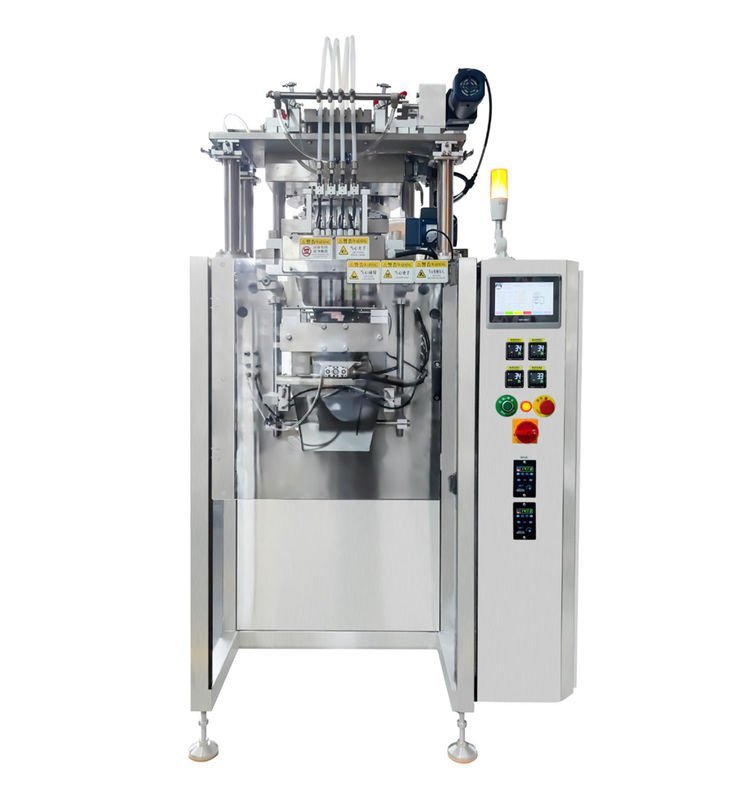
The cosmetics industry is driven by innovation, presentation, and consumer experience. Behind every beautifully presented bottle of serum, compact of powder, or tube of cream lies a complex world of packaging technology. Selecting the right packaging equipment is not merely an operational decision; it’s a strategic one that impacts product integrity, brand perception, production efficiency, and ultimately, profitability. This guide delves into the complete spectrum of packaging machinery for cosmetic products, from fundamental filling and sealing to sophisticated automated systems.

Understanding Cosmetic Packaging Requirements
Cosmetic products present unique challenges for packaging. The machinery must handle a wide variety of viscosities—from watery toners to thick creams and loose powders—with extreme precision to avoid waste and ensure consistent fill volumes. Furthermore, the equipment must be constructed from materials compatible with cosmetic formulations, often requiring sanitary, corrosion-resistant surfaces like 316L stainless steel. Sensitivity to air, light, and contamination means sealing integrity is paramount. Finally, the aesthetic outcome is critical; packaging must be flawless, with no leaks, smudges, or misaligned labels to uphold brand luxury and quality.
Key Considerations for Equipment Selection:
- Product Type: Liquid, gel, cream, paste, or powder.
- Container Type: Bottles (glass/plastic), jars, tubes, sachets, stick packs, or compacts.
- Production Speed: Output required per minute or hour.
- Accuracy & Hygiene: Precision of fill and sanitary design standards.
- Flexibility: Ability to handle multiple SKUs with quick changeovers.
Core Processes: Filling Systems
Filling is the heart of cosmetic packaging. The chosen technology depends primarily on the product’s physical properties.
Liquid Filling Machines
Used for toners, serums, shampoos, and liquid foundations. Volumetric piston fillers are highly accurate for thick and thin liquids, drawing a precise volume into a cylinder and dispensing it into the container. Gravity fillers are suitable for free-flowing, non-foaming liquids. Overflow fillers ensure a consistent fill level in clear bottles, crucial for visual appeal, by filling to the brim and draining excess.
Cream & Paste Filling Machines
For dense products like moisturizers, masks, and toothpaste. Positive displacement piston fillers are the standard, forcing product through a nozzle. For extremely viscous pastes, screw fillers or pump fillers are employed. Many systems include de-aeration features to prevent air pockets.
Powder Filling Machines
Handling loose or compacted powders like eyeshadow, face powder, or loose pigments. Auger fillers use a rotating screw to dispense a measured volume with excellent accuracy. Cup fillers use volumetric cups, ideal for free-flowing powders. For the highest precision in premium products, net weigh fillers weigh each dose independently.
Ensuring Integrity: Sealing & Capping Technologies
After filling, the package must be securely sealed to prevent contamination, leakage, and preserve shelf life.
Capping Machines
These apply screw caps, snap-on lids, pump dispensers, or sprayers. Spindle cappers torque caps to a precise specification. Chuck cappers are common for a variety of cap styles. Snap cappers apply pressure to secure click-on lids. For a complete packaging line, integrating a reliable capper is essential, and you can explore options for Filling & Packaging Lines that include this functionality.
Induction Sealing
A critical secondary seal for bottles and jars. A foil liner is placed under the cap, and the container passes under an electromagnetic coil. The coil generates heat, bonding the foil to the container rim, creating an airtight, tamper-evident seal. This is non-negotiable for many liquid and cream products.
Tube Sealing
For metal or laminate tubes, the end is folded and crimped in a precise pattern (e.g., a 4-fold seal) to ensure a perfect closure that can withstand pressure from squeezing.
The Power of Automation: Integrated Packing Systems
Moving from standalone machines to integrated lines unlocks unprecedented efficiency, consistency, and scalability.
Components of an Automated Cosmetic Packaging Line:
1. Unscrambler: Oriients empty containers from a bulk bin and feeds them single-file onto a conveyor.
2. Cleaning & Sterilization (Optional): Air jets or UV light sanitize containers.
3. Filling Station: The precise filler, as selected for the product.
4. Sealing/Capping Station: Applies the closure or seal.
5. Labeling Machine: Applies front/back, wrap-around, or tamper-evident labels.
6. Checkweigher: Verifies each package is within the correct weight tolerance, rejecting under/overfills.
7. Vision Inspection System: Checks for fill level, cap presence, label alignment, and seal integrity.
8. Secondary Packaging: Groups finished products into cartons or trays, often using Auxiliary Packaging Equipment like case packers.
Automation reduces labor costs, minimizes human error, increases output speed, and ensures every product leaving the line meets quality standards. For high-volume items like sample sachets or single-use products, specialized Sachet & Stick Pack Machines form, fill, and seal the package from a roll of film in one continuous operation.
Choosing the Right Partner for Your Packaging Machinery
Investing in packaging equipment is a significant decision. Partnering with an experienced manufacturer like Packmate (GuangDong) Co., Ltd. provides immense value. With over two decades of experience, Packmate specializes in designing and building reliable, automated solutions. Their expertise spans from individual machines to complete turnkey packaging lines. A strong partner will offer:
- Customization: Tailoring solutions to your specific container, product, and output needs.
- Robust Support: Comprehensive installation, training, maintenance, and spare parts services.
- Proven Reliability: Machinery built for 24/7 operation in demanding environments.
- Hygienic Design: Equipment that meets industry standards for easy cleaning and product safety.
For brands looking to package products in flexible pouches, which are growing in popularity for travel sizes and masks, exploring Bag & Pouch Packaging Machines is a logical step forward.
Future Trends in Cosmetic Packaging Machinery
The future points towards greater flexibility, data integration, and sustainability. Machines will feature more tool-less changeovers to handle smaller batch sizes cost-effectively. Integration with Industrial Internet of Things (IIoT) platforms will enable predictive maintenance, real-time production monitoring, and traceability. Furthermore, equipment will need to adapt to sustainable packaging materials, such as mono-material recyclable films and refillable container systems, which may require new handling and sealing techniques.
Frequently Asked Questions (FAQ)
1. What type of filling machine is best for a viscous cosmetic cream?
For viscous creams and pastes, a positive displacement piston filler is typically the best choice. It provides highly accurate volumetric filling by trapping a precise amount of product in a cylinder and forcibly discharging it, handling thick products without air inclusion.
2. How important is induction sealing for cosmetic bottles?
Extremely important. Induction sealing provides a hermetic, tamper-evident inner seal that prevents leakage, preserves product freshness by blocking oxygen and moisture, and enhances consumer confidence in product safety and quality. It is considered a standard for many liquid and cream-based cosmetics.
3. Can one packaging line handle different product SKUs?
Yes, with the right design. Modern lines are built for flexibility and quick changeover. This involves using adjustable components for different container heights/widths, quick-release change parts for fill nozzles and capping heads, and programmable logic controllers (PLCs) that can store recipes for different products. The changeover time can range from minutes to an hour depending on complexity.
4. What are the key benefits of a fully automated packaging system?
The primary benefits are: Increased production speed and output; superior consistency and accuracy, reducing product give-away; significant reduction in labor costs and manual handling; enhanced quality control through integrated checkweighers and vision systems; and improved hygiene by minimizing human contact with the product.
5. How do I determine the right speed/capacity for my packaging machine?
Calculate your current and projected future production needs (units per shift, day, year). Consider peak seasons and growth plans. A good rule is to choose equipment that can meet your peak demand with about 20-30% capacity headroom for future growth, without over-investing in an excessively large and expensive system. An experienced supplier like Packmate can help analyze your needs and recommend an appropriately scaled solution.