Single serve packaging has revolutionized how consumers interact with products, offering unparalleled convenience, precise portion control, and enhanced hygiene. At the heart of this revolution lies the single serve packaging machine, a sophisticated piece of automation that transforms bulk materials into individual, ready-to-use packets. This guide delves into the types, working principles, applications, and crucial buying tips for these essential machines, empowering businesses to make informed decisions.

Understanding the Core Types of Single Serve Packaging Machines
The market offers a diverse range of machines, each tailored to specific product forms and packaging styles. Choosing the right type is the first critical step.
Vertical Form Fill Seal (VFFS) Machines
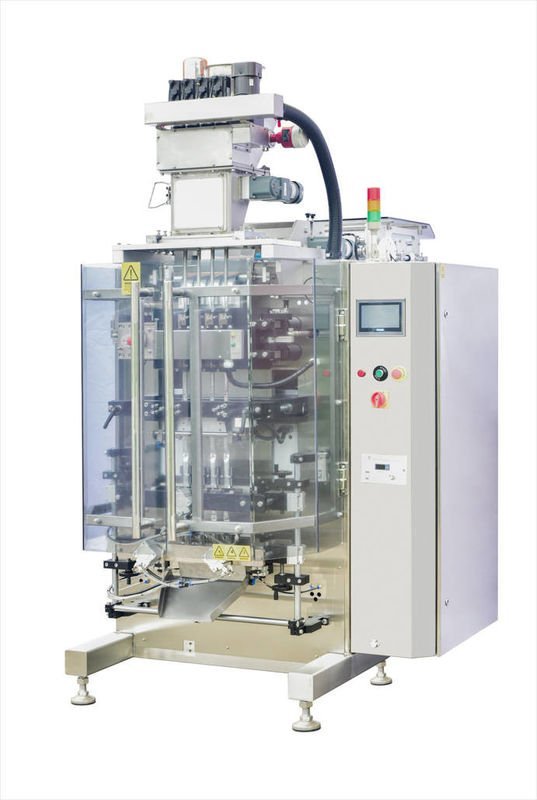
These are the workhorses of the industry. A VFFS machine forms a tube from a roll of packaging film, fills it with product, and then seals and cuts it into individual packets. They are incredibly versatile and cost-effective for medium to high-volume production. They are ideal for granules, powders, and small solids.
Horizontal Form Fill Seal (HFFS) Machines
HFFS machines are often used for more complex packaging shapes and multi-lane production. The film is fed horizontally, formed into pockets, filled, and then lidded with a second layer of film. This type is perfect for creating stick packs, sachets for liquids or creams, and packaging that requires a specific flat, pillow-like shape. Explore our range of sachet and stick pack machines to see this technology in action.
Pre-Made Pouch Fillers
Unlike form-fill-seal machines, these systems use pre-manufactured, empty pouches. The machine simply opens, fills, and then seals the pouch. This method is excellent for products that are sensitive or require a premium, stand-up pouch style. It offers great flexibility in pouch material and design but may have a higher per-unit packaging cost.
Liquid & Paste Sachet Machines
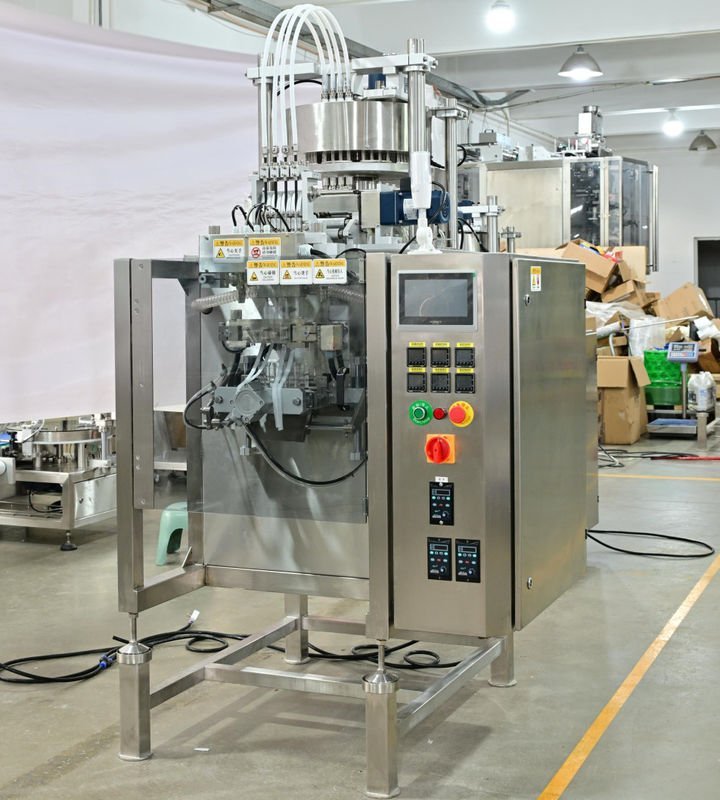
Specifically engineered to handle viscous products like sauces, condiments, shampoo, or pharmaceutical gels. These machines feature precision piston pumps or auger fillers to ensure accurate dosing without drips or spills. The sealing technology is also robust to prevent leaks.
Key Takeaway:
Your product’s physical state (powder, liquid, solid) and desired packet style (stick pack, sachet, stand-up pouch) are the primary determinants for choosing the machine type. A consultation with an expert manufacturer like Packmate can clarify the best path forward.
How Does a Single Serve Packaging Machine Work? The Working Principle
While variations exist, the core process for a form-fill-seal machine follows a consistent, automated cycle:
1. Film Unwinding & Forming
A roll of packaging material (laminate or film) is fed into the machine. In a VFFS machine, the film is pulled over a forming collar, shaping it into a vertical tube. A longitudinal sealer seals the film’s edge to create a continuous tube.
2. Product Metering & Filling
This is the heart of accuracy. Product is fed from a hopper into a precise measuring device. For powders and granules, this is typically a computer-controlled auger filler or cup filler. For liquids, a piston pump or timed flow filler is used. The measured dose is then dropped into the waiting film tube or pocket.
3. Sealing & Cutting
Horizontal sealing jaws clamp across the film tube above the product to create the top seal of one packet and, simultaneously, below the product to create the bottom seal of the next packet. A cutting mechanism then separates the individual packet from the continuous tube. For HFFS machines, the sealing occurs on the top and bottom of the formed pockets.
4. Discharge & Collection
The finished packets are discharged via a chute or conveyor belt for collection, boxing, or further downstream handling.
Wide-Ranging Applications Across Industries
The utility of single serve machines spans numerous sectors, driven by consumer demand for convenience and hygiene.
Food & Beverage Industry
Condiments: Ketchup, mustard, soy sauce, and mayonnaise packets for fast-food chains.
Instant Beverages: Coffee, tea, sugar, creamer, and powdered drink mixes.
Snacks: Nuts, crackers, biscuits, and candy in individual portions.
Culinary: Spices, herbs, baking powder, and flavored oils for recipe kits or food service.
Pharmaceutical & Healthcare
OTC Medications: Powdered pain relievers, cough medicine, or electrolyte mixes.
Nutraceuticals: Single-dose vitamins, protein powders, and dietary supplements.
Medical Samples: Sterile saline, antiseptic wipes, or lubricating gels.
Specialized Needs: Machines for snus and nicotine pouch packaging require specific adaptations for this niche market.
Personal Care & Chemicals
Hotel Amenities: Shampoo, conditioner, body wash, and lotion.
Consumer Samples: Perfume, skincare serums, and hair styling products.
Industrial: Detergents, lubricants, adhesives, and reagents for laboratory use.
Essential Buying Tips for Your Investment
Purchasing a single serve packaging machine is a significant investment. Here are key factors to consider:
1. Match Machine to Product Characteristics
This is non-negotiable. Define your product’s flowability, abrasiveness, hygroscopicity, and particle size. A machine for free-flowing salt will differ from one for sticky honey or oily powder. Request a product test with the manufacturer.
2. Define Your Output Speed Requirements
Calculate your required packets per minute (PPM) based on current and projected demand. Don’t overpay for excessive speed you won’t use, but ensure the machine can scale with your growth. Consider multi-lane machines for higher output.
3. Prioritize Accuracy and Consistency
Dosing accuracy directly impacts your profitability and compliance (especially in pharmaceuticals). Look for machines with high-precision servo-driven fillers and check their fill weight tolerance specifications.
4. Evaluate Packaging Material Flexibility
Can the machine run the laminate or film you plan to use? Consider future packaging changes. Check the sealing system’s compatibility with different material layers (PET, AL, PE) and its ability to produce air-tight or gas-flushed packs if needed.
5. Assess Ease of Use and Maintenance
A user-friendly HMI (Human-Machine Interface), quick-change parts for different packet sizes, and easy cleaning access reduce downtime and operator training time. Robust construction from a reputable manufacturer like Packmate Machinery ensures longevity.
6. Consider After-Sales Support and Service
The relationship doesn’t end at purchase. Ensure the supplier offers comprehensive technical support, readily available spare parts, and operator training. A global service network is crucial for international operations.
Pro Tip:
Always request references and case studies. Seeing a machine successfully packaging a product similar to yours is the best proof of concept. Review our client case studies to understand real-world applications.
Frequently Asked Questions (FAQs)
What is the typical price range for a single serve packaging machine?
Prices vary widely based on type, speed, automation level, and brand. Basic, semi-automatic machines can start around $10,000, while fully automated, high-speed, multi-lane lines can exceed $100,000. It’s best to get a specific quote based on your requirements.
How do I ensure the packaging is sealed properly and won’t leak?
Proper sealing depends on the correct combination of sealing jaw temperature, pressure, and dwell time, all matched to your specific packaging film. Reputable manufacturers will help you determine these parameters and conduct thorough testing during commissioning.
Can one machine handle different packet sizes?
Yes, most modern machines are designed with “quick-change” features. This allows operators to switch forming tools, filling nozzles, and sealing jaws to accommodate different packet lengths and widths, often within 15-30 minutes, maximizing production flexibility.
What kind of maintenance do these machines require?
Regular maintenance includes daily cleaning to prevent product buildup, lubrication of moving parts as per the manual, and periodic inspection of wear items like sealing jaws, cutting blades, and gaskets. A preventive maintenance schedule is key to avoiding unplanned downtime.
Are these machines suitable for food-grade or pharmaceutical production?
Absolutely. Many machines are built with food-grade stainless steel (e.g., 304 or 316) and feature designs that facilitate easy cleaning and prevent contamination. For pharmaceutical use, look for machines that comply with relevant GMP (Good Manufacturing Practice) standards and offer features like CIP (Clean-in-Place).