In the highly regulated and precision-driven world of pharmaceuticals, the packaging process is far more than just putting products into containers. It is a critical step that directly impacts product integrity, patient safety, and operational efficiency. For manufacturers handling diverse product forms like powders, granules, and liquids, selecting the right automated packaging system is paramount. This article delves into the specialized solutions for pharmaceutical packaging, highlighting the technologies that ensure compliance, accuracy, and reliability.
The Critical Role of Packaging in Pharma
Pharmaceutical packaging serves multiple vital functions: it protects the product from environmental factors like moisture, light, and contamination; it provides accurate dosing information; and it ensures tamper-evidence. For sensitive formulations—whether they are hygroscopic powders, free-flowing granules, or viscous liquids—the packaging machine must be more than just fast. It must be a guardian of product stability from the moment it leaves production until it reaches the end-user.
Key Packaging Requirements:
- Contamination Control: Machines must be constructed with materials and designs that prevent product contact with contaminants.
- Dosing Accuracy: Consistent and precise filling is non-negotiable for patient safety and regulatory compliance.
- Material Compatibility: The system must handle various packaging films and laminates suitable for pharmaceutical barriers.
- Data Integrity: Modern systems often include tracking and documentation features for batch records.
Tailored Solutions for Different Product Forms
A one-size-fits-all approach does not work in pharma packaging. The physical characteristics of the product dictate the engineering of the filling and sealing system.
Powder Packaging Systems
Powders, especially fine or cohesive ones, present unique challenges like dust generation, clumping, and inconsistent flow. Advanced powder packaging machines utilize auger fillers with specialized screw designs. These systems often feature de-dusting mechanisms, vibration-assisted settling, and load cells for gross/net weighing to achieve remarkable accuracy, often within ±1% tolerance. This precision is crucial for APIs (Active Pharmaceutical Ingredients) and potent compounds.
Granule Packaging Systems
Granules, such as those used in effervescent tablets or certain supplements, are typically easier to handle but require gentle treatment to prevent breakage. Multi-head weighers or volumetric cup fillers are commonly employed. The focus here is on high-speed, consistent filling with minimal product degradation. Systems can be integrated with nitrogen flushing to displace oxygen and extend shelf life, a common requirement for granulated products.
Liquid & Viscous Product Packaging
Liquids range from sterile water to syrups and ointments. Packaging solutions employ piston fillers, peristaltic pumps, or time-pressure fillers. Key considerations include drip-free nozzles to maintain package cleanliness, CIP (Clean-in-Place) capabilities for sterile applications, and precise control over fill volume to avoid costly overfills. For more complex liquid packaging lines, you can explore integrated filling and packaging lines.
Core Components of an Automatic Pharmaceutical Packing Line
A complete automatic system is a symphony of integrated components, each performing a specific role in the sequence.
🔄 The Packaging Sequence:
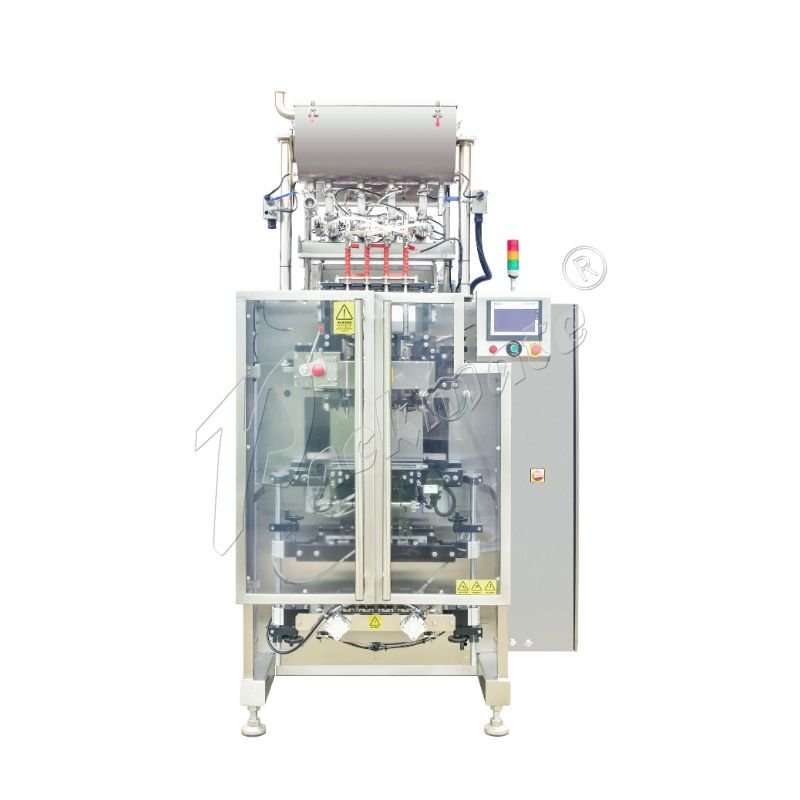
- Film Unwinding & Forming: The packaging material (laminated film) is fed from a roll and formed into a tube around a vertical collar.
- Product Filling: The measured dose of powder, granule, or liquid is injected into the formed tube.
- Sealing & Cutting: Horizontal and vertical seals create individual pouches or sachets, which are then cut apart.
- Optional Secondary Packaging: Individual sachets can be automatically collated, counted, and cartoned.
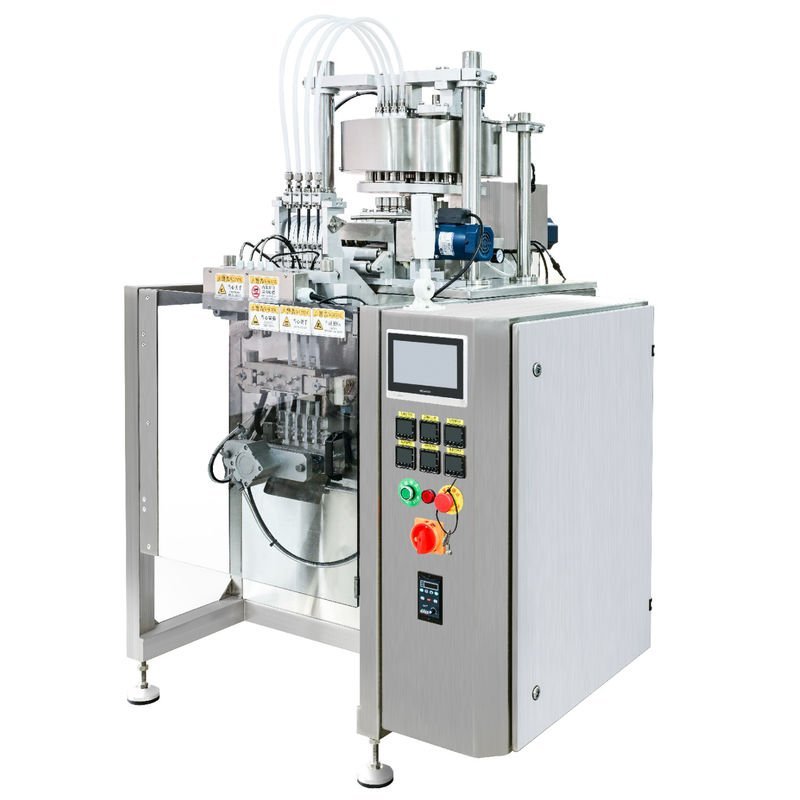
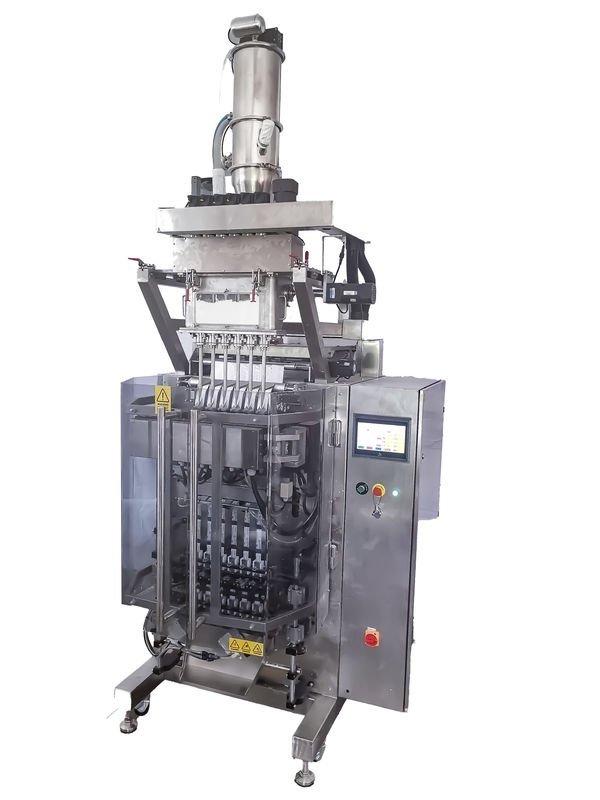
Beyond the primary packager, auxiliary equipment is vital. This includes checkweighers to verify each packet’s weight, metal detectors for contamination control, and vision inspection systems to check seal integrity and print quality. For high-volume outputs like stick packs for powders or liquid doses, multi-lane sachet and stick pack machines dramatically increase throughput by running several packaging lanes simultaneously.
Benefits of Automating Your Pharma Packaging Process
Transitioning from semi-automatic to fully automatic systems delivers transformative advantages.
- Enhanced Compliance & Traceability: Automated systems reduce human intervention, minimizing contamination risk. They also digitally record production data, simplifying audits and compliance with FDA 21 CFR Part 11 and other regulations.
- Superior Product Protection: Precise control over the sealing environment (temperature, pressure) and the option for gas flushing create a superior protective barrier compared to manual methods.
- Dramatic Efficiency Gains: Automatic systems operate at consistent high speeds, significantly boosting output per shift and reducing labor costs per unit.
- Reduced Material Waste: High filling accuracy means less product giveaway. Precise film feeding and cutting also minimize packaging material waste.
Choosing the Right Partner for Your Packaging Solution
Investing in pharmaceutical packaging machinery is a long-term decision. The manufacturer’s expertise, quality standards, and support network are as important as the machine’s specifications. A partner with deep industry experience, like Packmate Machinery, understands these nuances. They don’t just sell a machine; they provide a validated, turnkey solution that includes factory acceptance testing (FAT), installation support, operator training, and readily available spare parts. Reviewing real-world application cases can provide valuable insight into a supplier’s capability.
Frequently Asked Questions (FAQs)
1. What level of accuracy can I expect from an automatic powder filler?
High-quality pharmaceutical auger fillers can typically achieve filling accuracies within ±0.5% to ±1.0% of the target weight, depending on the powder’s characteristics (flowability, density). Systems with feedback from in-line checkweighers can further enhance consistency.
2. Can one machine handle both powder and granules?
Some versatile machines are designed with interchangeable filling systems. For instance, a machine might use an auger filler for powders and switch to a volumetric cup filler for granules. However, for optimal performance and minimal cross-contamination, dedicated lines are often recommended for high-volume, different product types.
3. How important is GMP (Good Manufacturing Practice) in machine design?
It is absolutely critical. Pharmaceutical packaging machines should be designed with GMP principles: easy-to-clean surfaces with no crevices, use of sanitary-grade materials (e.g., 304 or 316L stainless steel), and documentation supporting material certifications. This design is essential for passing facility audits.
4. What is the typical lead time for a custom pharmaceutical packaging line?
Lead times vary based on complexity and customization. A standard machine might be delivered in 8-12 weeks, while a fully customized, validated turnkey line could take 4-6 months or more. Clear communication of requirements with the manufacturer early in the process is key to setting accurate timelines.
5. What kind of after-sales support should I look for?
Comprehensive support includes detailed installation guidance, on-site or remote operator training, a readily available inventory of common spare parts, and access to technical service engineers for troubleshooting. A reliable partner offers long-term support to ensure your line’s uptime and productivity.