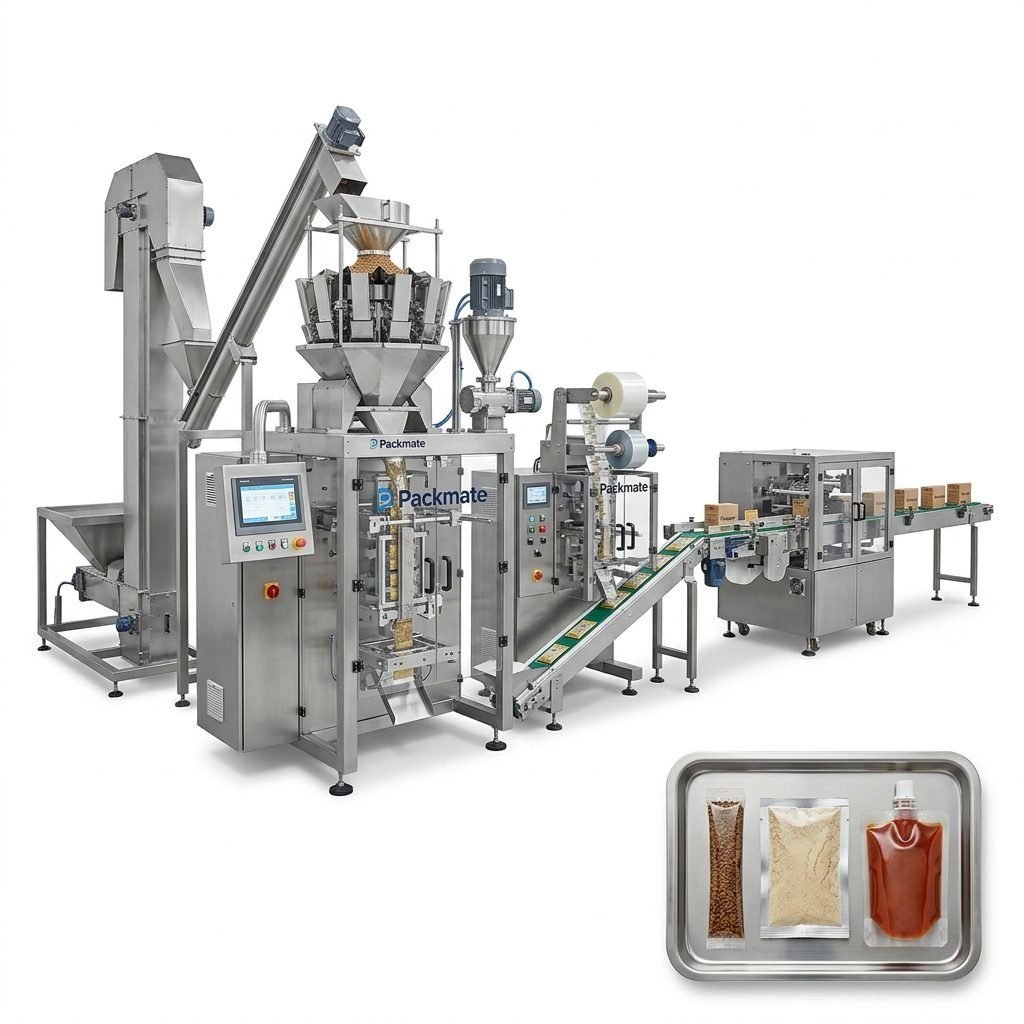
Choosing the right automatic powder packaging machine is a critical decision for any production facility. It directly impacts efficiency, product consistency, operational costs, and your ability to scale. With a vast array of manufacturers and models available, selecting the ideal solution requires careful consideration of your specific product, output requirements, and long-term goals.
Understanding Your Core Packaging Requirements
Before evaluating any machine, you must clearly define your needs. This foundational step prevents costly mismatches and ensures the equipment you select is truly fit for purpose.
Key Factors to Define:
Product Characteristics: Is your powder fine, coarse, free-flowing, or cohesive? Does it have high fat content, are there any abrasive or hygroscopic properties? This determines the type of feeding system (auger, volumetric cup, net weigh scale) required.
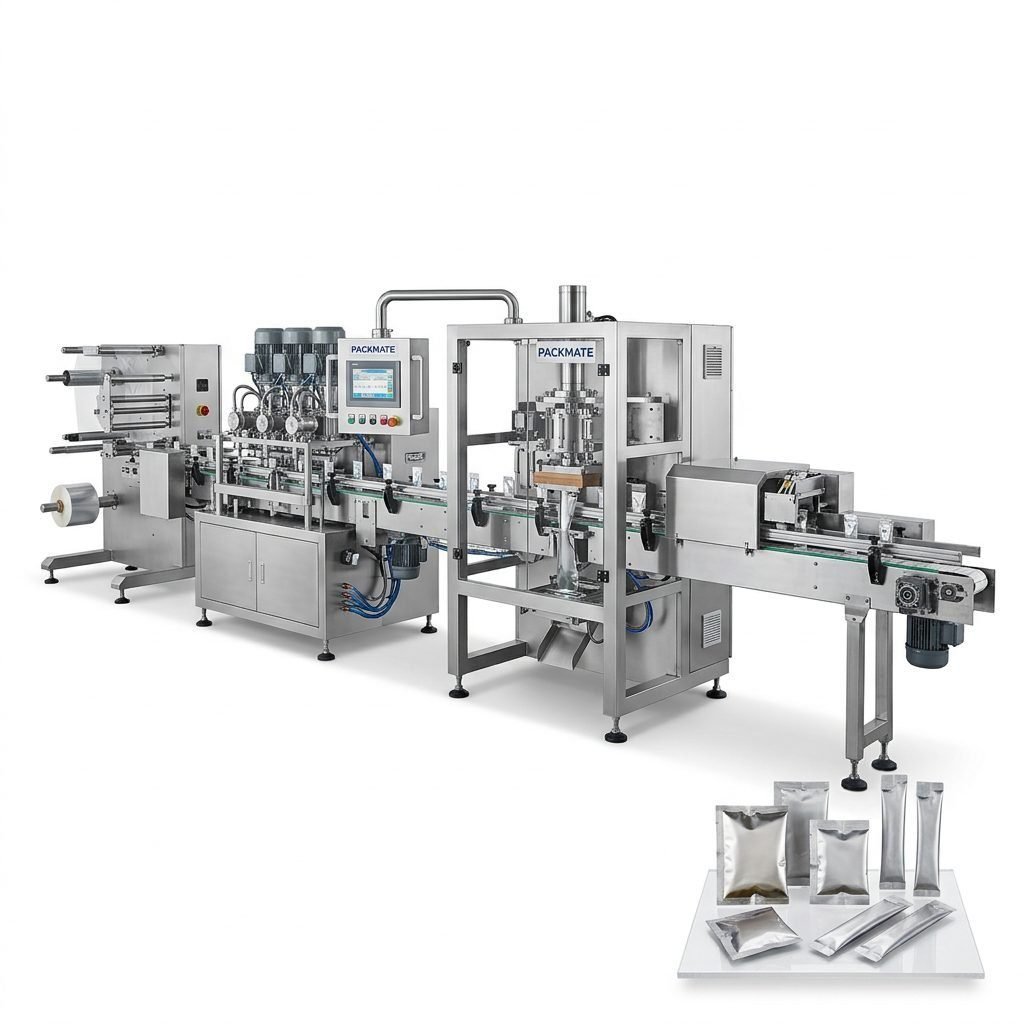
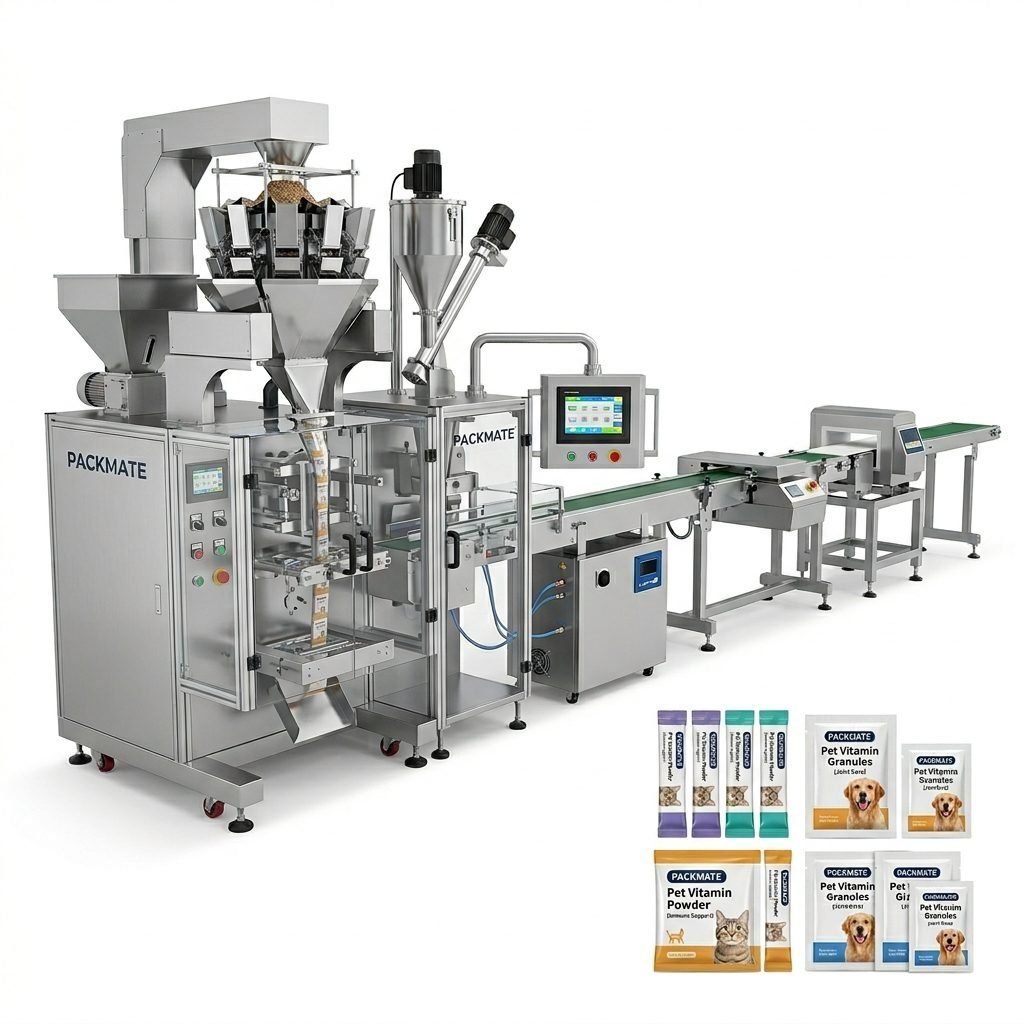
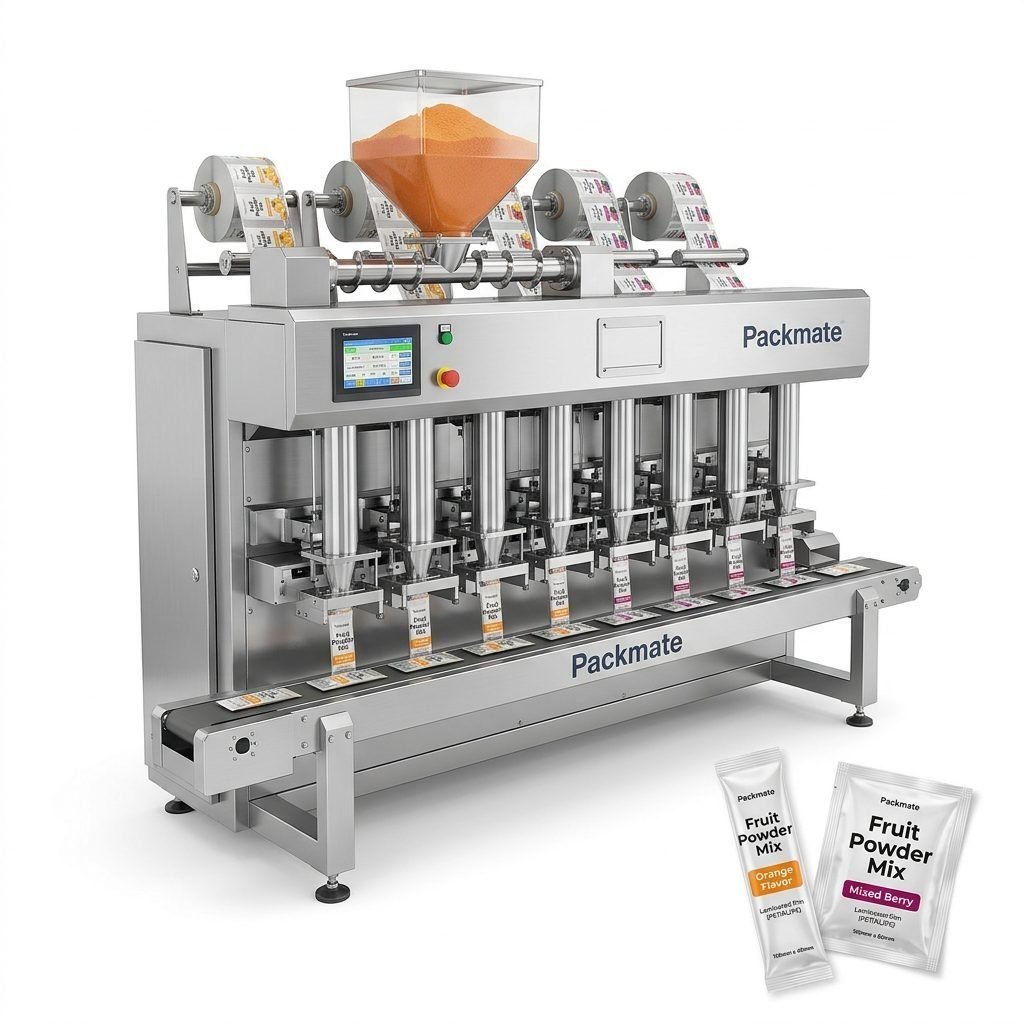
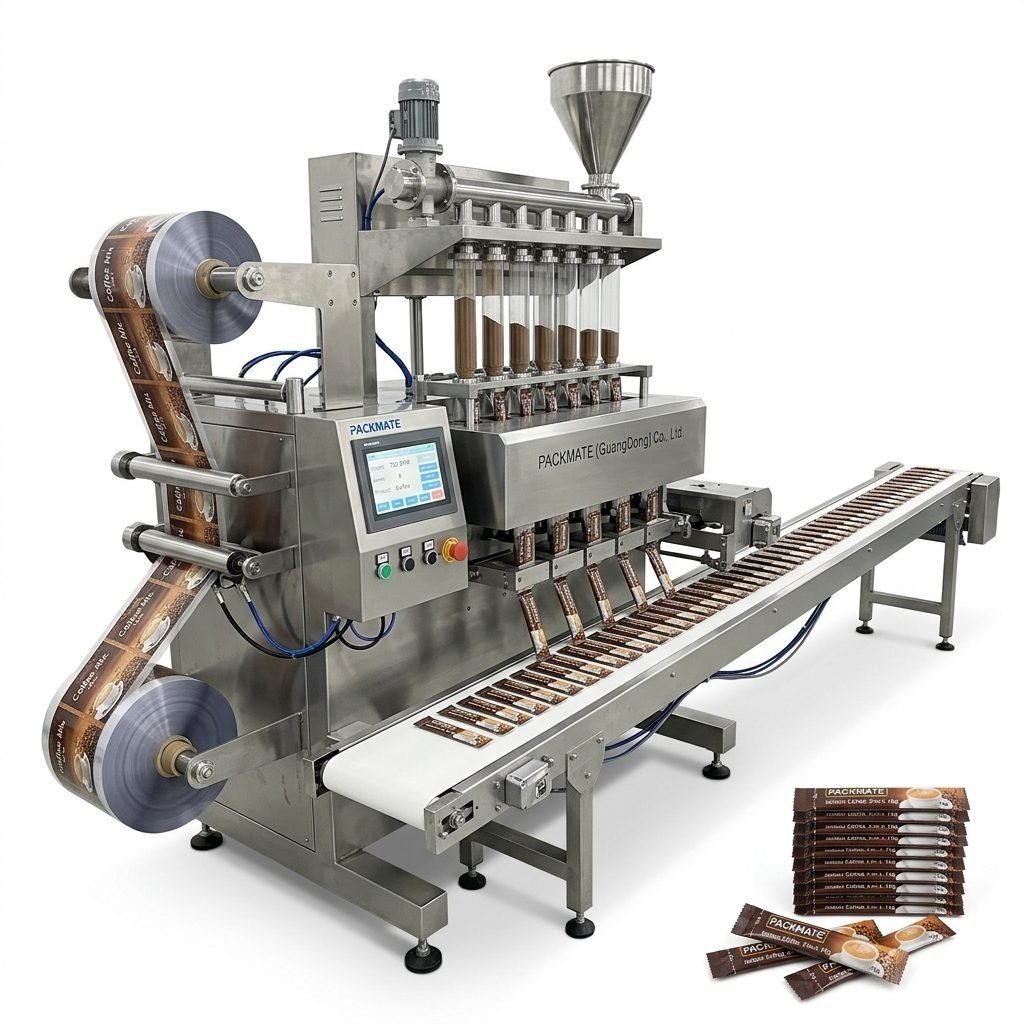
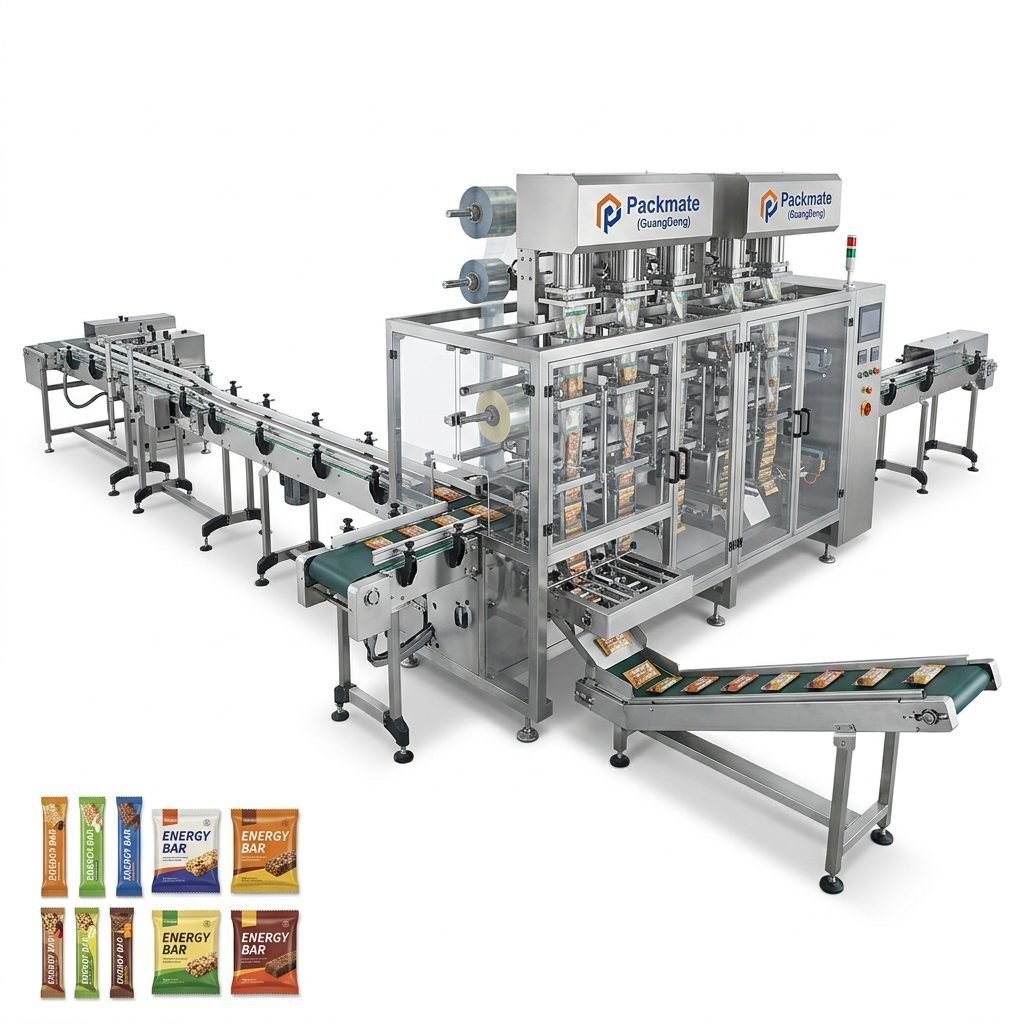
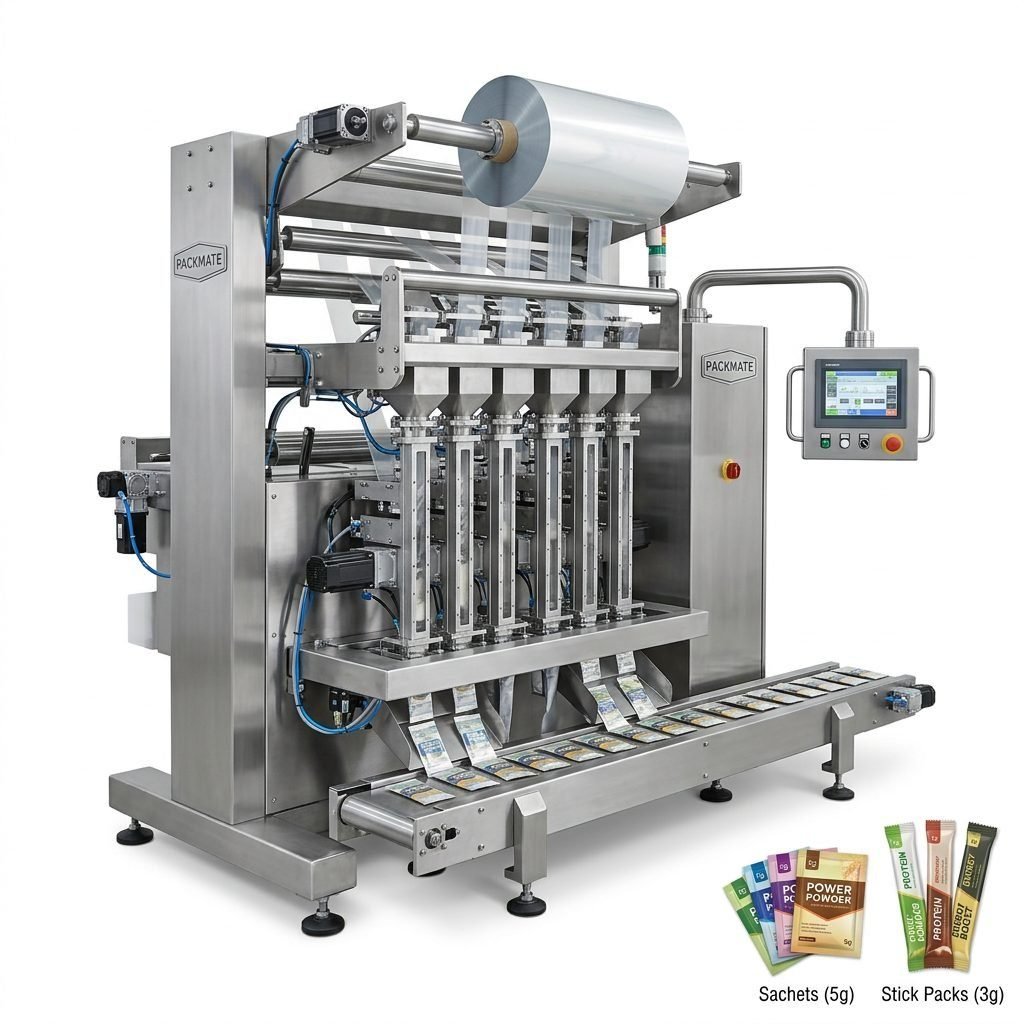
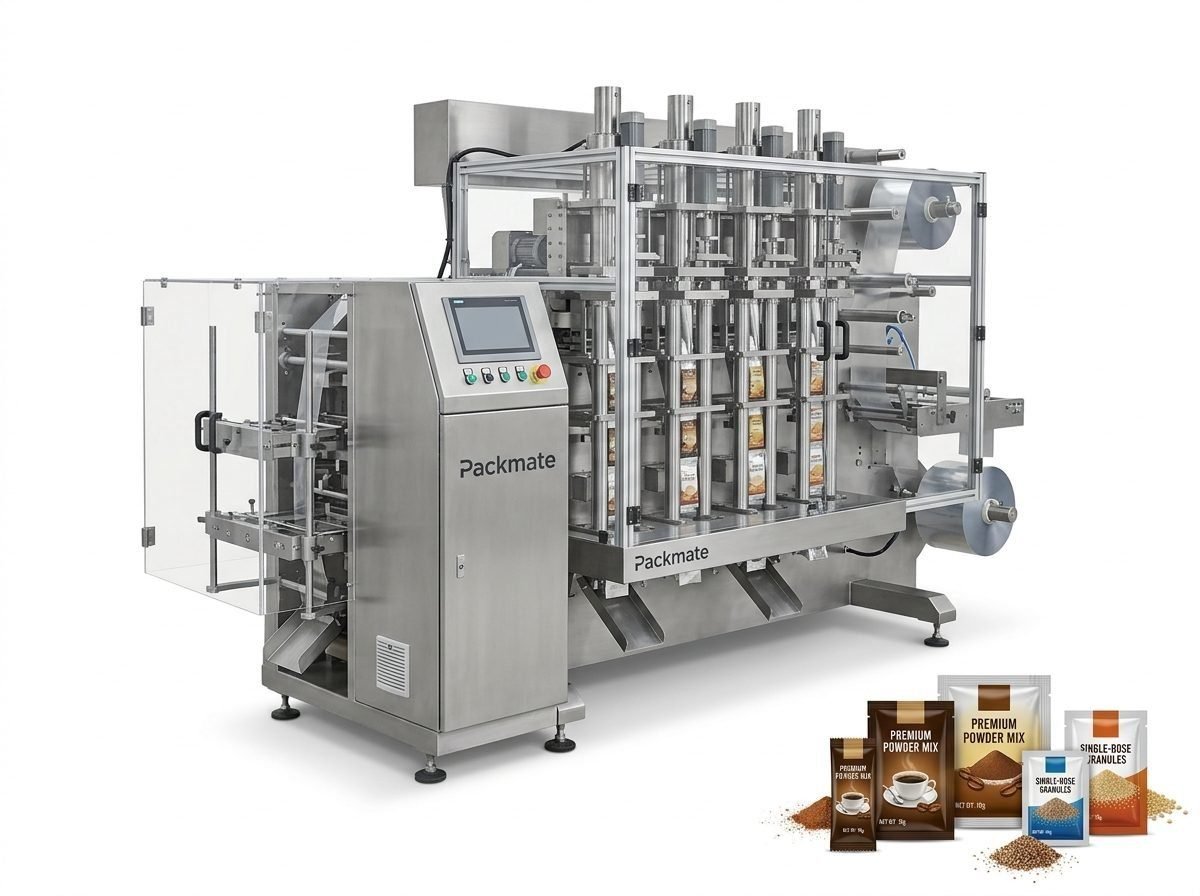
Packaging Format: Will you be producing stick packs, sachets, pouches, or bulk bags? Each format requires a different machine type, from vertical form-fill-seal (VFFS) systems to dedicated stick pack machines.
Production Speed (Output): Calculate your required output in bags or pouches per minute (BPM/PPM). This is a primary driver in deciding between single-lane, dual-lane, or high-speed multi-lane systems.
Accuracy and Dose Weight: What is your target fill weight and the permissible tolerance? Pharmaceutical and premium supplement packaging demand much higher precision than, for instance, some food powders.
Future Scalability: Do you anticipate significant growth in production volume? Choosing a modular system or a manufacturer that offers upgrade paths can protect your investment.
The Role of Automation Level
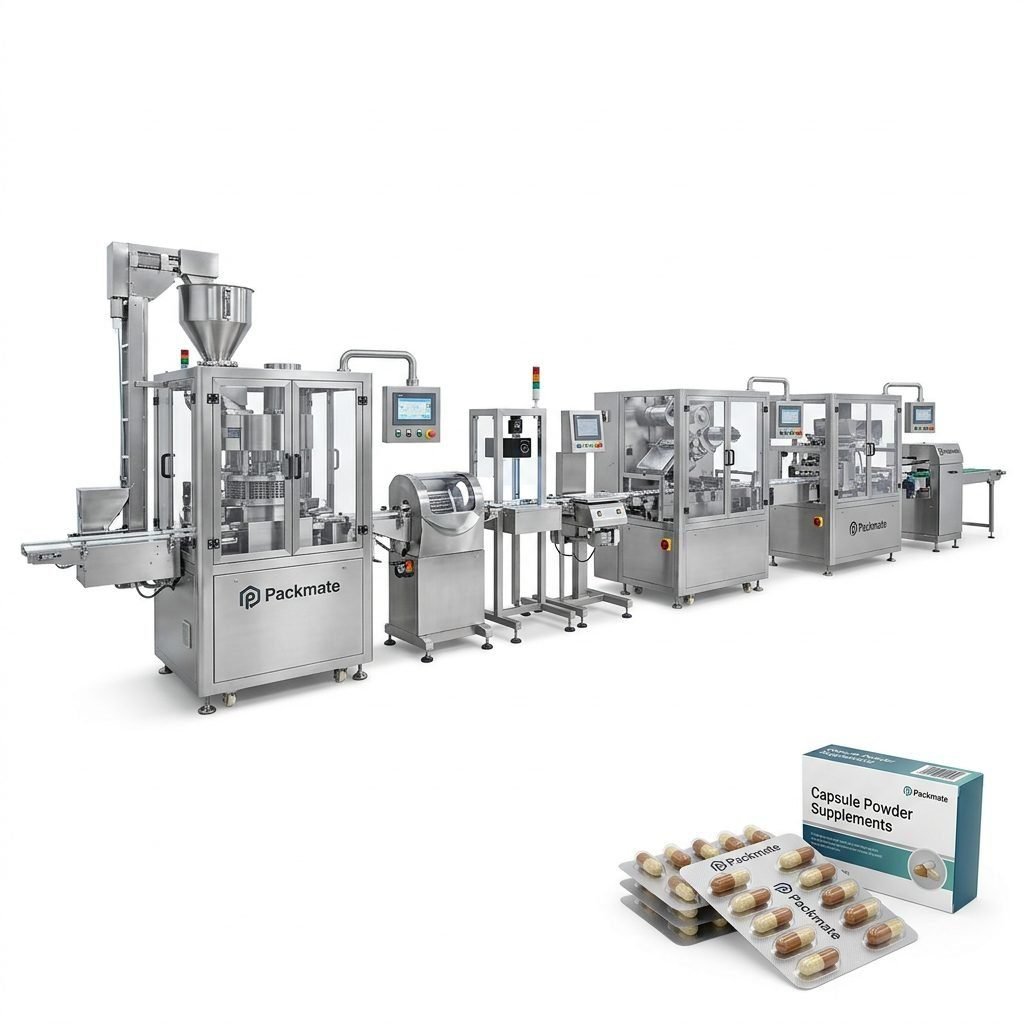
Automatic powder packaging machines range from semi-automatic units to fully integrated, turnkey packaging lines. A semi-automatic machine may require manual bag placement and indexing, suitable for lower volumes or pilot production. A fully automatic system incorporates automated film feeding, forming, filling, sealing, coding, and often downstream processes like cartoning or case packing. The higher initial investment in full automation is justified by dramatic labor savings, increased consistency, and higher throughput.
Critical Technical Features to Evaluate
Once your requirements are clear, focus on the technical specifications and build quality of the machines under consideration.
1. Filling System Technology
The heart of any powder packager. Auger fillers are the most common, using a rotating screw to dispense product. Look for servo-driven augers for superior accuracy, anti-bridging features, and easy-clean designs. For ultra-high precision or difficult powders, net weigh scales or combination weigh systems are the gold standard, though they are more complex and costly.
2. Machine Construction and Hygiene
For food, pharmaceutical, or health supplement applications, hygiene is non-negotiable. Prioritize machines with frames and product contact parts made of stainless steel (304 or 316 grade). Smooth, crevice-free surfaces and CIP (Clean-in-Place) capabilities significantly reduce downtime for changeovers and cleaning.
3. Control System and HMI
The machine’s brain. A modern, user-friendly Human-Machine Interface (HMI) touchscreen allows for easy recipe storage, quick changeovers, and real-time monitoring of production data, speed, and error logs. PLC-based systems from reputable brands (e.g., Siemens, Mitsubishi) offer reliability and easier servicing.
4. Sealing System
Consistent, strong seals are vital for product integrity and shelf life. Evaluate the sealing technology (hot bar, impulse, ultrasonic) for your specific packaging film material (laminate, polyethylene, etc.). Machines with adjustable temperature, pressure, and dwell time controls provide the flexibility needed for perfect seals across different materials.
Navigating the Supplier Landscape
Choosing a reliable manufacturer is as important as choosing the right machine. Consider companies with a proven track record in your specific industry. For example, manufacturers like Ludyway, with over 30 years of experience, have developed deep application knowledge for food, pharma, and supplement powders. Similarly, for specialized segments like nicotine pouches, a focused supplier like SnusMachinery offers niche expertise that general manufacturers may lack.
| Supplier Consideration | Why It Matters |
|---|---|
| Industry Experience & Specialization | A supplier familiar with your product’s challenges can preempt issues and suggest optimal configurations. |
| Technical Support & Spare Parts | Availability of local engineers or responsive remote support and a comprehensive spare parts inventory minimize production stoppages. |
| Customization Capability | If your needs are unique, a manufacturer skilled in non-standard and customized solutions is essential. |
| Factory Visit & Testing | The ability to see the machine being built and to conduct a live test with your actual product is invaluable for verifying performance. |
Cost Considerations: Beyond the Purchase Price
The initial machine cost is just one component of the total cost of ownership (TCO). A cheaper machine with lower efficiency, higher waste, and frequent breakdowns will ultimately cost more.
Operational Costs: Factor in energy consumption, compressed air usage, and the cost of consumables like sealing jaws and cutting blades.
Material Waste: A high-precision filler minimizes give-away (overfilling), saving significant material costs over time. Also, consider the machine’s film waste during forming and sealing.
Labor Efficiency: A fully automatic, multi-lane system may have a high price tag but can replace several operators, offering a rapid return on investment (ROI) through labor savings and increased output.
Maintenance & Downtime: Robustly built machines from established suppliers like Packmate Machinery may have higher upfront costs but typically offer greater reliability, reducing costly unplanned downtime.
Planning for Integration and Future Growth
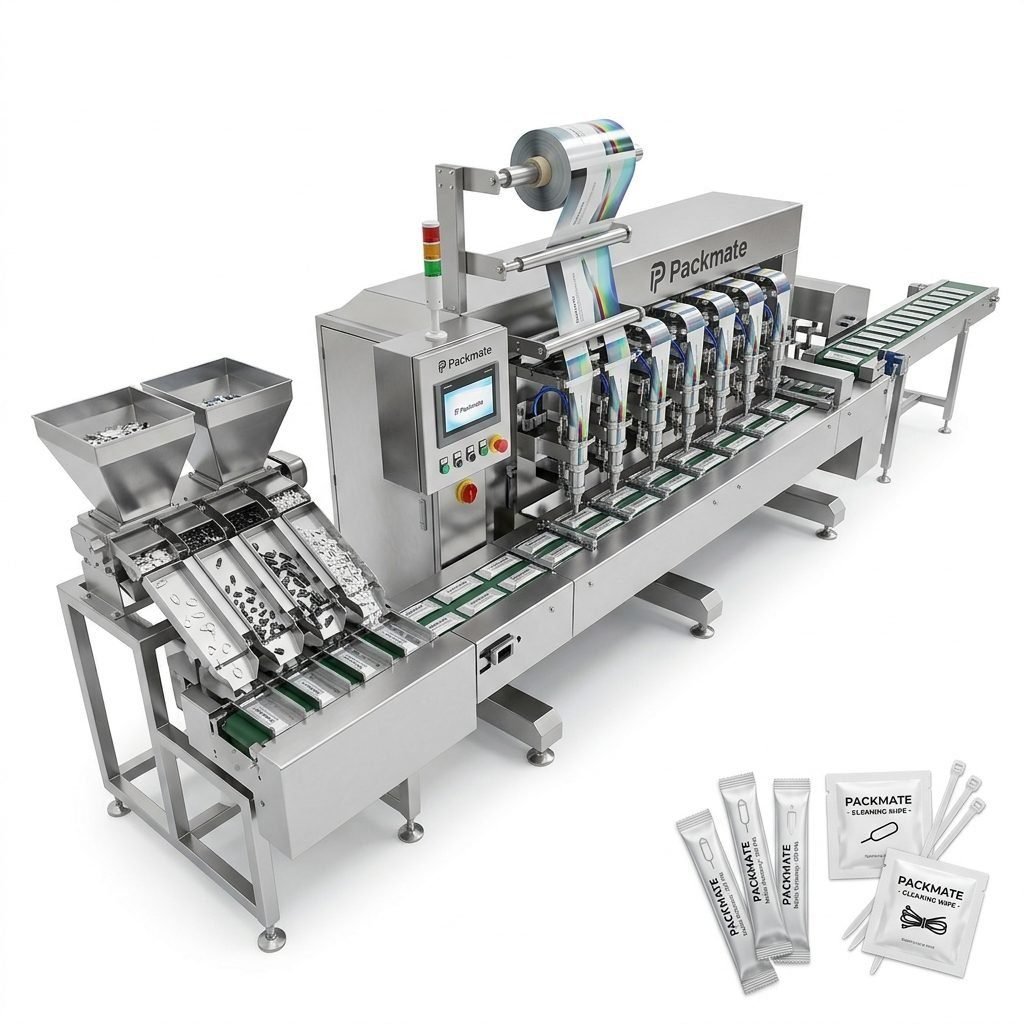
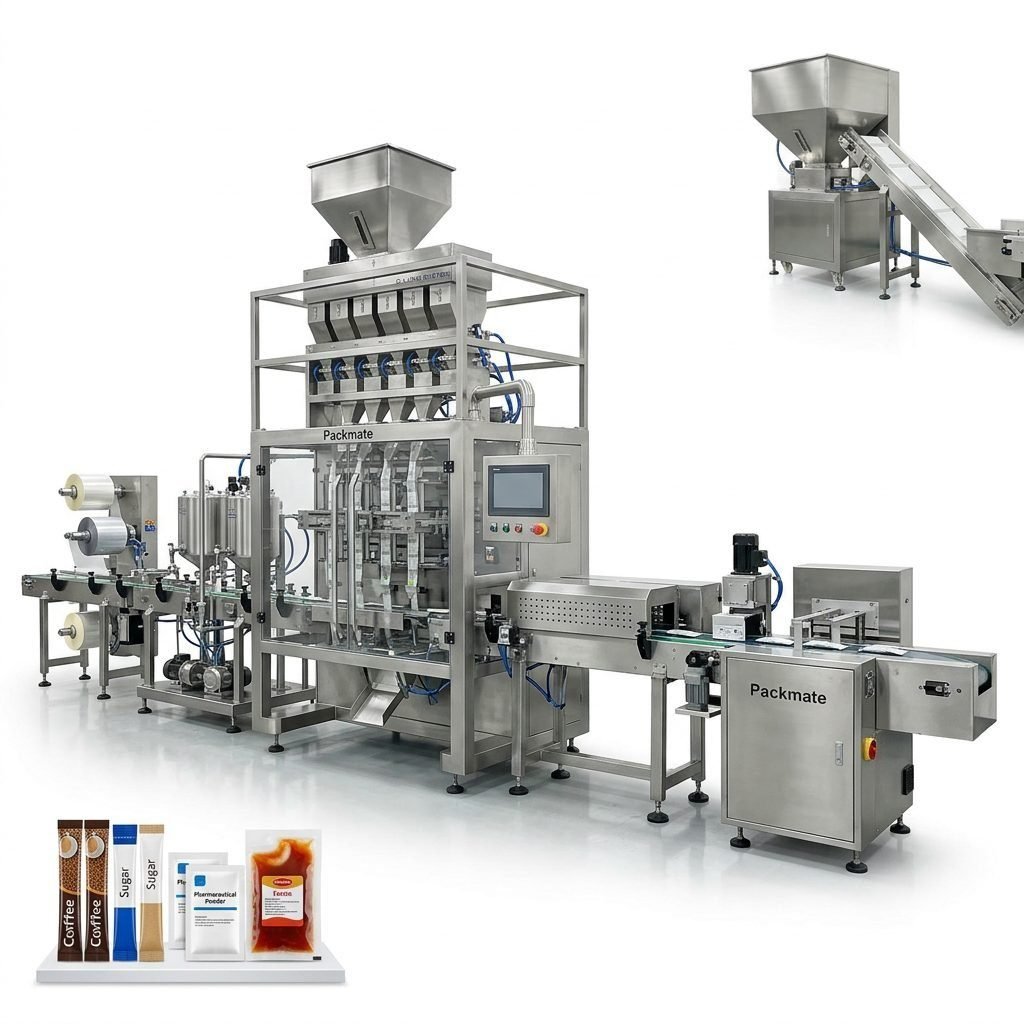
Think beyond the standalone machine. How will it integrate into your current production line? Consider space requirements, utility connections (power, air), and material handling (powder feeding, packaged product evacuation). If you plan to expand, discuss with your supplier whether the machine can be upgraded with additional lanes or integrated with downstream equipment such as checkweighers, metal detectors, cartoners, or case packers. A modular design philosophy is a key advantage for growing businesses.
Final Selection and Implementation
The final step involves a detailed comparison of shortlisted options. Create a weighted scoring matrix based on your defined criteria: technical specs, supplier reputation, cost of ownership, and after-sales support. Always insist on a factory acceptance test (FAT) using your product and packaging materials. This is the final proof of performance before the machine ships.
Frequently Asked Questions (FAQs)
Q: What is the typical accuracy range for an automatic powder packaging machine?
A: It varies by technology. Standard auger fillers can achieve ±1-2% accuracy. Servo-driven augers or volumetric cup fillers can reach ±0.5-1%. For the highest precision (e.g., ±0.1-0.5%), a net weigh scale system is required.
Q: How long does it take to changeover between different products or bag sizes?
A: Changeover time depends on machine design. Modern machines with tool-less changeover features and digital recipe recall can switch formats in 15-30 minutes. More complex changes may take an hour or more.
Q: Can one machine handle both stick packs and sachets?
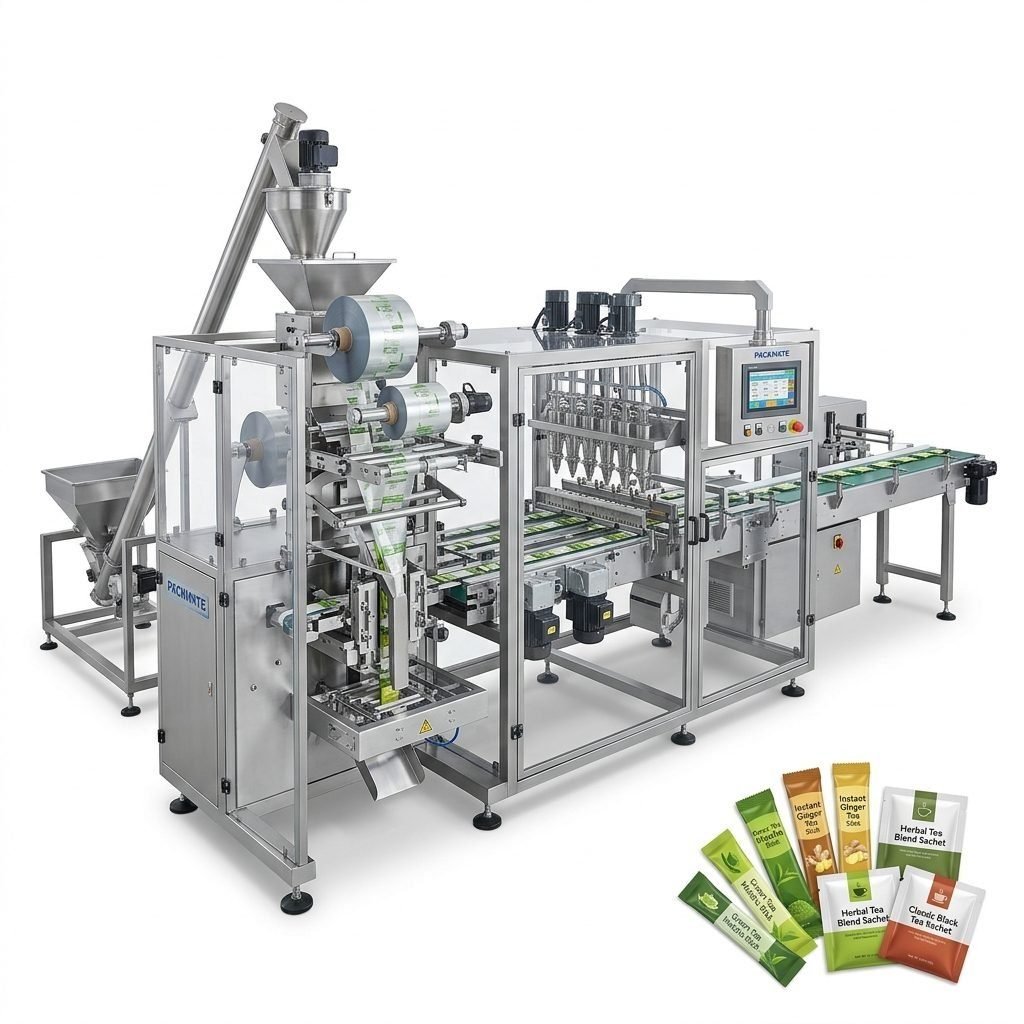
A: Some versatile vertical form-fill-seal (VFFS) machines can produce both by changing the forming tube and sealing jaws. However, dedicated multi-lane stick pack machines are optimized for high-speed production of that specific format.
Q: What are the most common causes of downtime in powder packaging?
A: Frequent causes include powder bridging in the hopper leading to inconsistent fills, film tracking issues, sealing problems due to temperature fluctuations or contaminated sealing surfaces, and general mechanical wear. Proper maintenance and operator training are crucial.
Q: Is it better to buy a standalone machine or a complete turnkey line?
A: For new product lines or major capacity expansions, a turnkey solution from a single supplier ensures all components work harmoniously and provides a single point of responsibility. For replacing a single machine in an existing line, a standalone unit may be sufficient if integration is well-planned.