Investing in a coffee sachet packing machine is a critical decision for any producer looking to scale, improve efficiency, and ensure consistent product quality. This guide provides a comprehensive overview of the different types of machines, their key features, and a detailed framework to help you select the best equipment for your specific needs.
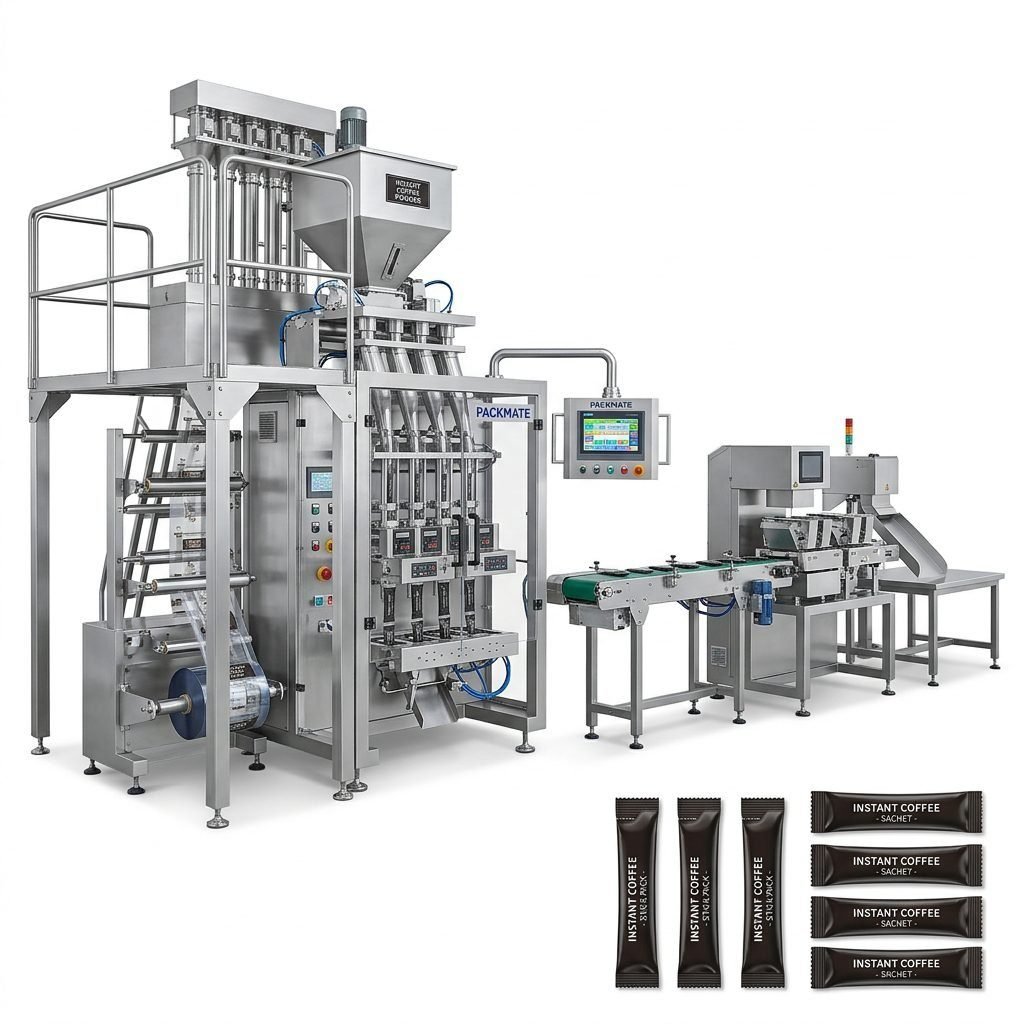
Understanding Coffee Sachet Packaging Machines
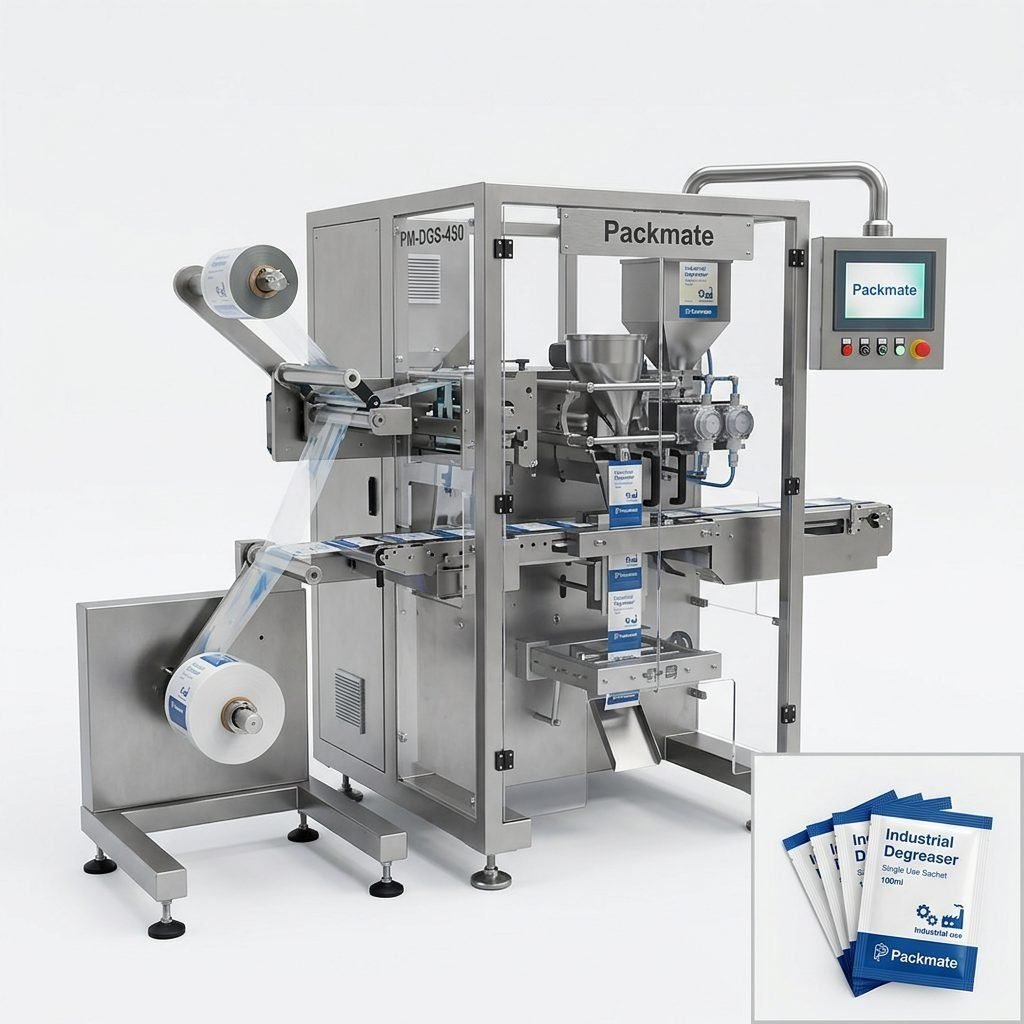
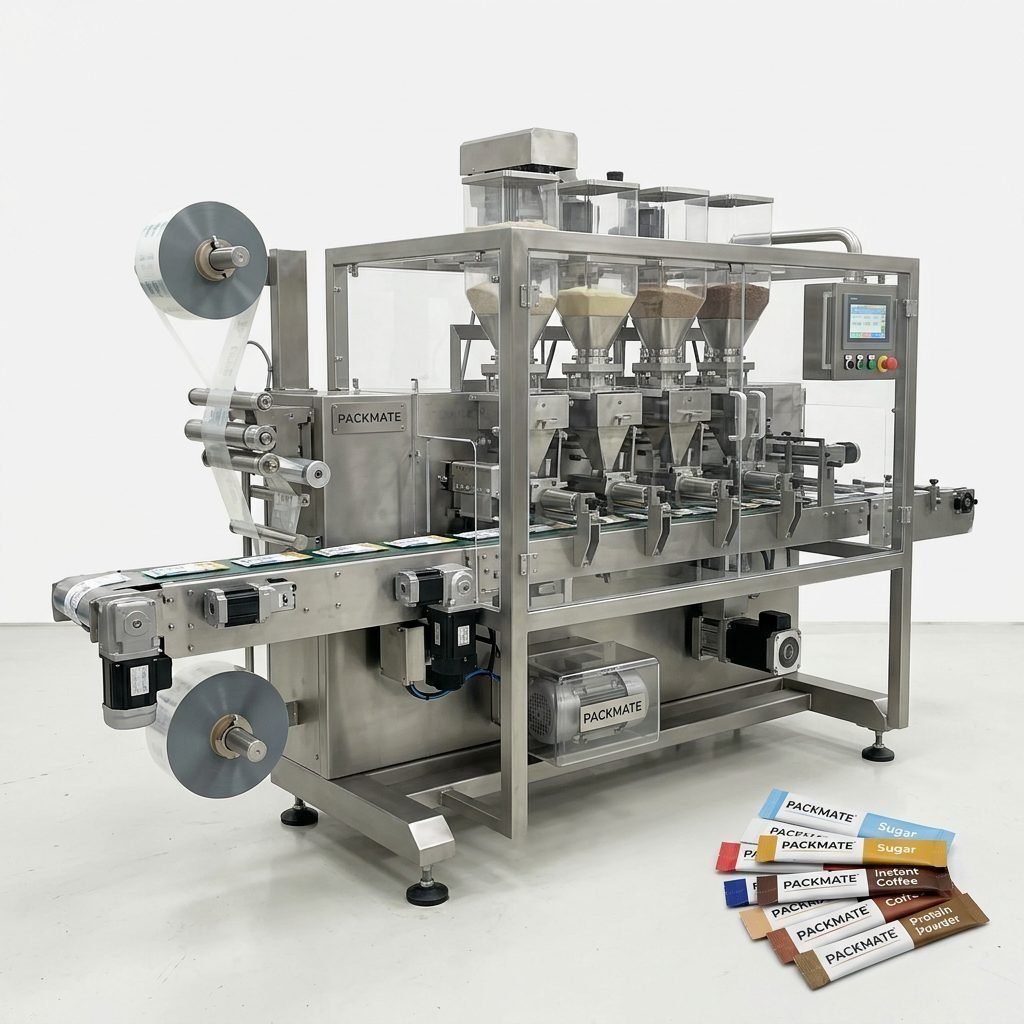
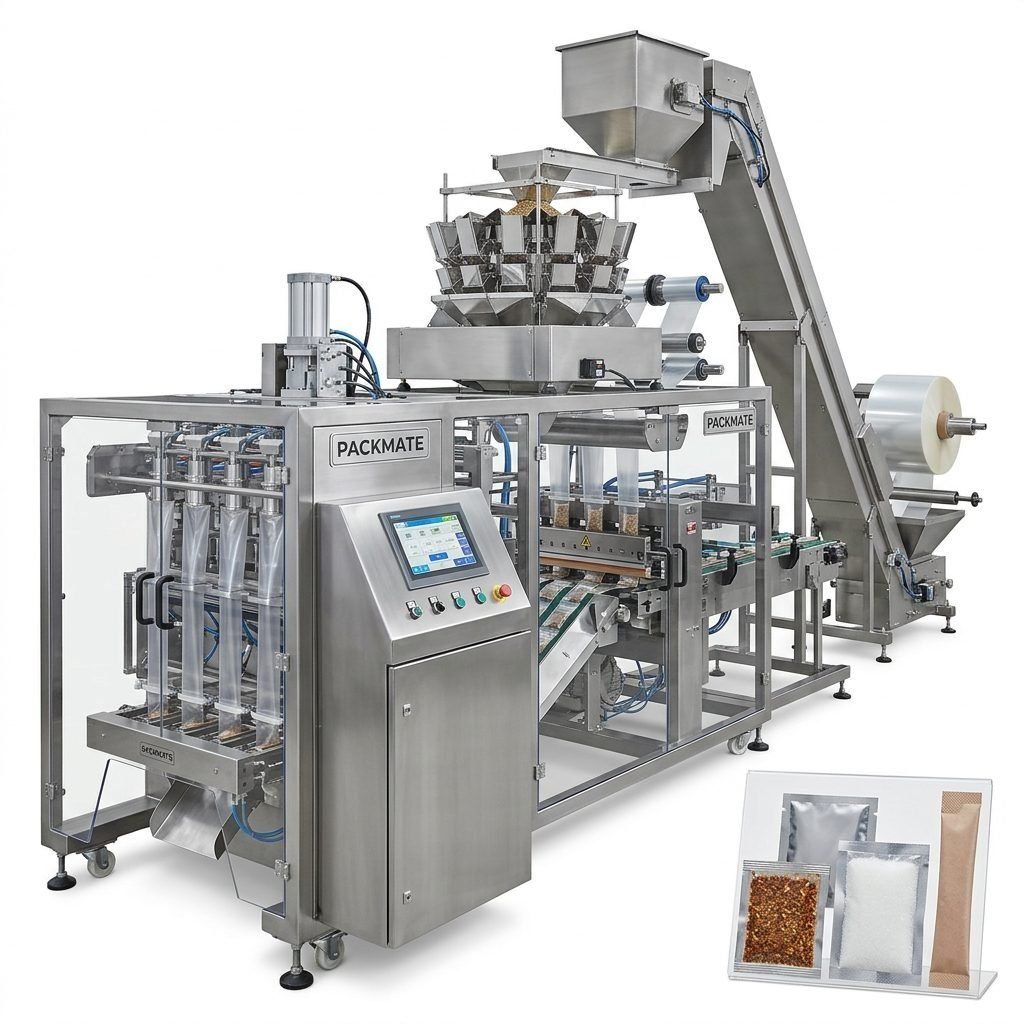
Coffee sachet packing machines are specialized vertical form-fill-seal (VFFS) machines designed to create, fill, and seal single-serve packets from a roll of packaging film. These machines handle various coffee formats, including fine powder, granules, and even instant coffee mixes. The primary goal is to achieve high-speed, accurate, and hygienic packaging that protects the coffee’s aroma, flavor, and shelf life.
Core Working Principle
The process typically involves a film roll being fed into the machine, where it is formed into a tube around a filling cylinder. The vertical back seal is created, and the bottom of the pouch is sealed. Precisely measured coffee is then dispensed into the pouch. Finally, the top of the filled pouch is sealed, and the individual sachet is cut from the film tube. Modern machines are fully automated, integrating auger fillers or weigh scales for precision dosing and programmable logic controllers (PLCs) for seamless operation.
Main Types of Coffee Sachet Packing Machines
Choosing the right type depends heavily on your production volume, budget, and desired level of automation.
1. Single-Lane Machines
These are the most basic and cost-effective models, producing one sachet at a time. Ideal for small businesses, startups, or low-volume production (e.g., specialty or artisanal coffee roasters). They offer simplicity and a lower initial investment but have a limited output, typically ranging from 30 to 60 bags per minute.
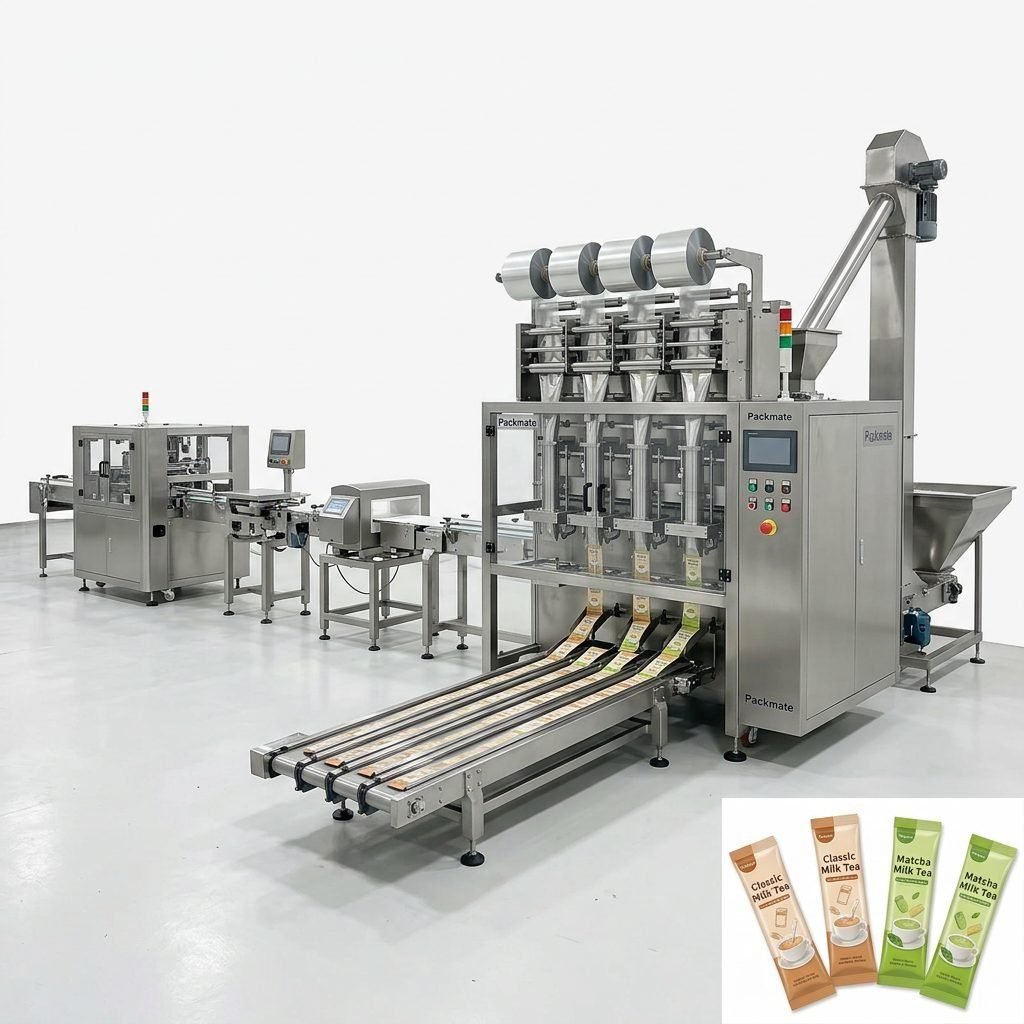
2. Multi-Lane Machines
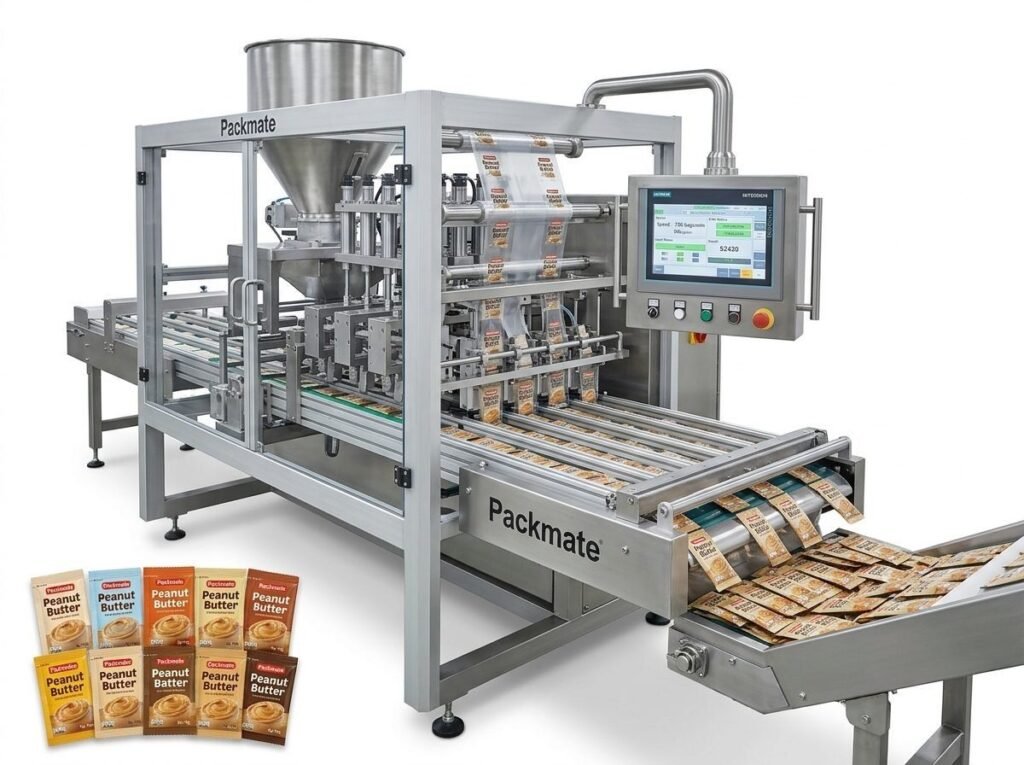
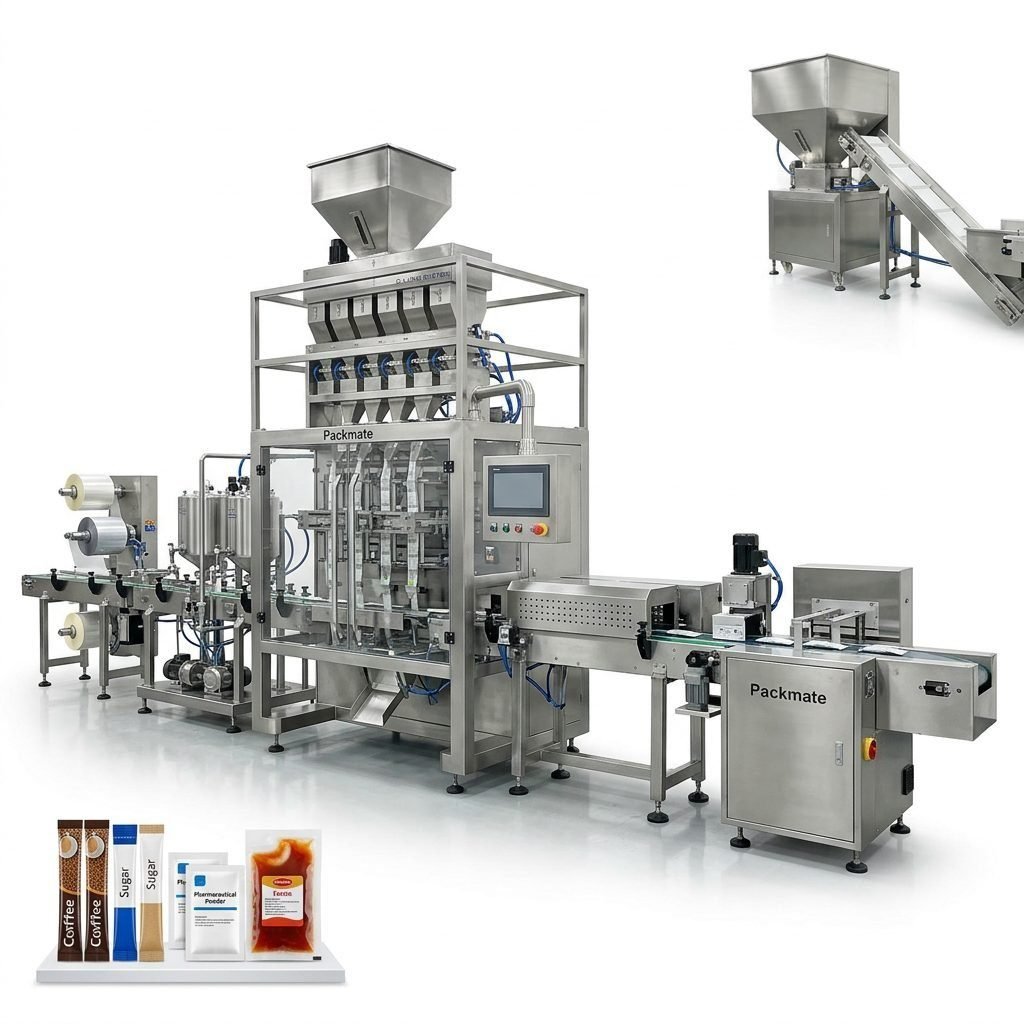
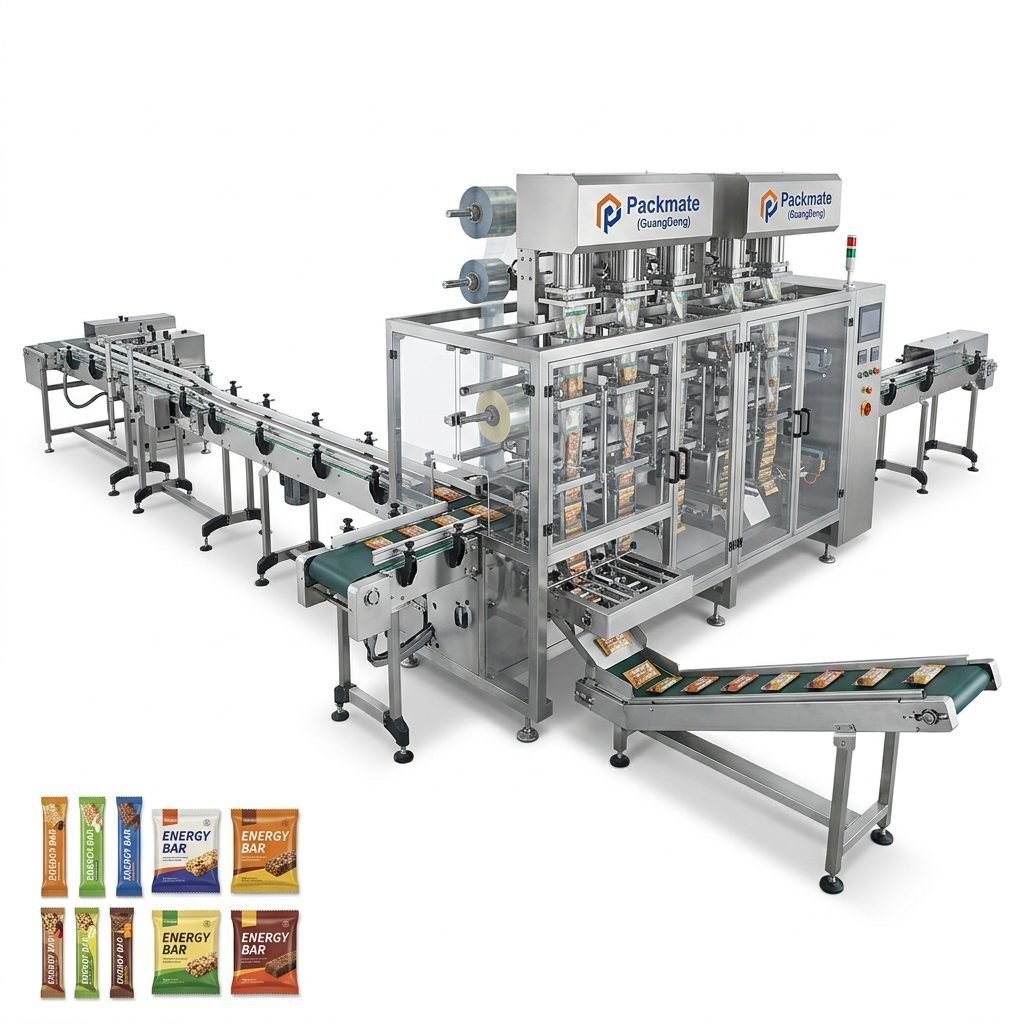
This is the most common type for medium to large-scale commercial production. Multi-lane machines feature multiple filling heads (from 2 to 16 or more) operating in parallel, dramatically increasing output. They are the workhorses of the industry, capable of producing hundreds of sachets per minute, making them perfect for brands supplying supermarkets, hotels, and offices.
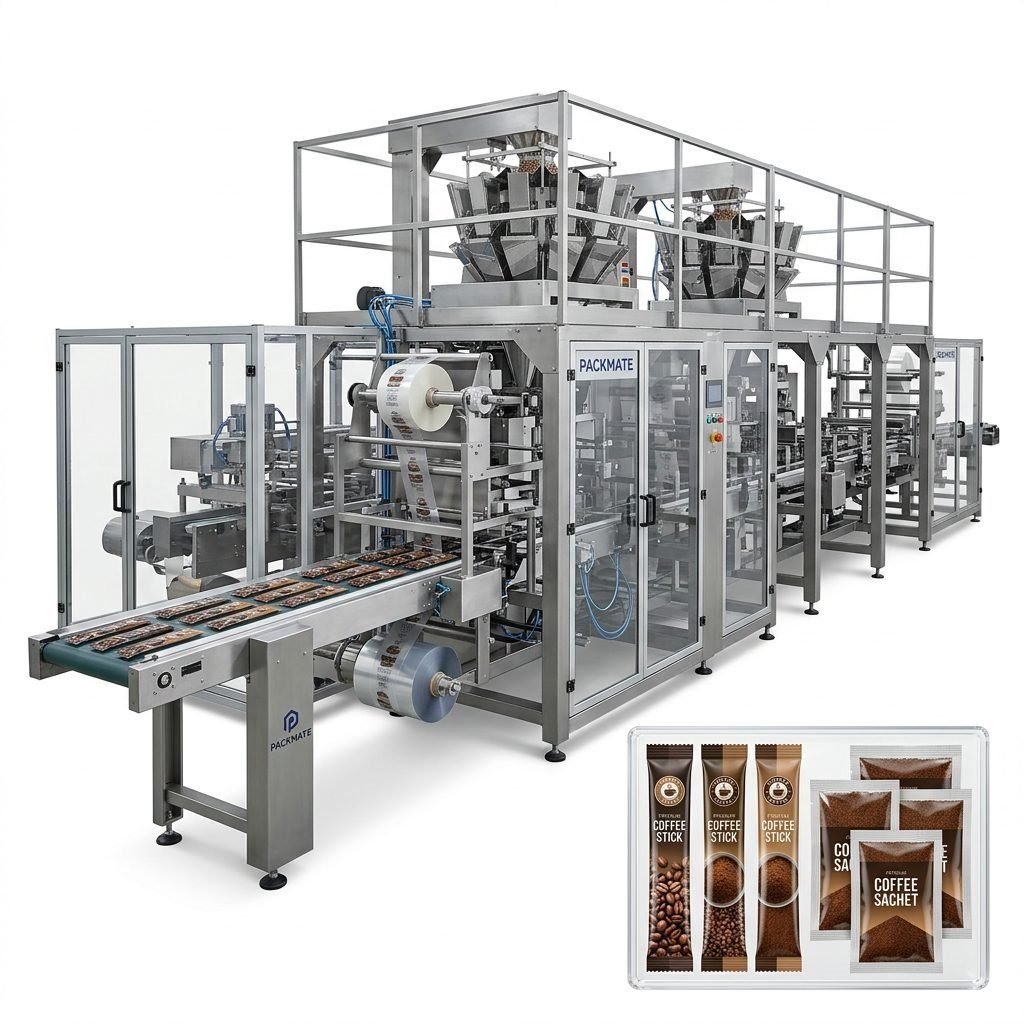
3. Integrated Turnkey Lines
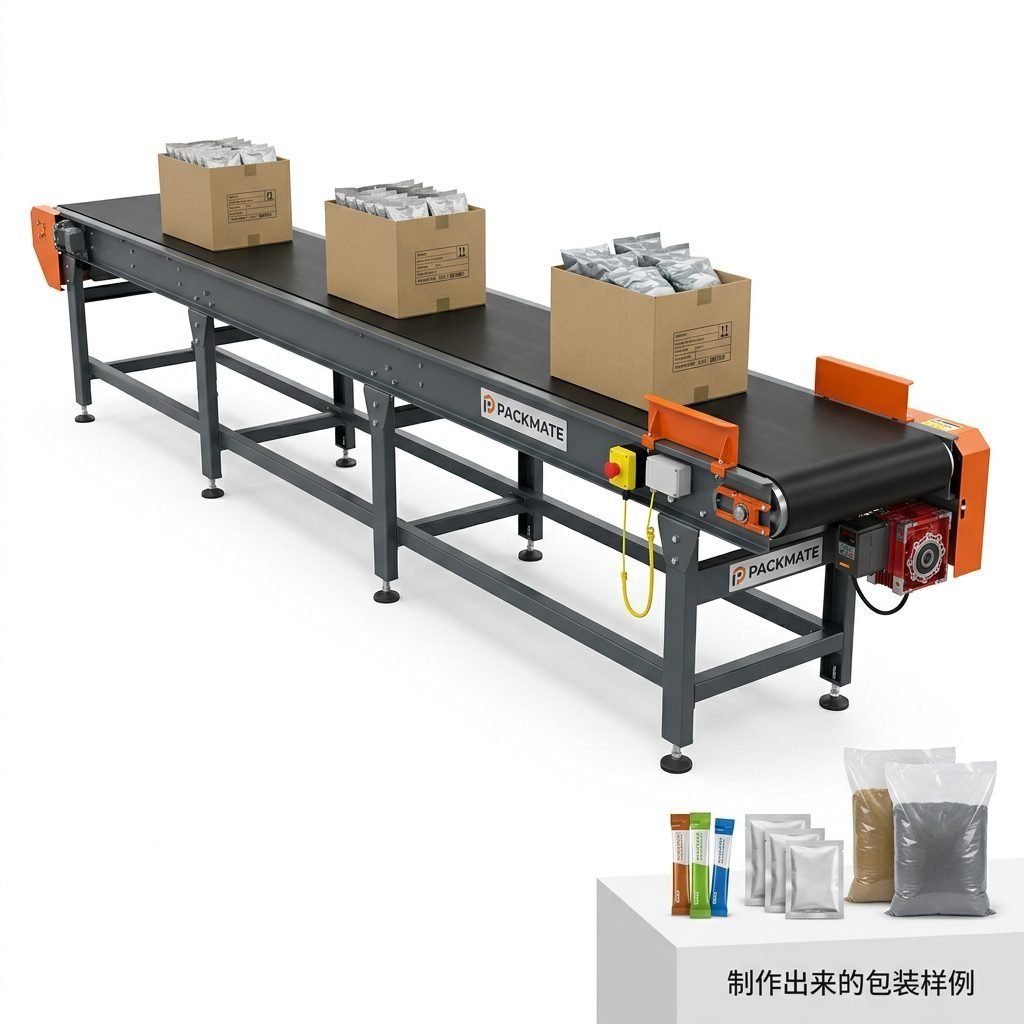
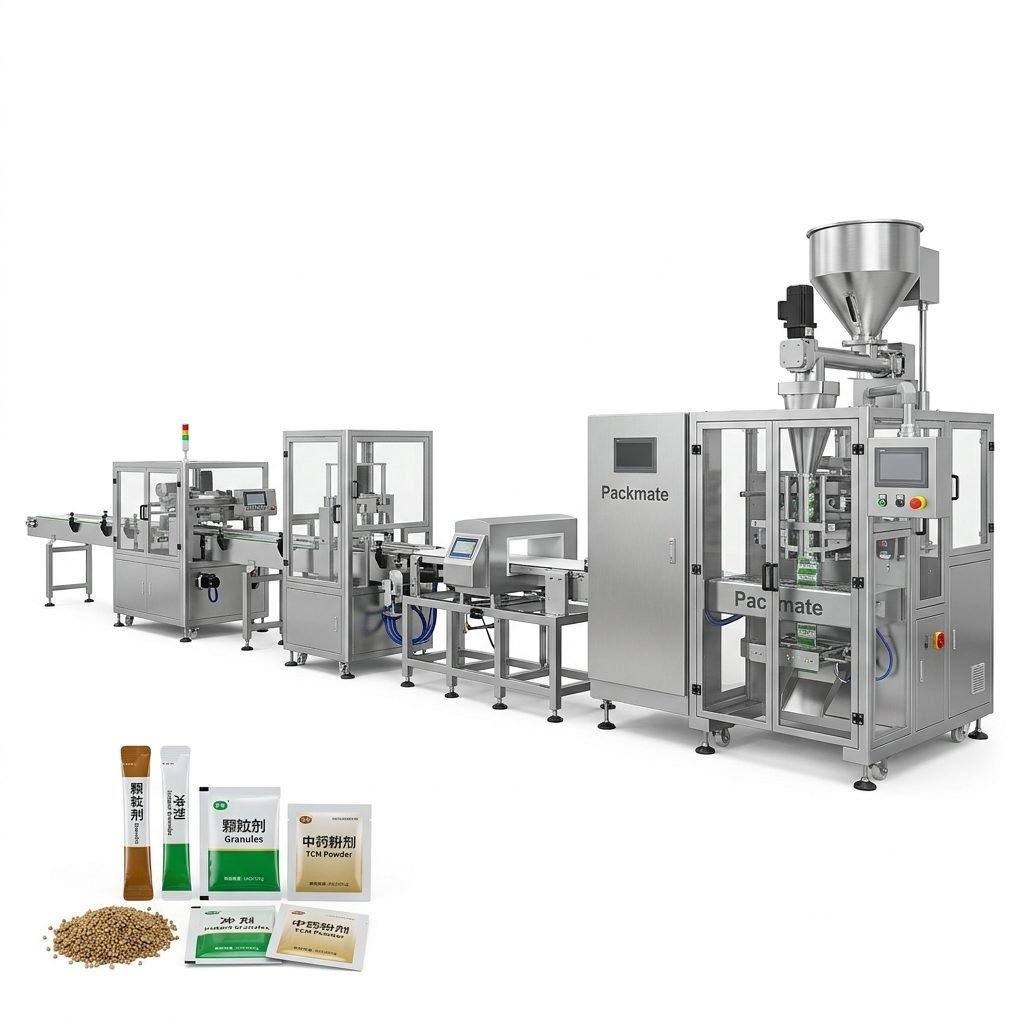
For maximum automation, a turnkey line goes beyond the primary packing machine. It integrates additional modules like an automatic feeding system, checkweigher, metal detector, date coder, and cartoning system. This creates a continuous, start-to-finish production line with minimal manual intervention, maximizing efficiency and consistency for high-volume manufacturers.
Key Features & Technological Considerations
When evaluating machines, look beyond the basic type. These features determine performance, reliability, and suitability for your product.
| Feature | Description & Importance |
|---|---|
| Filling System | Auger fillers (volumetric) are common for powders/granules. For higher precision, especially with valuable products, multi-head weighers or linear weigh scales are superior, ensuring each sachet contains the exact specified weight. |
| Sealing Mechanism | Crucial for freshness. Look for robust heat sealing with precise temperature control. Some machines offer gas flushing (nitrogen) capability before sealing to displace oxygen, significantly extending shelf life and preserving aroma. |
| Machine Construction | Food-grade stainless steel (especially contact parts) is essential for hygiene, durability, and corrosion resistance. A sturdy frame ensures stability during high-speed operation and reduces vibration. |
| Control System | A user-friendly touchscreen HMI (Human-Machine Interface) and a reliable PLC allow for easy parameter setting (bag size, weight, speed), recipe storage, and troubleshooting. Modern machines often feature data tracking and connectivity for Industry 4.0 integration. |
| Changeover Flexibility | If you produce multiple coffee blends or sachet sizes, quick changeover is vital. Look for machines with tool-less adjustments for forming tubes, fillers, and sealing jaws to minimize downtime between production runs. |
How to Choose the Best Machine: A Step-by-Step Guide
Step 1: Assess Your Production Requirements
This is the foundation of your decision. Clearly define:
- Output (Speed): Required bags per minute/hour/shift. Factor in future growth.
- Sachet Specifications: Size (dimensions), weight range, and packaging material (laminated film, foil, filter paper).
- Coffee Format: Fine espresso powder, coarse grind, granules, or mixed instant coffee. This dictates the best filling system.
Step 2: Determine Your Automation Level
Balance your budget with labor costs and desired efficiency.
- Basic Semi-Auto: Manual feeding, single-lane. Low cost, high labor.
- Fully Auto Standalone: Automatic feeding and discharge. Good for focused sachet production.
- Fully Integrated Line: Includes all downstream equipment (checkweigher, cartoner). Maximizes output and minimizes labor.
Step 3: Evaluate Key Supplier Factors
The machine is only as good as the company behind it. Research potential suppliers like Ludyway, Packmate Machinery, PacklineOEM, PackingMachineOEM, and SnusMachinery. Consider:
- Experience & Reputation: Look for manufacturers with a proven track record in food, especially coffee or similar powdered products.
- Technical Support & Service: Availability of spare parts, installation support, training, and after-sales service is critical for minimizing downtime.
- Customization Ability: Can they adapt the machine to your specific film or unusual sachet design?
Step 4: Consider Total Cost of Ownership (TCO)
Look beyond the initial purchase price. Factor in:
- Installation and commissioning costs.
- Cost of spare parts and routine maintenance.
- Energy consumption.
- Potential cost of downtime.
A slightly more expensive, reliable machine from a reputable supplier like Ludyway often has a lower TCO than a cheaper, less reliable alternative.
Step 5: Request a Product Test
Never buy a machine sight-unseen for your product. The most reliable step is to send your actual coffee and packaging material to the supplier for a live test run. This demonstrates the machine’s ability to handle your product’s flow characteristics, achieve the desired fill accuracy, and create a strong, consistent seal with your chosen film.
Market Focus: Catering to Global Coffee Cultures
Coffee consumption habits vary globally, influencing packaging needs. A machine supplier with international experience, like those exporting to Europe, North America, and Southeast Asia, understands these nuances.
- Europe & North America: High demand for single-serve convenience (stick packs for office, hotels) and premium, gas-flushed sachets for specialty ground coffee. Machines need high precision and flexibility for diverse roast profiles.
- Middle East & Southeast Asia: Strong markets for instant coffee mixes (3-in-1) with sugar and creamer. Machines must handle mixed-density products reliably and at high speed.
- South America & Africa: Growing markets for both local roast & ground coffee and instant products. Durability and ease of maintenance in various climates are key considerations.
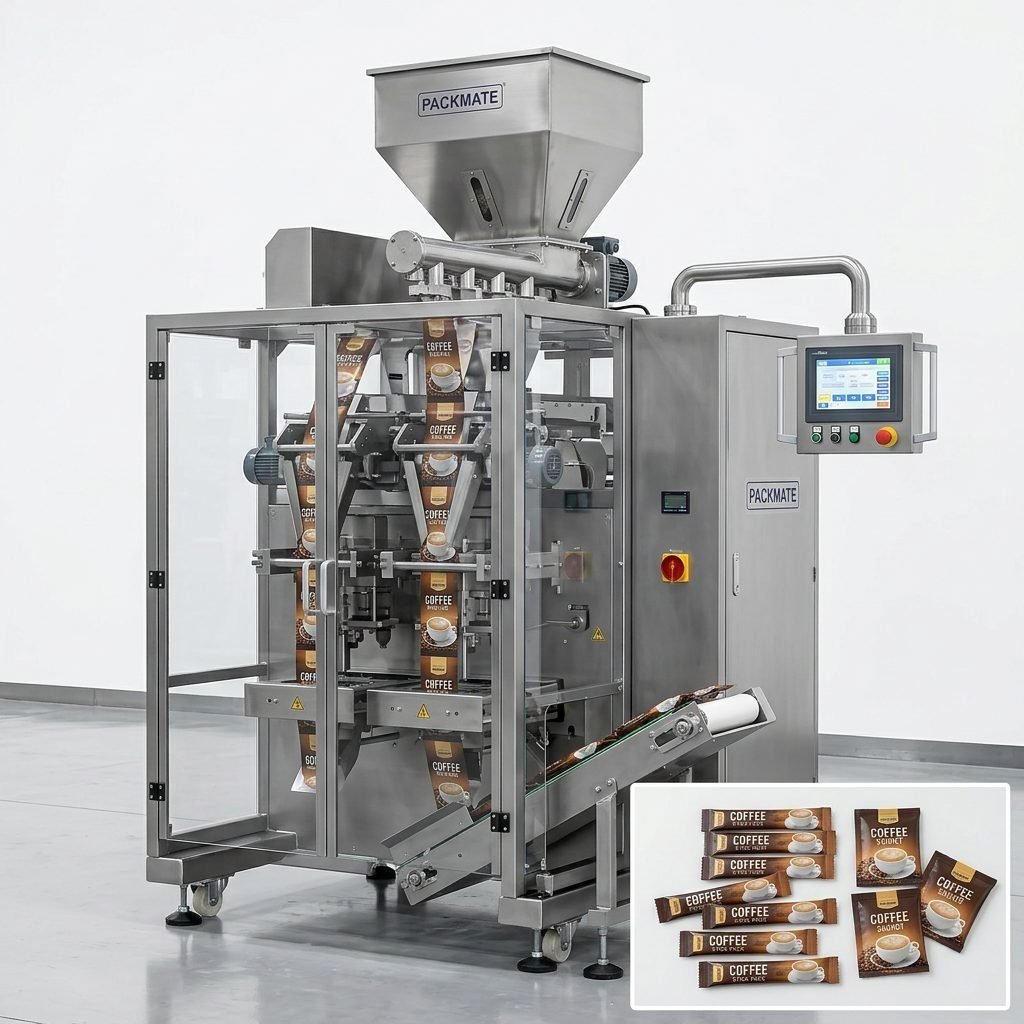
Frequently Asked Questions (FAQs)
What is the typical output speed of a coffee sachet machine?
Speed varies widely. A single-lane machine may produce 40-80 bags per minute (BPM). Multi-lane machines are far more common for commercial production, with speeds ranging from 120 to over 400 BPM, depending on the number of lanes and product characteristics.
Can one machine handle different coffee types (powder vs. granules)?
Yes, but it requires proper configuration. The key is the filling system. An auger filler can often be adjusted or have its screw changed to handle different flow characteristics. For significant product changes, consult with the manufacturer to ensure compatibility.
How important is after-sales service?
Extremely important. Packaging machines are complex and will require maintenance and occasional repairs. A supplier with a strong global service network, readily available spare parts, and responsive technical support is invaluable for minimizing costly production downtime.
What packaging materials are compatible?
Most machines are designed for heat-sealable laminates, which are standard for coffee. Common structures include PET/AL/PE or PET/MPET/PE for barrier properties. It’s crucial to test your specific material with the machine to ensure consistent sealing performance.
Is a gas flushing system necessary?
It is highly recommended for roast and ground coffee to preserve freshness and extend shelf life by displacing oxygen. For instant coffee or products with a very short shelf-life expectation, it may be optional. It adds to the machine’s cost and complexity but is a key quality differentiator.