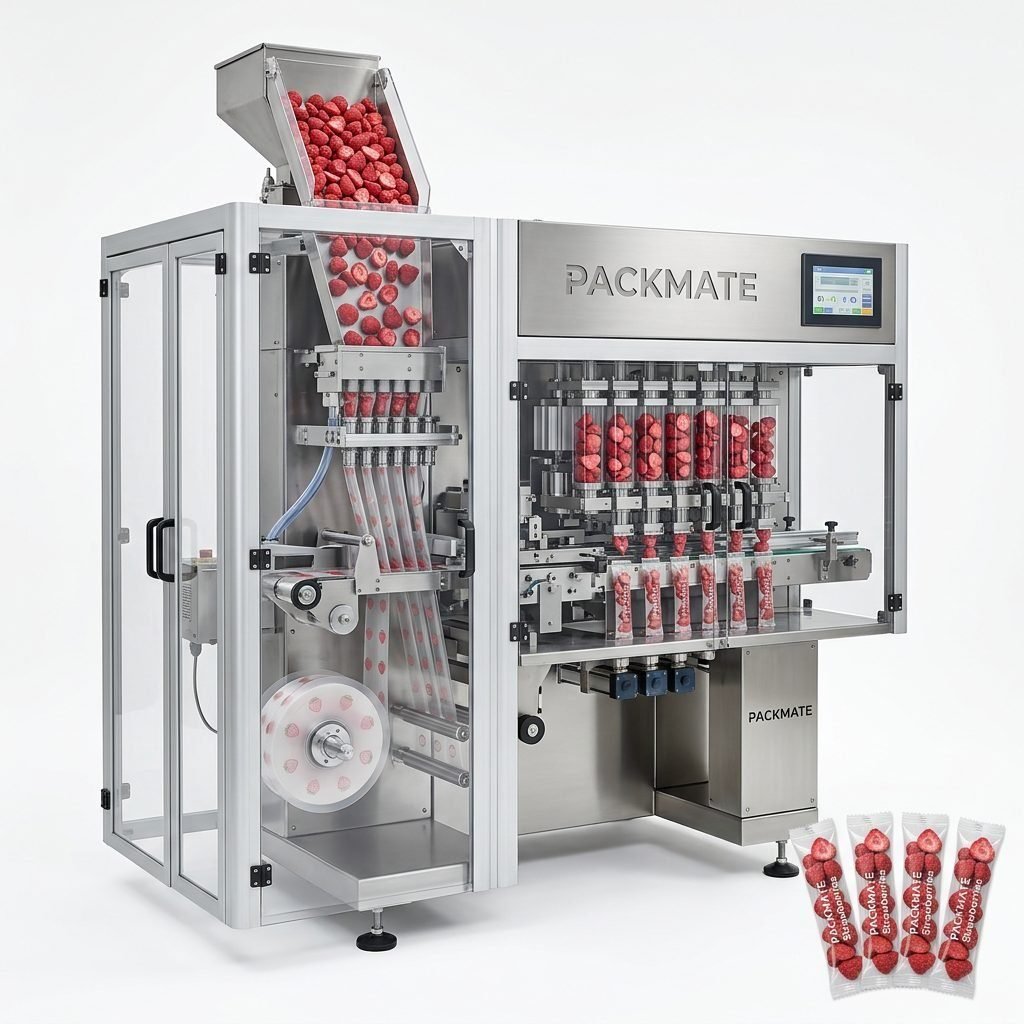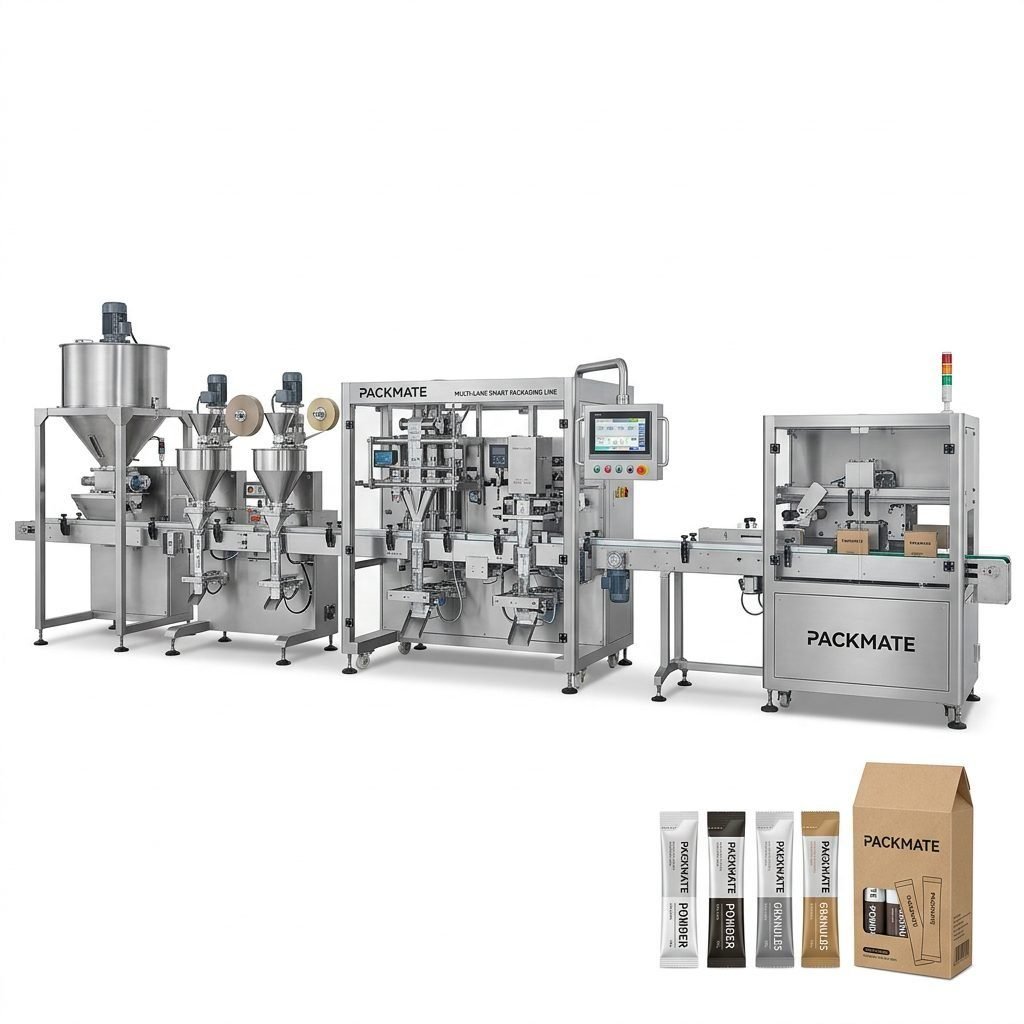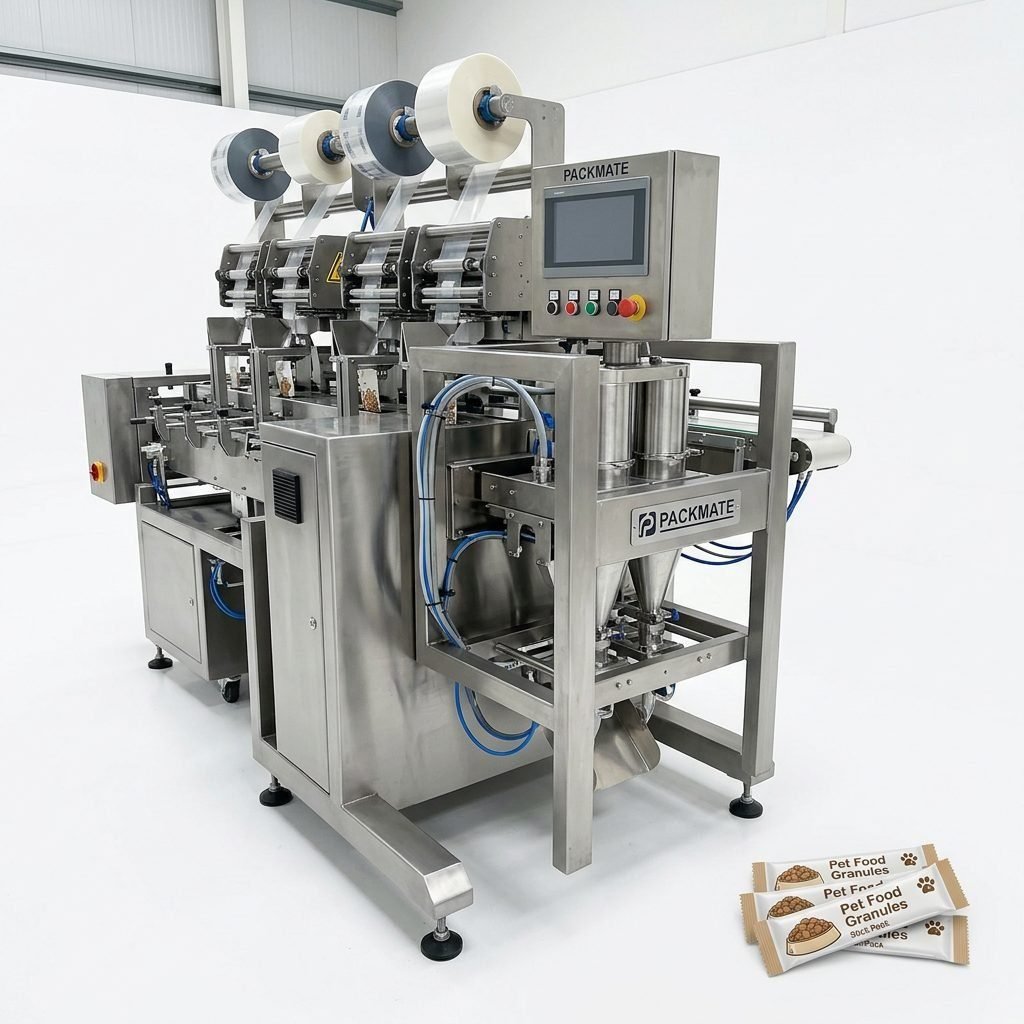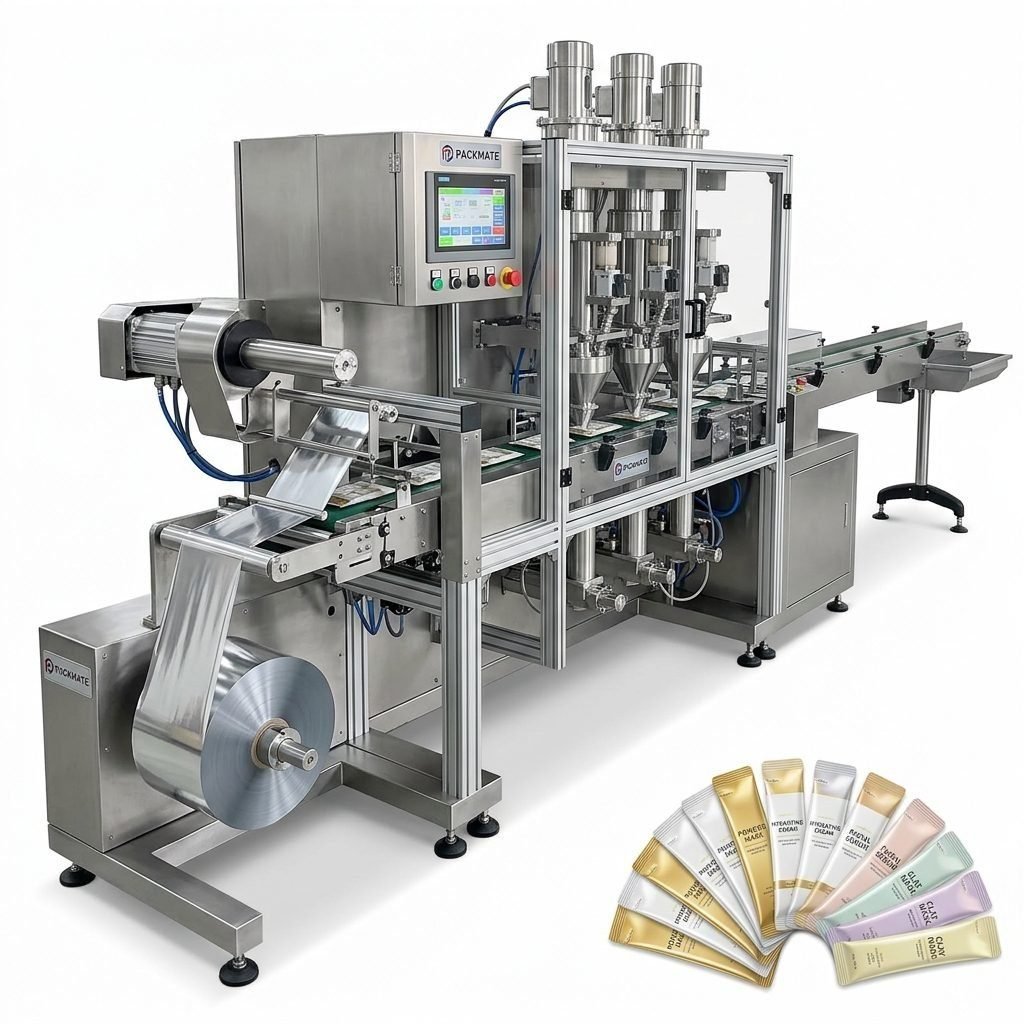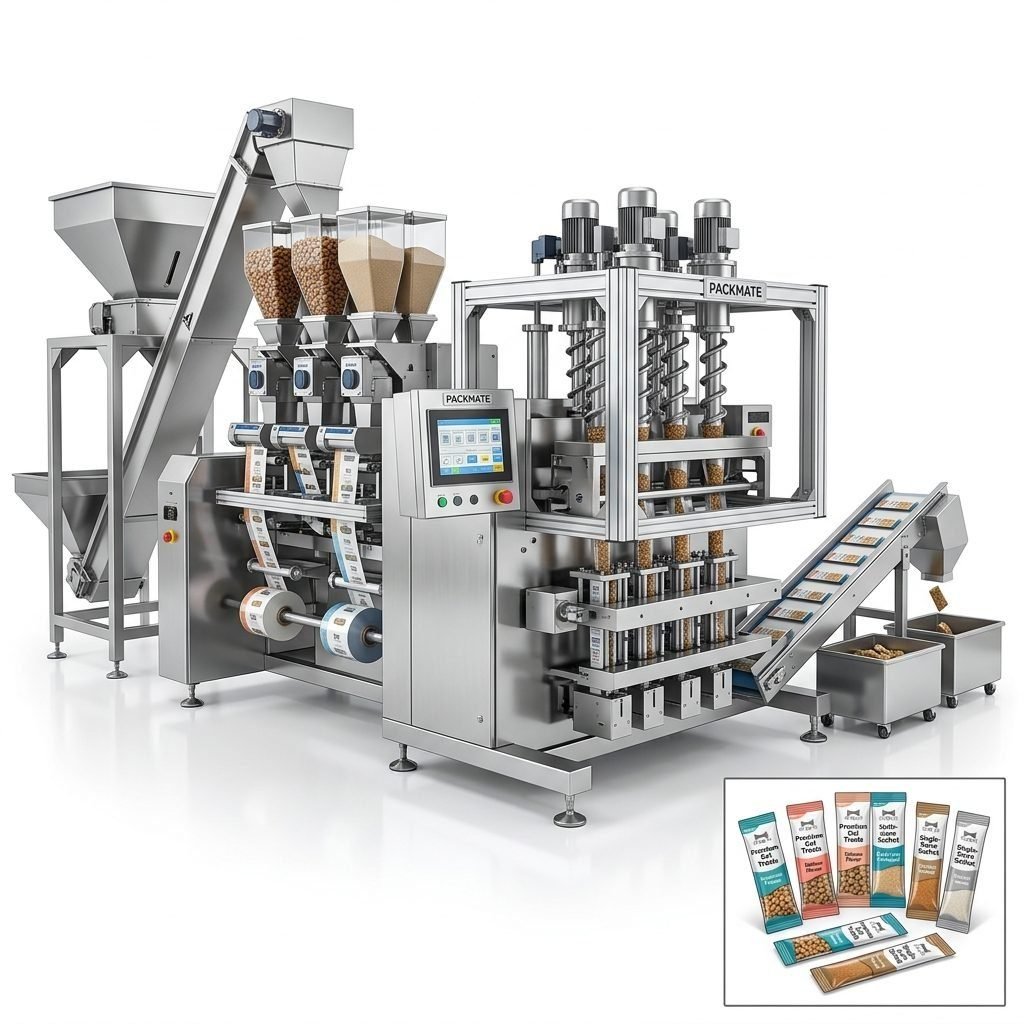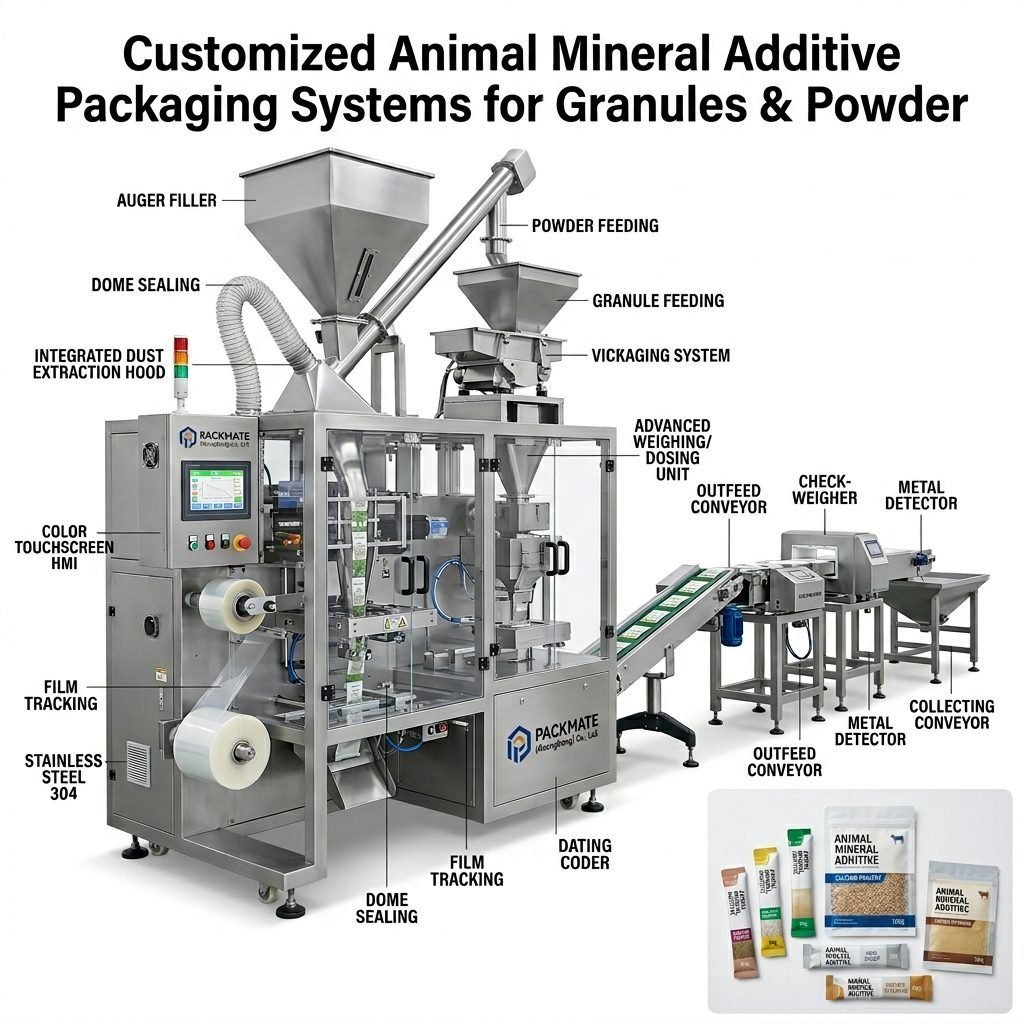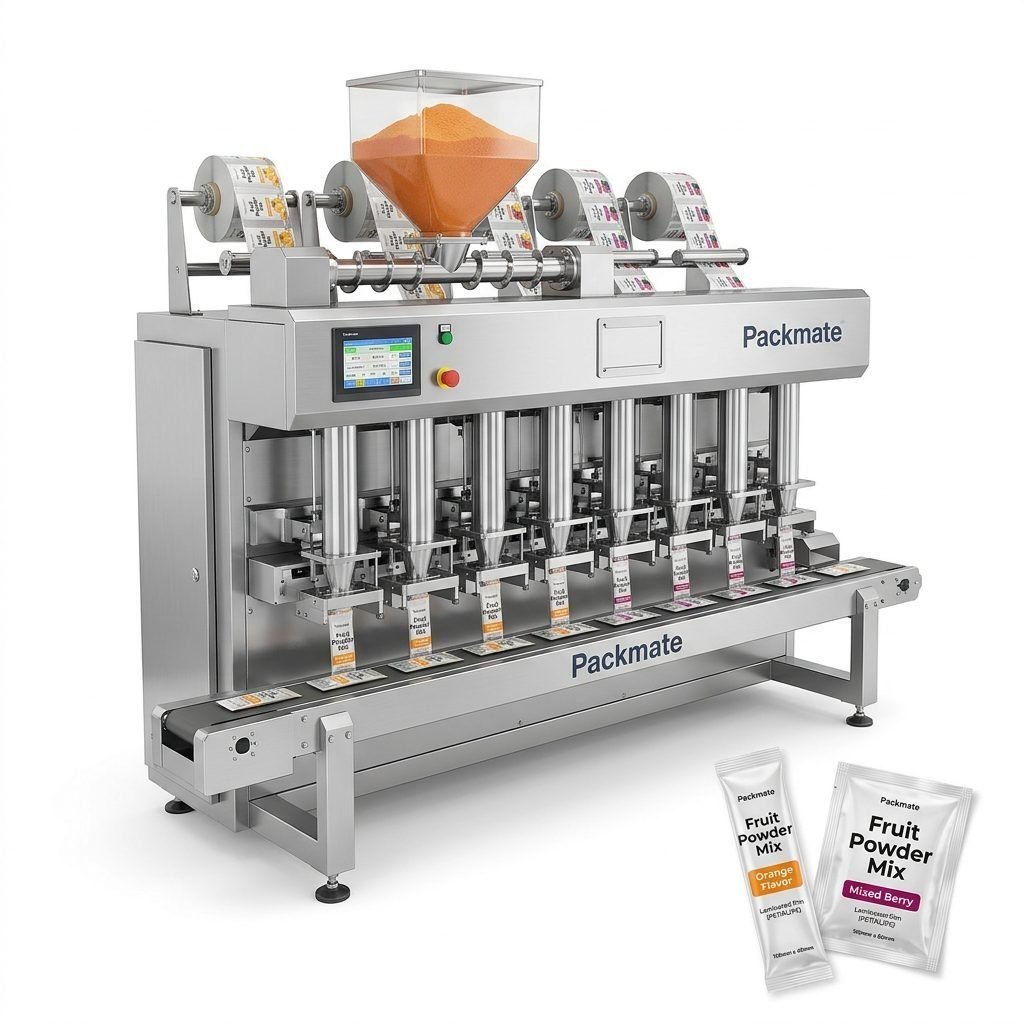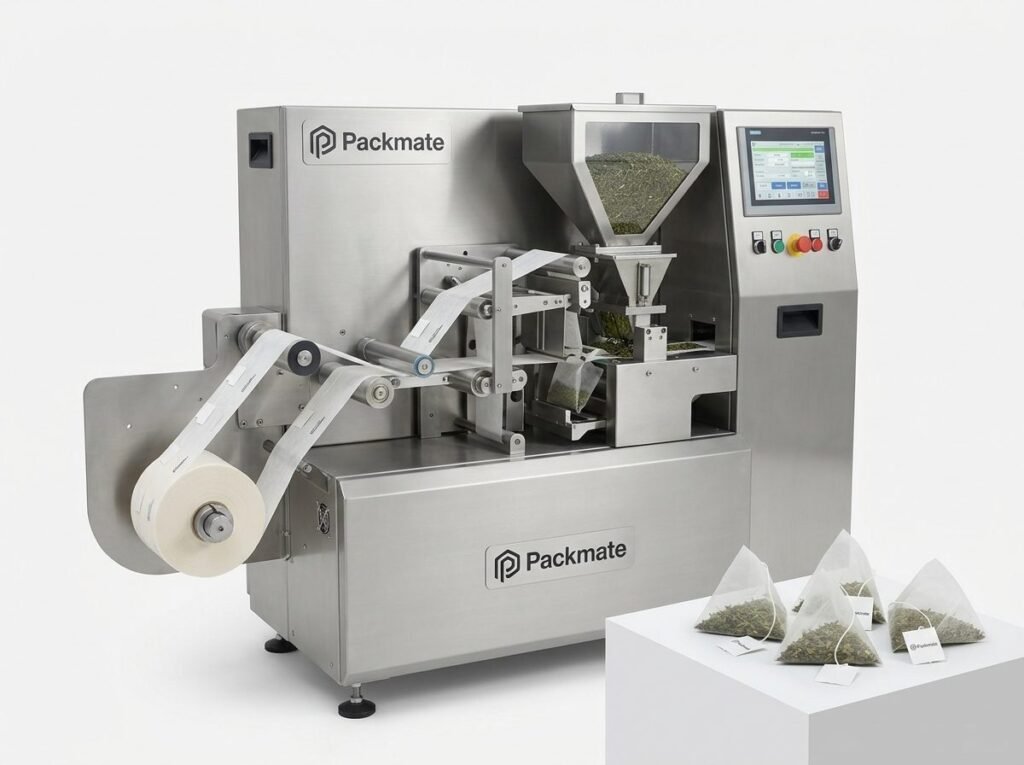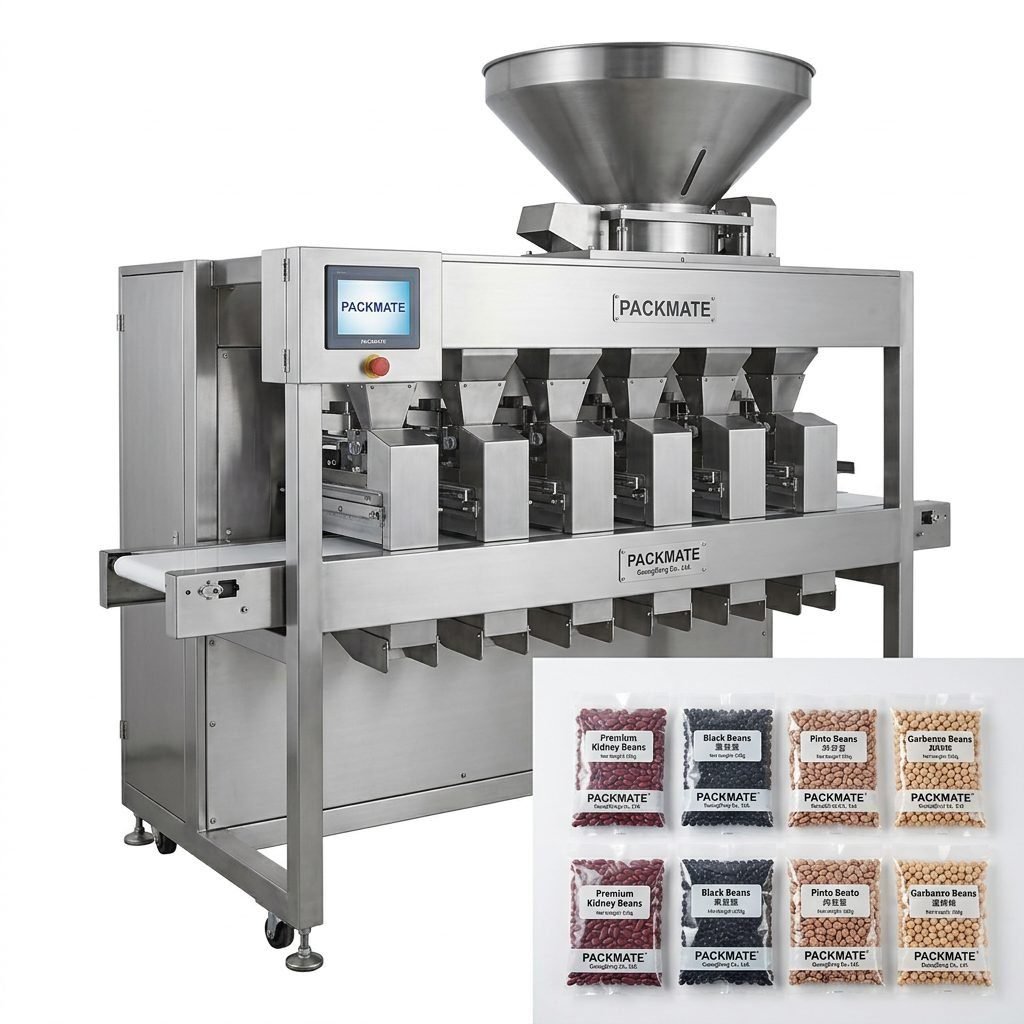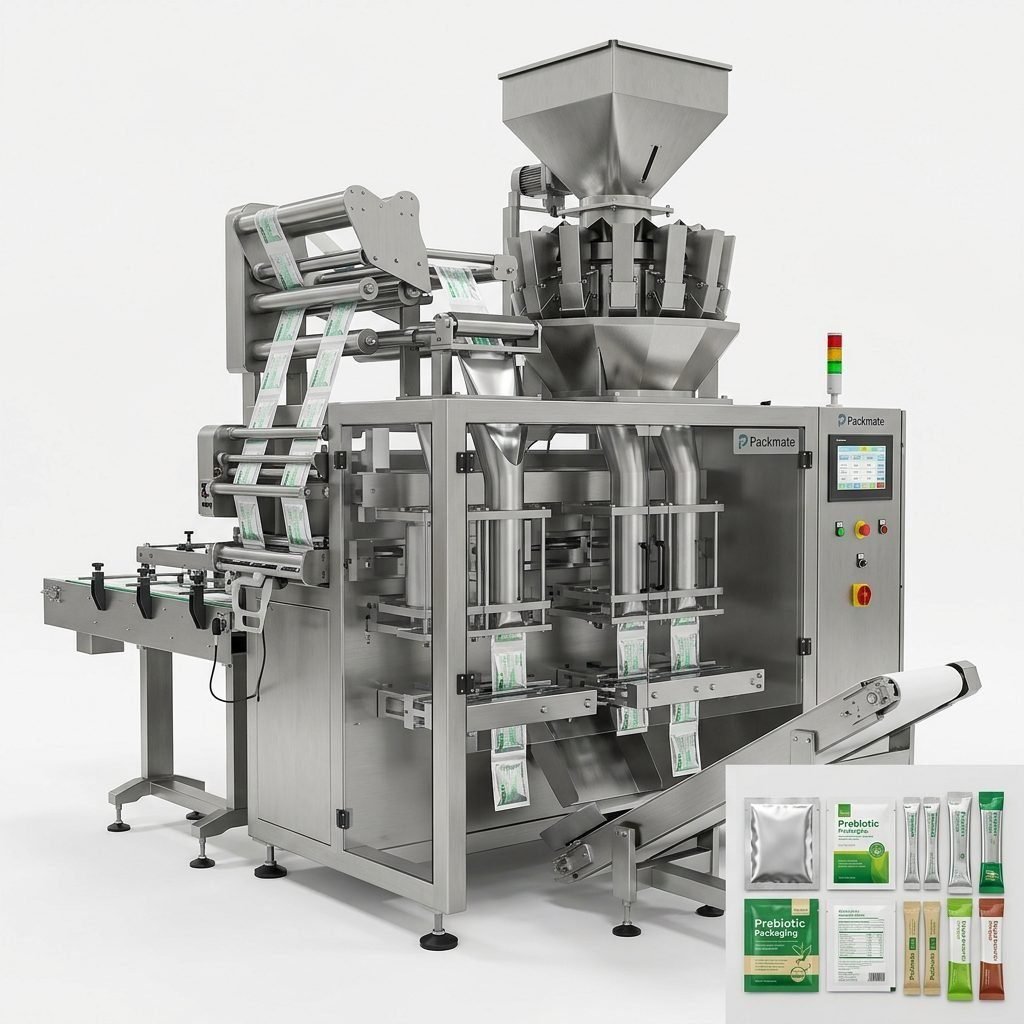
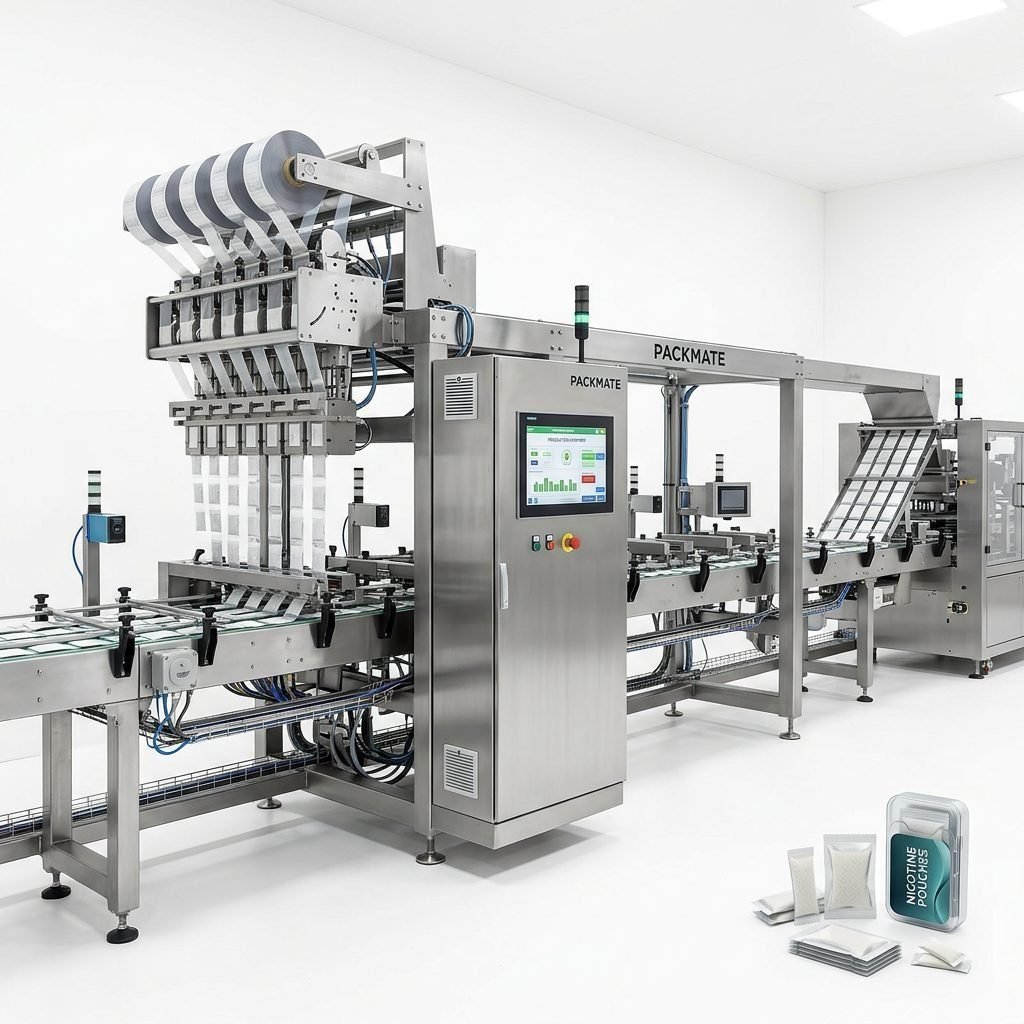
Strip packaging machines, also known as blister card or sachet strip packaging machines, are specialized automated systems designed to form, fill, and seal individual product doses into a continuous strip of pouches. These machines are widely used in the pharmaceutical, food, and nutraceutical industries for packaging items like tablets, capsules, powders, and granules into single-serving pouches connected in a strip. The process offers high efficiency, excellent product protection, and convenient dispensing for end-users.
Main Types of Strip Packaging Machines
Strip packaging machines can be categorized based on their operation, number of lanes, and the type of packaging material they handle.
1. Horizontal Form-Fill-Seal (HFFS) Strip Packers
These machines use a horizontal flow of packaging film. The film is unwound, formed into pouches, filled with product, and then sealed in a horizontal plane. They are ideal for packaging solid items like tablets, capsules, and hard candies.
2. Vertical Form-Fill-Seal (VFFS) Strip Packers
In VFFS machines, the film moves vertically. The film is formed into a tube, filled with product (typically powders or granules), and sealed. This type is common for packaging powdered supplements, instant drink mixes, and granular spices.
3. Multi-Lane Strip Packaging Machines
Designed for high-volume production, these machines feature multiple parallel lanes (e.g., 4, 8, 10 lanes) that operate simultaneously. They dramatically increase output by packaging several strips at once, making them suitable for large-scale manufacturing of products like OTC pharmaceuticals and food seasonings.
How Do Strip Packaging Machines Work? (Working Principle)
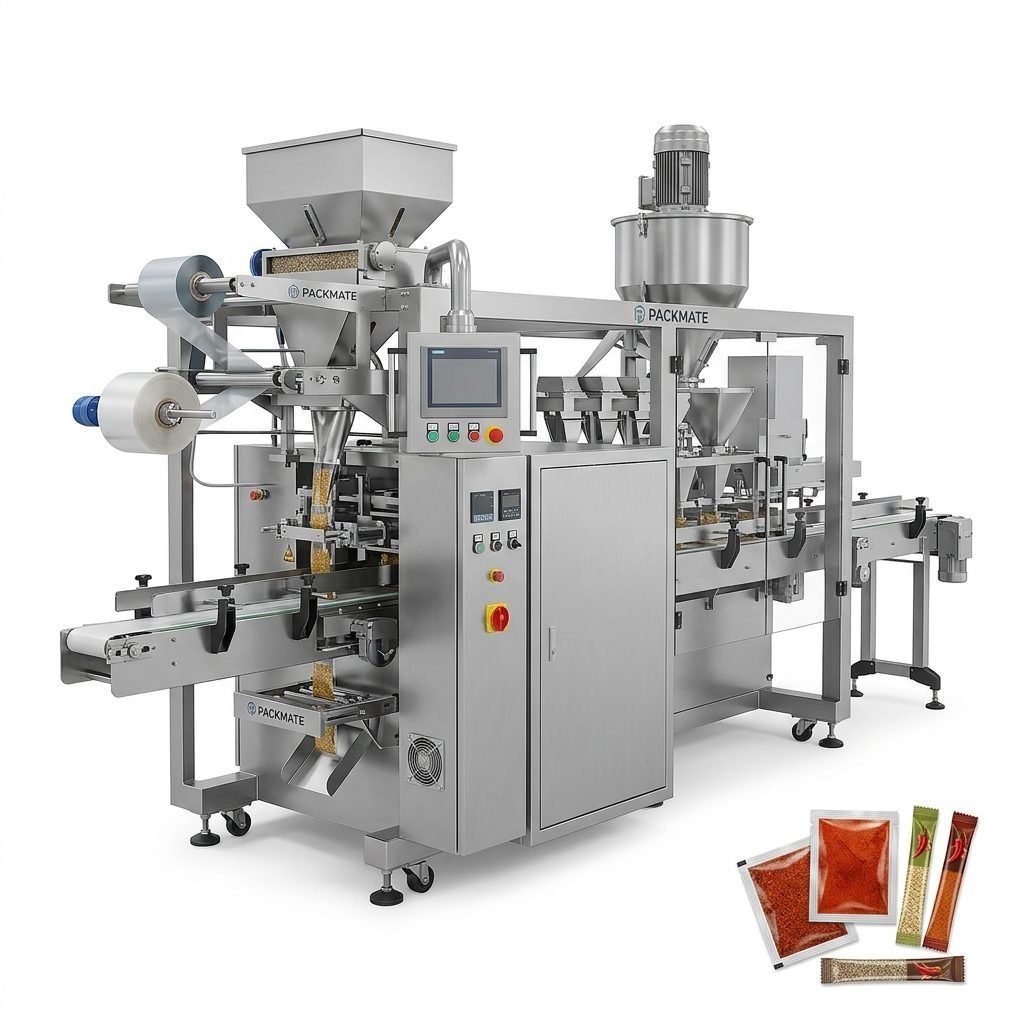
The core working principle involves a continuous, automated process of forming, filling, and sealing pouches from a roll of film. The typical sequence is as follows:
- Film Unwinding: Two reels of packaging material (typically a laminate of plastic and aluminum foil) are fed into the machine.
- Pouch Forming: The bottom web is drawn over a forming die where cavities (pockets) are created using heat and pressure or a mechanical process.
- Product Feeding & Filling: The product is precisely dosed into each cavity. This can be done via volumetric cups, auger fillers for powders, or vibratory feeders for tablets/capsules.
- Lidding & Sealing: The top web of film is laid over the filled cavities. Heat and pressure are applied to seal the two layers together around each product, creating individual pouches.
- Perforation & Cutting: The sealed web is perforated between each pouch to allow easy tearing by the consumer. Finally, the continuous strip is cut into predetermined lengths (e.g., 10-pouch strips).
- Discharge: The finished strips are discharged onto a conveyor for secondary packaging or cartoning.
Key Applications and Industries
Strip packaging is favored in industries where product integrity, single-dose convenience, and hygiene are paramount.
| Industry | Typical Products Packaged |
|---|---|
| Pharmaceutical | Tablets, capsules, lozenges, powder sachets (oral rehydration salts, antibiotics). |
| Nutraceutical & Supplements | Vitamin pills, probiotic capsules, protein powder sachets, effervescent tablets. |
| Food & Beverage | Instant coffee, sugar, seasoning powders, sauce/dressing sachets, drink mixes. |
| Specialty Nicotine | Nicotine pouches, snus products. Specialized machines from companies like SnusMachinery are designed for this niche. |
| Cosmetics & Personal Care | Single-use shampoo, conditioner, lotion, or serum sachets. |
The demand for strip packaging is particularly strong in Europe and North America, where consumer preference for hygienic, portable, and precisely dosed products is high. Manufacturers like Ludyway and Packmate Machinery have developed strong export footprints in these regions by meeting stringent quality and automation requirements.
Essential Buying Guide: Key Factors to Consider
Choosing the right strip packaging machine is a significant investment. Here are the critical factors to evaluate:
1. Product Characteristics
The nature of your product dictates the machine type. Solid items (tablets) require different feeding systems than powders or granules. Consider product flowability, abrasiveness, and sensitivity to heat or moisture.
2. Production Speed and Output Requirements
Determine your required output in pouches per minute (PPM). Single-lane machines are suitable for lower volumes, while multi-lane machines from suppliers like PacklineOEM are necessary for high-volume production.
3. Packaging Material Compatibility
Ensure the machine can handle your chosen laminate film (e.g., PET/AL/PE, paper/AL/PE). The sealing system (temperature, pressure, dwell time) must be compatible with the material to ensure strong, airtight seals.
4. Level of Automation and Integration
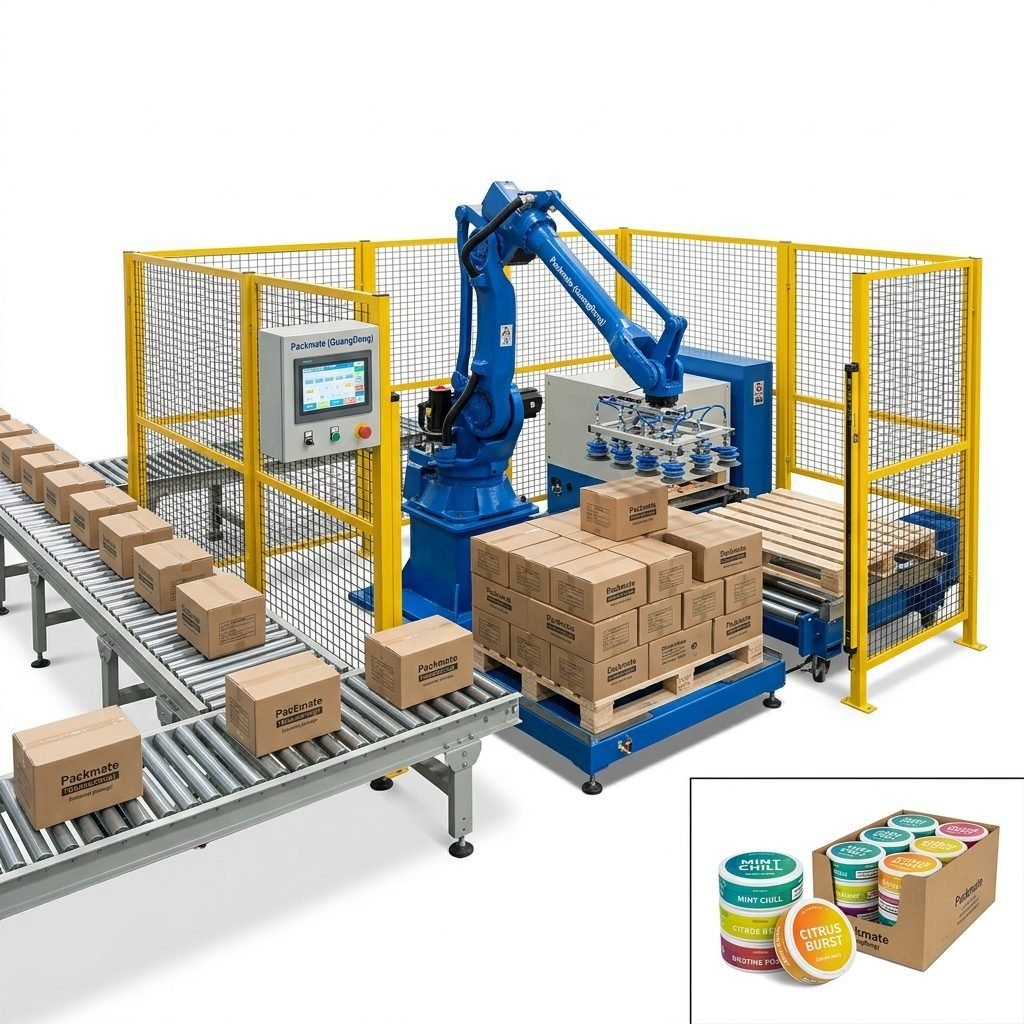
Decide if you need a standalone machine or a fully integrated turnkey packaging line. For end-to-line automation, companies specializing in line integration, such as PacklineOEM, offer solutions that include feeding, checkweighing, cartoning, and case packing.
5. Machine Flexibility and Changeover
If you package multiple products or pouch sizes, look for machines with quick-change tooling and recipe memory functions to minimize downtime during product changeovers.
6. Hygiene and Construction Standards
For food and pharmaceutical applications, machines should have a stainless steel (304 or 316) contact parts, easy-clean designs, and comply with relevant standards (e.g., GMP, FDA guidelines for materials).
7. After-Sales Support and Spare Parts
Consider the manufacturer’s reputation for technical support, training, and spare parts availability. Established manufacturers with over 30 years of experience, like those listed in the company profiles, often provide more reliable long-term support.
Leading Manufacturers: A Comparative Overview
Several Chinese manufacturers are prominent in the global strip packaging machinery market, each with specific strengths.
| Manufacturer | Key Strength | Ideal For |
|---|---|---|
| Ludyway | Broad product range, strong export history, complete turnkey lines. | Buyers seeking a one-stop solution from single machines to full lines across food & pharma. |
| Packmate Machinery | Balanced cost-performance, wide model selection (>80 models). | Medium to large-scale producers looking for reliable, customizable standard machines. |
| PacklineOEM | Specialization in integrated turnkey packaging production lines. | Factories needing fully automated, connected packaging systems with end-to-end engineering. |
| PackingMachineOEM | Strong focus on non-standard and highly customized machine solutions. | Projects with unique product formats, materials, or automation requirements needing bespoke engineering. |
| SnusMachinery | Niche expertise in nicotine pouch and snus packaging equipment. | Companies in the smokeless tobacco and modern oral nicotine pouch sector. |
Frequently Asked Questions (FAQs)
What is the main advantage of strip packaging over bottle packaging?
Strip packaging offers superior product protection (moisture, light, air), precise single-dose convenience for consumers, reduced risk of contamination, and often requires less packaging material per unit compared to bottles with cotton and desiccant.
What is the typical production speed of a multi-lane strip packer?
Speeds vary widely based on the machine model, number of lanes, and product. A standard single-lane machine may run at 100-200 pouches per minute (PPM), while a high-speed 10-lane machine can achieve outputs exceeding 1,000 PPM.
Can one machine handle different pouch sizes?
Yes, most modern machines are designed with changeable forming dies and sealing tools. However, changing pouch size requires a changeover process which can take from 30 minutes to a few hours, depending on the machine’s design. Look for “quick-change” features for frequent size changes.
What type of film is commonly used for pharmaceutical strip packaging?
Pharmaceutical strips often use high-barrier laminates like paper/AL/PE or PET/AL/PE. The aluminum (AL) layer provides excellent moisture and oxygen barrier, while the polyethylene (PE) layer enables heat sealing. The specific structure depends on the product’s sensitivity.
Is it possible to integrate vision inspection systems into a strip packaging line?
Absolutely. Integrating vision inspection systems is a common practice, especially in pharmaceutical and high-value food packaging. Cameras can check for correct product presence, fill level, print quality, and seal integrity in-line, ensuring 100% quality control.